The United States throws South Africa a lifeline


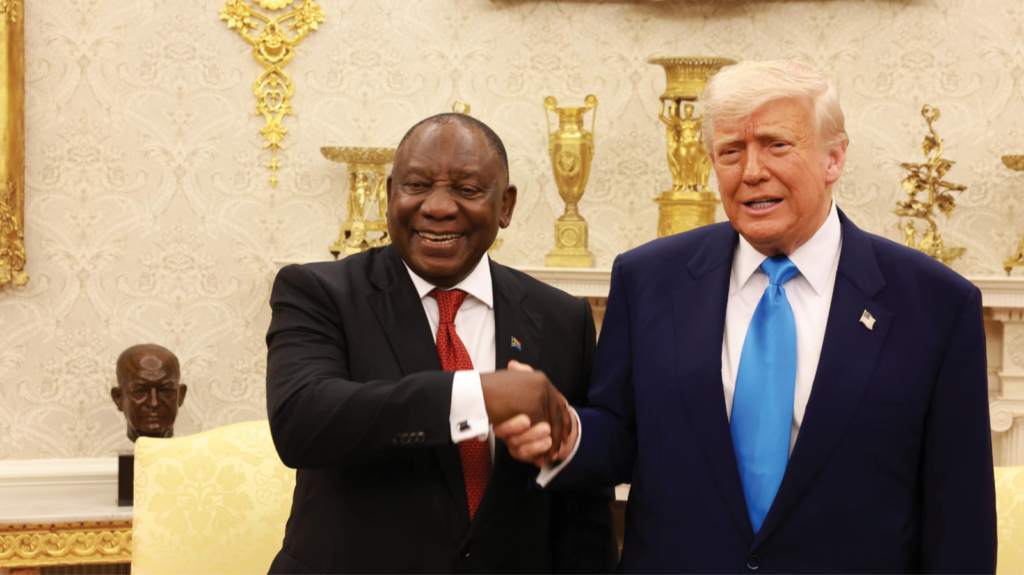
The United States Senate has approved a two-year extension to the African Growth and Opportunity Act (AGOA), voting to extend the programme till the end of 2028.
Introduced in 2000, AGOA allows participating African countries, including South Africa, to export certain products to the US without having to pay duties.
The Senate approved the extension with an overwhelming majority, with 90 votes for the extension versus just six votes against it.
The extension of the Act will now be passed on to the House of Representatives for further consideration, before being sent to US President Donald Trump for final approval.
If the extension is approved, it will secure duty-free market access to the US for many South African exports for the next two years.
Approximately 22% of all South African exports to the United States directly benefit from AGOA, with sectors such as agriculture, automotive, and mining benefiting the most.
This is the second approved extension of AGOA this year, following a late extension in February, which moved to continue the trade deal until the end of 2026.
The February extension was approved retroactively almost five months after AGOA initially lapsed in September 2025.
The new extension also comes during a period of significant diplomatic tension between South Africa and the United States, which had left the former country’s future in AGOA uncertain.
Specifically, South Africa’s position as a member of BRICS and its alignment with China, one of America’s biggest rivals, has been a point of contention.
Trump’s administration has also frequently criticised certain South African economic and political policies, such as BEE and the Expropriation Act, as going against US interests.
While the White House could potentially veto the AGOA extension, international relations expert Kingsley Makhubele told Newzroom Afrika this is unlikely to happen.
“The White House is backfooted in terms of critical minerals and rare earths that they need for their defence industry,” Makhubele said.
“With China holding a big sway in terms of the rare earths, they are unlikely to veto this because they are looking for rare earths and critical minerals for their own national security requirements.”
Good news for South African farmers

The potential extension of AGOA has been seen as particularly good news for South Africa’s agricultural industry, which exports heavily to the United States.
The American market accounted for around 4% of the country’s total $15.1 billion annual agricultural exports, equivalent to around $504 million in 2025.
While the country’s total agricultural exports saw a 10% increase from the year prior, exports to the US declined by 3% instead.
This slight drop was attributed to Trump’s introduction of the “Liberation Day tariffs” in April 2025, which were later declared illegal by the United States Supreme Court.
With new tariffs recently being introduced by the US on South African exports, Agbiz Chief Economist Wandile Sihlobo said AGOA will be beneficial for South African farmers.
“Without AGOA, South African products exported to the US would typically face an additional tariff of 3% on top of the new tariffs, which are at 12.5%, bringing the total to around 15.5%,” Sihlobo explained.
“This would have placed South African agricultural products at a disadvantage compared to competitors in the American market, such as Chile and Peru.”
Sihlobo explained that AGOA allowed South Africa to stand on equal footing with these countries at the new 12.5% tariff mark.
He pointed out, however, that certain agricultural products had been exempted from these new tariffs by the United States.
For South Africa specifically, products such as oranges, macadamia nuts, and fruit juices benefit from this exemption, while all other agricultural exports are subject to the 12.5% tariff.
While some have argued that South African farmers should focus more on exporting to China, Sihlobo said the US remained an integral export market, particularly for products such as citrus, nuts, wine, and others.
“I get the desire to expand access to China, and support it, especially under the zero-tariff access provisions of the China-Africa Partnership Agreement for Shared Prosperity,” Sihlobo said.
“But we must view the Chinese market as an addition to the group of countries that offer access to the South African markets, not a substitute for others.”
Sihlobo said continued inclusion in AGOA would be a positive step for South African agriculture until a formal trade agreement with the United States is reached.





Comments