Mafia robbing South Africa of R17 billion a year


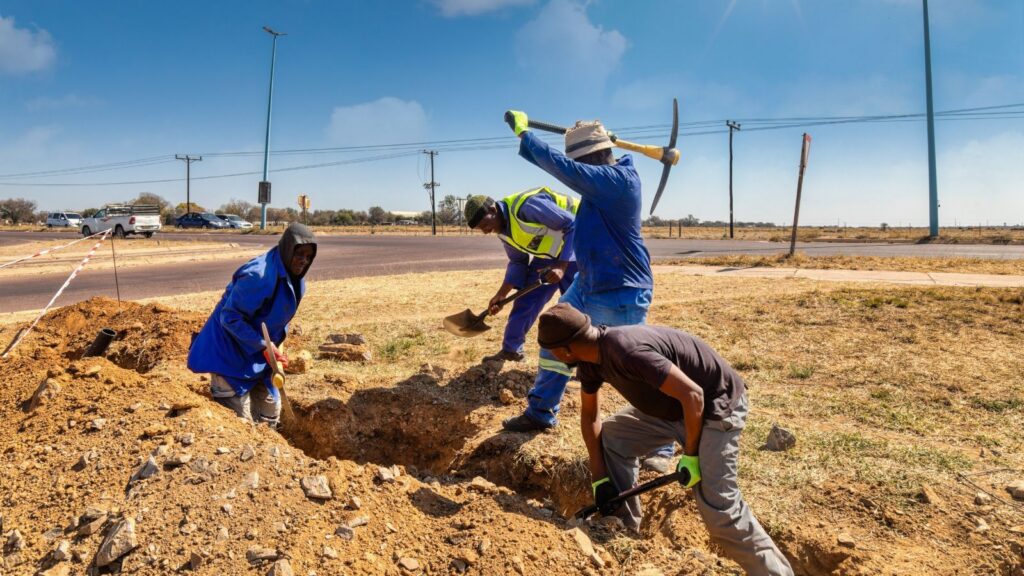
The construction mafia has embedded itself across South Africa, delaying projects, scaring off investors, and preventing infrastructure maintenance.
This is done to extort construction companies into buying supplies or hiring people from local mafia groups and business forums, and, in some cases, to make cash payments.
Public Works Minister Dean Macpherson outlined the impact this has on South Africa’s economy and what his department is doing about it at the 9th BizNews Conference.
Macpherson explained that when he entered office two years ago, criminal syndicates and business forums were operating with impunity.
“They were increasingly confident that they could arrive on construction sites, intimidate workers, demand money, and shut down economic development without consequence,” he said.
“This not only delays a project. It changes the entire investment decision and narrative about South Africa.”
Macpherson said no investor, local or international, is willing to invest capital into sites where criminal organisations run riot.
The direct cost of the construction mafia is R17 billion in lost economic output per year, with billions more being lost before a project gets off the ground.
One of Macpherson’s main aims has been to tackle the rise of the construction mafia and restore trust in the industry in South Africa.
This is challenging, as the mafia is highly organised and sophisticated and also comprises local business forums that demand employment.
The government has developed a response to the mafia, which is yielding results. So far, 770 cases of construction-related intimidation and extortion have been reported.
Macpherson said that, of this, 266 arrests have been made and 241 people have been convicted. The first step, he explained, is to make it clear that intimidation will not be tolerated.
Crucially, this has yielded results from the industry itself, with construction-related disruptions in KwaZulu-Natal dropping from 60 per year to less than 10.
A longer-term solution is to clarify legislation to make it clear how a local business can participate fairly and avoid extortion.
Currently, the legal framework is unclear, resulting in local participation being neglected in some cases and greatly abused by the mafia.
Blacklisting companies

Macpherson’s crackdown goes beyond the construction mafia, with the minister also taking aim at contractors who fail to deliver value for money.
These contractors often deliberately delay projects to earn more money, inflate costs, or do a poor job, requiring additional spending to fix mistakes.
“Bad contractors must understand that the government does not owe them a tender. Government will demand value for every rand it spends,” Macpherson said.
In the decade prior to Macpherson, only two companies were blacklisted by the department for poor work or cost inflation.
In the two years Macpherson has been in office, 52 companies have been blacklisted, and dozens of employees have been fired.
Data from the Building Industry Bargaining Council (BIBC) show that many companies have also been blacklisted for falsifying Black Economic Empowerment credentials.
It said that this is part of a history of non-compliance within the construction sector that makes it hard for legitimate businesses to compete.
The BIBC also noted that blacklisting a company is often not the end of the road, unless the individuals running the business are convicted.
Non-compliant contractors often deregister, rename, or re-establish entities using associates and family members as new directors to avoid detection.
The lack of visibility regarding the real owners of entities is particularly acute in high-volume public procurement, where scale makes investigation difficult and time-consuming.
As a result, problematic contractors can reappear under new guises, continuing cycles of poor delivery and non-compliance.
Macpherson said the challenge posed by the construction mafia and bad contractors is a major driver of the sector’s decline in South Africa.
The construction sector is on track for its ninth consecutive decrease in annual output. This means it has shrunk every year for nearly the past decade.
This has resulted in thousands of jobs being lost and infrastructure collapsing across South Africa. Macpherson said green shoots are emerging and the sector is turning the corner, albeit gradually.




Comments