Government can get more power to expropriate land without compensation in South Africa


The 2026 Gas Bill proposes broadening the government’s power to expropriate land, potentially without compensation, and removing some safeguards in the existing Gas Act.
This is according to social and environmental justice organisation The Green Connection, which commented on the proposed Gas Bill alongside other interested parties.
If approved, the Gas Bill will repeal South Africa’s existing Gas Act of 2001. The Bill provides for the promotion of the orderly development of South Africa’s gas industry.
It covers new developments and changing technologies in the local gas sector, with a focus on socio-economic and environmentally sustainable development.
On Wednesday, 12 August, the Portfolio Committee on Electricity and Energy heard submissions regarding the Bill, providing stakeholders the opportunity to present their views.
One such stakeholder was The Green Connection, which submitted that the Gas Bill be withdrawn and, if not, how it should be amended.
One of the organisation’s biggest concerns related to the powers of expropriation that the Bill grants.
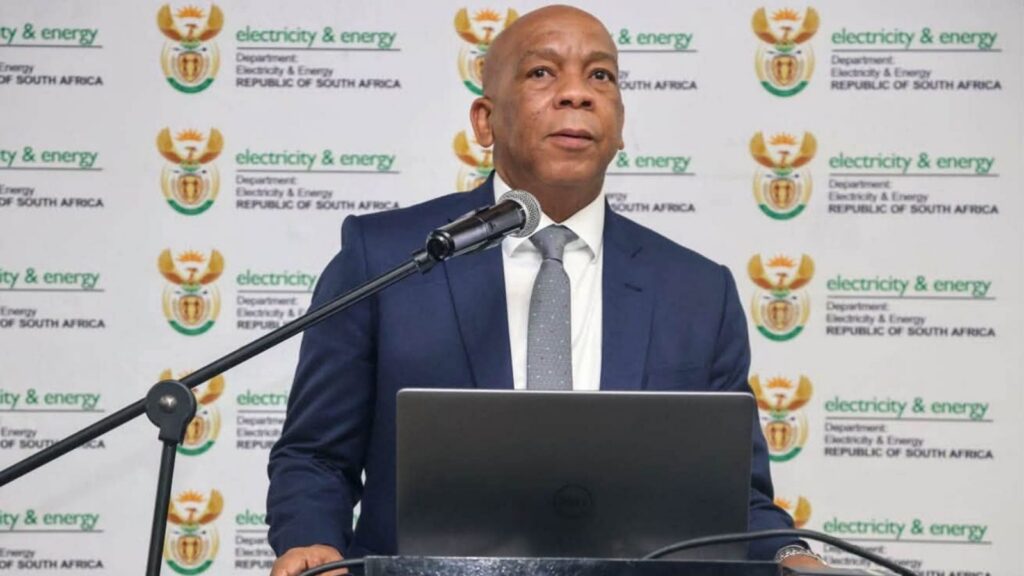
Section 33 of the Gas Bill empowers the Energy and Electricity Minister to expropriate land for gas facilities for a public purpose or in the public interest. This ministerial position is currently held by Minister Kgosientsho Ramokgopa.
Under the proposed legislation, the minister must take these decisions in consultation with the minister responsible for administering the Expropriation Act.
However, The Green Connection pointed out that the terms ‘public purpose’ and ‘interest of the public’ are not defined in the Bill.
The organisation further explained that, under the existing Gas Act, expropriation was exercised by the regulator under highly specific circumstances.
Expropriation took place only on a licensee’s request, where land was reasonably required, and after a public hearing with a mandatory compensation recommendation and a right to approach a court.
In contrast, section 33 of the Gas Bill transfers this power to the minister, who may act on his own initiative, for “any gas facilities”.
In the Bill’s current form, the minister can exercise the expropriation power without requiring a licensee’s request, a prior attempt at voluntary acquisition, or any prescribed compensation procedure.
The Green Connection said these safeguards currently exist under the Piped Gas Regulations, but are not in the Gas Bill.
Support for the Gas Bill
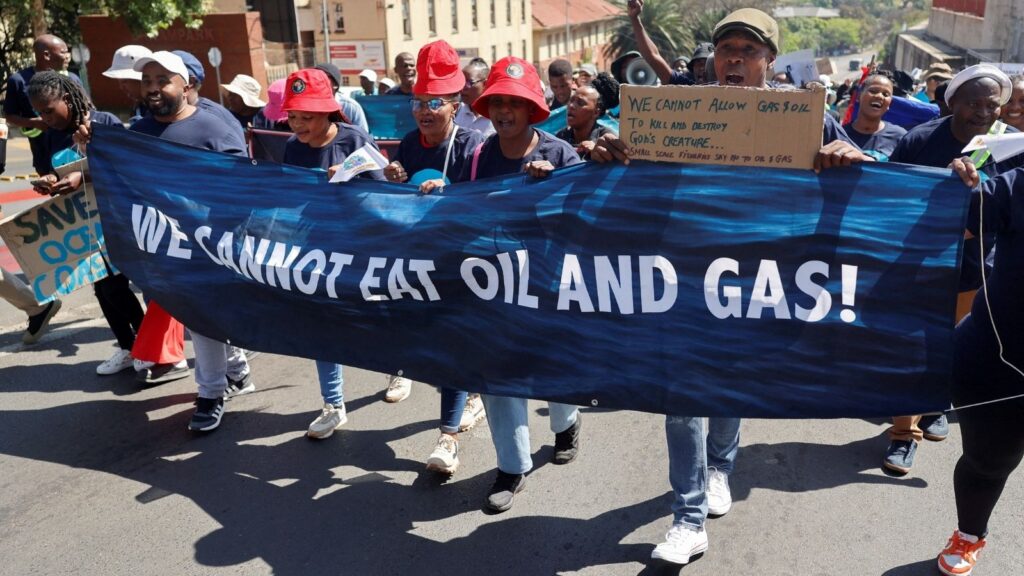
While The Green Connection and other stakeholders raised serious concerns with the Gas Bill, other parties supported the proposed legislation.
One such proponent was the Congress of South African Trade Unions (COSATU), which argued that the legislation could be a strong economic driver.
“As coal plants retire, we need new energy sources and new industries to absorb workers. The gas discoveries off our coast are that opportunity,” the union said.
COSATU estimated that developing South Africa’s gas industry, as the Gas Bill proposed, could create between 20,000 and 35,000 jobs.
These employment opportunities would span exploration, drilling, production, liquid natural gas terminals, pipelines, and gas-to-power plants.
The union said it could also create between 60,000 and 120,000 indirect jobs in manufacturing, steel, fabrication, engineering, logistics, port services, and maintenance.
Based on this, COSATU said it supports the Gas Bill “as a well thought-out legislative framework”. It urged Parliament to expedite the passage of the Bill.
The Minerals Council South Africa also provided comments on the Gas Bill, and commended the Department of Electricity and Energy for its efforts to modernise the gas regulatory framework.
One of the council’s main concerns with the Bill was that it does not go far enough to provide the degree of regulatory certainty needed for the local hydrogen market.
“The Bill treats hydrogen largely as another form of gas,” the Minerals Council South Africa said.
“The inclusion of hydrogen-rich gas within the definition of ‘gas’ does not provide a regulatory framework capable of supporting the broader hydrogen value chain.”
“Hydrogen should be recognised not only as a regulated gas, but as both an energy carrier and an industrial feedstock.”
The council said the Gas Bill should be used as a transitional platform to give the regulatory certainty needed to establish South Africa as a competitive participant in the emerging global hydrogen economy.






Comments