Major South African trade union slams Eskom’s unbundling


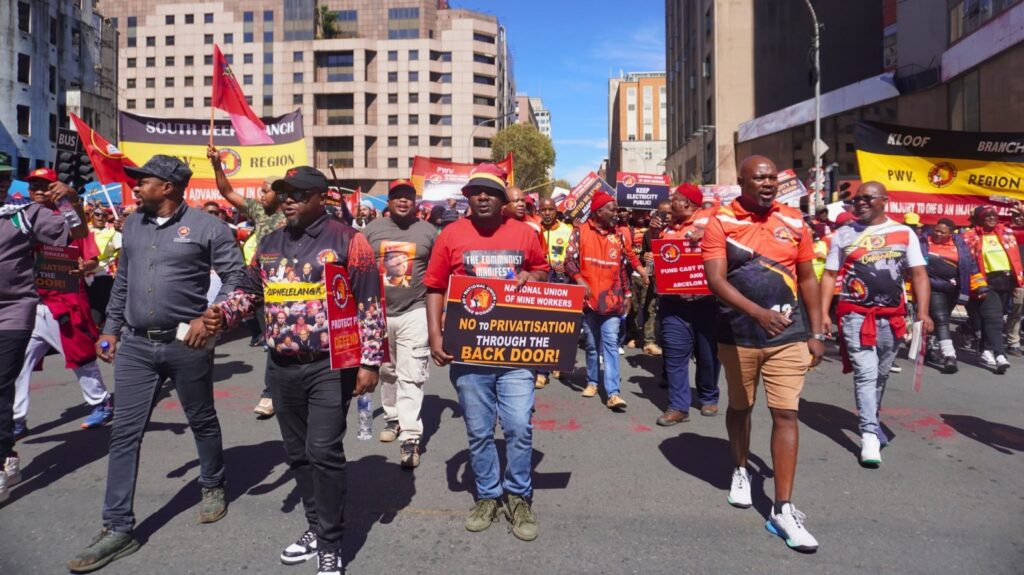
The National Union of Mineworkers (NUM) has criticised the unbundling of Eskom as not being in the best interest of the South African public.
This comes shortly after President Cyril Ramaphosa approved the Phase One report of the Eskom Restructuring Task Team (ERTT).
The report recommended the establishment of an Independent Transmission System Operator (ITSO), which would exist separately from Eskom.
This is intended to promote competition, strengthen energy security, and attract investment as the country moves closer towards a free and open electricity market.
NUM argued that this would constitute a move towards the privatisation of South Africa’s energy sector, resulting in job losses and higher energy prices.
NUM deputy president Olehile Kgware said the union had written a letter to the President in June to express their concerns, but had not received a response.
“Workers are not the only affected party,” Kgware said. “It’s not about NUM and its members. It’s about society in general because the price of electricity now is already unbearable for our public.”
“So this is not for the people. It is for a few elite people who will benefit as private businesses in taking over Eskom.”
NUM said it had not been properly consulted on the matter and that it will explore all possible avenues to further oppose the unbundling process, including potential legal action.
The union said the transfer of Eskom’s transmission assets to an independent entity would undermine the power utility’s long-term financial sustainability.
Eskom itself has called for these assets to only be transferred after it has completely resolved its current municipal debt crisis, which now stands close to R120 billion.
In an interview with 702, NUM National Energy Sector Coordinator Khangela Baloyi said South Africa’s energy should remain a public good, not a commodity for foreign investors.
Baloyi argued that these foreign investors were not interested in developing South Africa as a country, but were only concerned with their own profit.
“A good example of this is the independent power producers,” Baloyi said. “Most of them come from European countries.”
“They come here, set up their plants, and then control those plants from Europe. They create very few jobs for South Africans, and create more jobs for Europeans.”
According to Baloyi, increased competitiveness in South Africa’s energy market does not necessarily mean electricity prices will decline.
Businesses stand behind unbundling
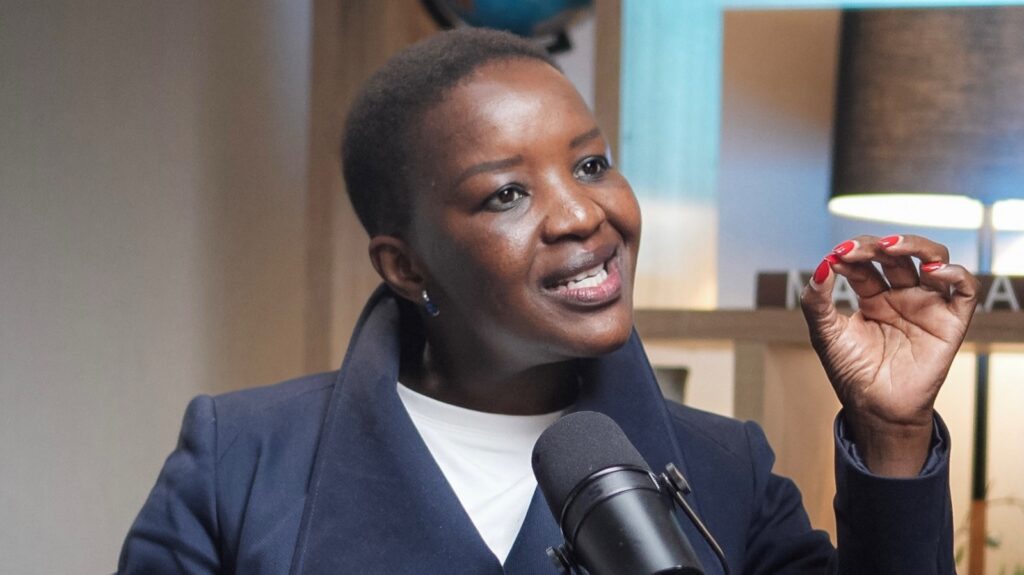
While NUM has said it stands firmly opposed to the unbundling of Eskom, South Africa’s business leaders have expressed their support for the move.
In her weekly newsletter, Business Leadership South Africa (BLSA) CEO Busisiwe Mavuso welcomed President Ramaphosa’s endorsement of the ERTT Phase One report.
Mavuso called on Eskom to align with the report’s recommendations as the country prepares to launch the South African Wholesale Electricity Market (SAWEM) later this quarter.
The SAWEM was initially intended to open on 1 April 2026, but was delayed to ensure that all operational and regulatory requirements could be met.
“BLSA has argued consistently, against the resistance of Eskom itself, that an independent grid operator is the only way to build a truly competitive electricity market,” Mavuso said.
“One that treats all electricity generators equally, brings prices down over time and gives investors the certainty they need to commit capital.”
According to Mavuso, the President’s approval of the report was a particularly positive sign for investors, as it removed much of the uncertainty surrounding South Africa’s energy reforms.
Mavuso said independent power producers and large industrial consumers who had previously been concerned could now plan their investments accordingly.
Part of Eskom’s unbundling process involved the creation of the National Transmission Company SA (NTCSA) to take over transmission responsibilities from Eskom.
The ERTT’s Phase One report called for greater independence of the NTCSA through the appointment of a new board and senior management with no cross-directorships with Eskom.
It also suggested that all decision-making regarding the electricity market be delegated to the NTCSA, and that its finances and operations be ring-fenced.
“These are the right recommendations,” Mavuso said. “They build the institutional muscle that the ITSO will eventually inherit.”
“The report directly addresses the concern that Eskom could continue to exercise influence over transmission decisions through informal means. The ring-fencing and governance separation proposals close that door.”
Mavuso said Eskom should now approach the ERTT’s Phase Two report, which is due in three months’ time, as a constructive participant.
This report will cover the transaction structure and implementation plan, including detailed timeframes for completing the restructuring as proposed.




Comments