The Oppenheimer family saved R111 billion through one decision


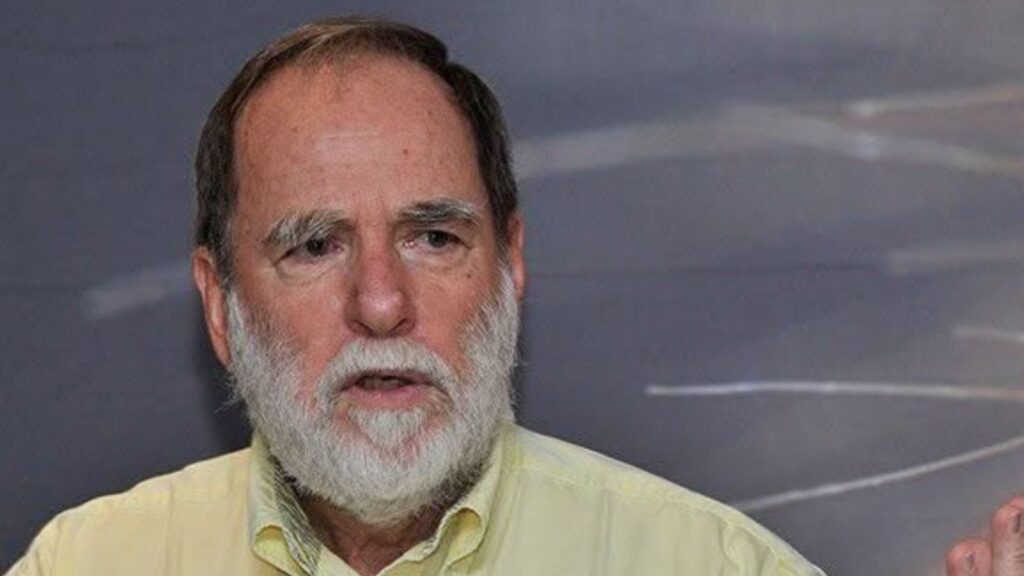
The Oppenheimer family sold their 40% stake in De Beers for $5.1 billion in 2011. Today, the entirety of the company is being sold for $1 billion.
In 2026 money, the Oppenheimer sale would be worth $7.73 billion (R127.98 billion). This means the family avoided a potential R111.48 billion decline in the value of their De Beers stake.
De Beers is one of the world’s most iconic companies, with it dominating the diamond industry and famously marketing diamonds to newlyweds with its slogan, “A Diamond is Forever”.
Founded by Cecil John Rhodes in 1888 as De Beers Consolidated Mines, the company quickly took control of South Africa’s diamond output, which centred on Kimberley.
While Rhodes was a visionary and a man of action, it was not he who made De Beers into the company that it is known as today.
Sir Ernest Oppenheimer was simultaneously trying to make a fortune in the diamond mines in South Africa through his Anglo American Corporation.
Oppenheimer knew there was serious money to be made if one company could consolidate the sale of diamonds and not just the mining of the gems.
Whoever did this would control supply to the market and give them complete control over prices and, thus, economic value.
Anglo snapped up De Beers, and Oppenheimer built the Centralised Selling Organisation (CSO) to dominate the diamond industry.
Using the might of Anglo and De Beers, the CSO effectively took over the selling of diamonds around the world. This organisation ended up having a stake in every single diamond pipe mine in the world.
De Beers, through the CSO, had the ability to increase prices as it wished by artificially limiting supply. Many thought this would last forever.
Under Ernest’s son, Harry, De Beers produced 21.4 million carats of diamonds from 1957 to 1982 and generated an average of R1.7 billion annually during that period.
Harry’s secret sauce was the famous ‘A Diamond is Forever’ marketing campaign, which sent demand for diamonds skyrocketing.
After his retirement, the CSO’s control over the diamond industry began to falter as new mines opened in Russia, Canada, and Australia that could bypass it.
This forced De Beers to give up its artificial control of supply by stockpiling diamonds and carefully timing their release into the market.
However, this was just the beginning of the company’s troubles, as manmade diamonds began taking a foothold in the market in the early 2000s. This threatened to shut down the entire industry.
The Oppenheimer exit
Manmade diamonds were first developed as part of experiments in the 1950s to mass-produce the hardest known material on earth.
However, these first few diamonds produced by General Electric and others were of low quality and expensive to make.
This resulted in many dismissing them as potential competitors to natural or mined diamonds, as the differences were easy to notice, and it was financially unsustainable.
However, technological breakthroughs came in the 1980s and 1990s that significantly reduced the cost of man-made diamonds.
While making them cheaper, these methods also produced higher-quality diamonds that could be used in industry and in low-quality jewellery.
By the 2010s, manmade diamonds were indistinguishable from their natural counterparts, creating a significant challenge for companies like De Beers.
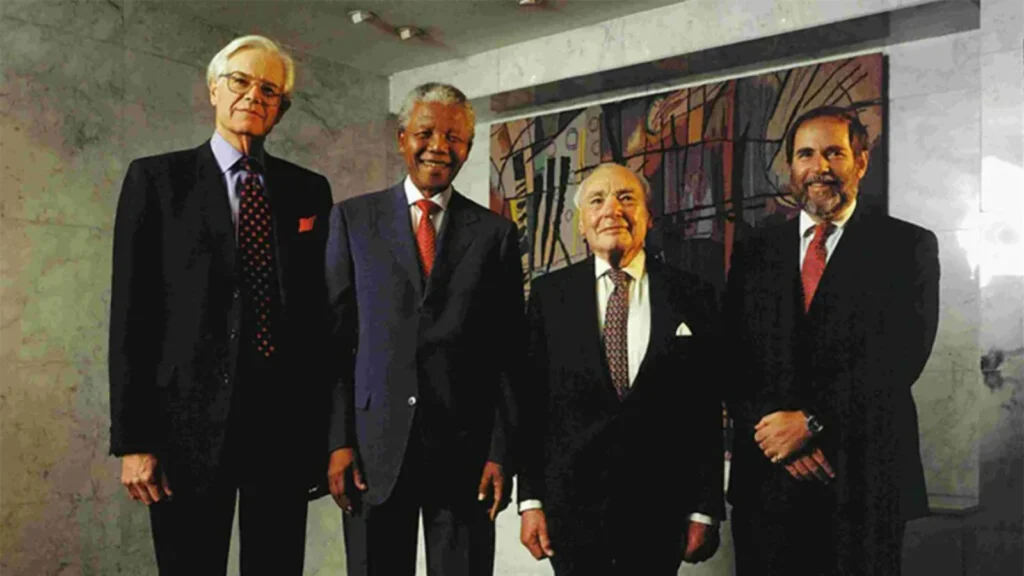
The Oppenheimers, by then led by Nicky Oppenheimer, saw the writing on the wall and began planning their exit from De Beers.
Nicky never enjoyed the sweeping power his father and grandfather had at Anglo, with the local press dubbing him “Not-yet Nicky” for his failure to take over the reins from Harry.
However, he did make the extremely wise decision to sell the Oppenheimers’ 40% stake in De Beers to Anglo for $5.1 billion in 2011.
“This has been a momentous and difficult decision as my family has been in the diamond industry for more than 100 years and part of De Beers for over 80 years,” Nicky said at the time.
“After careful and deliberate consideration of the offer, and what is in the best interests of the family, we unanimously agreed to accept Anglo American’s offer.”
“Anglo American is the natural home for our stake as they have been major shareholders in De Beers since 1926 and have a deep knowledge of the diamond business.”
Little did Anglo know that this would be the high-water mark for De Beers and diamond mining as manmade diamonds were taking over.
From hero to zero
As manmade diamonds improved in quality and their prices dropped, consumers increasingly bought them as alternatives to expensive mined diamonds.
Manmade diamonds were initially produced for industrial uses to cut hard materials and process minerals. As the qualities improved, they became popular with jewellers.
In the aftermath of the Great Financial Crisis, the demand for manmade diamonds soared as cheaper alternatives were sought out.
This has gone into overdrive in the 2020s, with research from McKinsey showing that manmade diamonds are not seen as equal to mined alternatives.
McKinsey expects this trend to accelerate into the future as buyers become increasingly price-conscious.
Coupled with this rise has been the impact of geopolitical tensions and shifts in the mining industry, creating a perfect storm for a company like De Beers.
Mining companies are heavily focused on minerals of the future, such as copper, iron ore, and platinum group metals, among others.
Diamonds no longer have a role, and their miners cannot stand alone. They are only seen to be viable as part of a large conglomerate.
Anglo CEO Duncan Wanblad kicked off a restructuring process in 2024 to see off a takeover from BHP. Part of this restructuring is the sale of De Beers.
This has been hard to see through, with Anglo struggling to find a buyer. The company initially valued De Beers at $5 billion but has steadily reduced its asking price to attract interest.
It now appears to have found a buyer after taking three impairments on its stake in three years, valuing De Beers at $2.3 billion.
Bloomberg reported in July that Anglo had selected a consortium led by former De Beers CEO Gareth Penny as the preferred bidder for Anglo.
The current deal structure envisages Global Diamond Consortium paying about $1 billion for Anglo’s 85% stake in De Beers.
This is a far cry from the $10 billion plus valuation at which the Oppenheimers sold their stake in 2011. Nicky’s masterstroke saved the family from missing out on R111.48 billion.




Comments