Anglo American built an entire city in the middle of nowhere


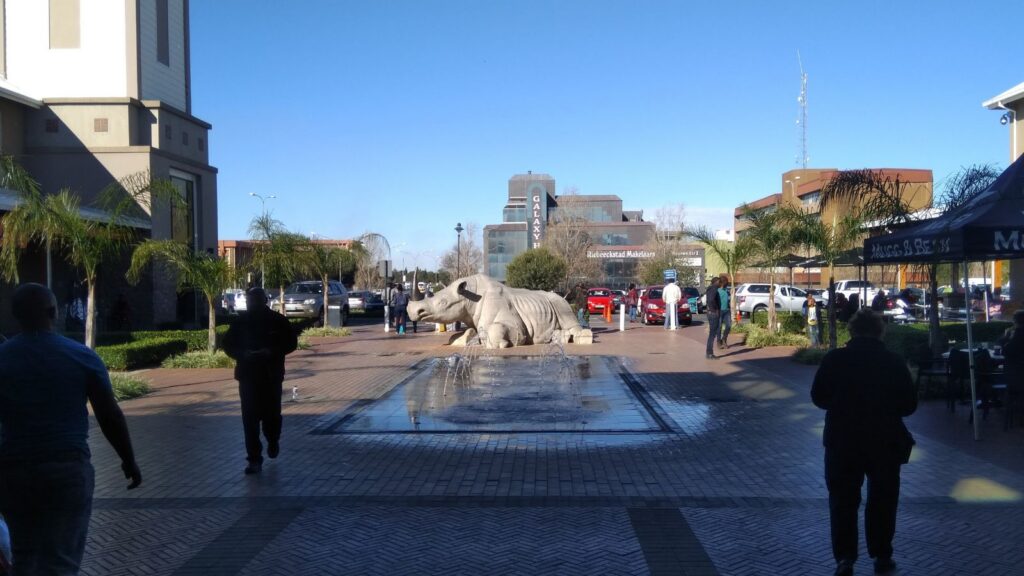
Anglo American built the city of Welkom to house the thousands of mineworkers attracted to the Free State by the discovery of gold.
The city is the result of the largest private capital investment in South African history by Sir Ernest Oppenheimer and his Anglo American Corporation.
Unlike the gold fields on the Witwatersrand, the precious metal was not readily observable in the Free State, resulting in Oppenheimer’s investment being labelled a “bet” at the time.
People knew that the Witwatersrand Reef extended to the east and west outside of Johannesburg at great depth. No one believed gold would be found south of the Vaal.
Two prospectors in 1896 discovered a small outcrop near modern-day Welkom, which showed potential for gold, as its geology was similar to that of the Witwatersrand.
However, no one believed them, and the reef never gained interest among mining prospectors and speculators. At the time, all the attention was on the Witwatersrand.
Even if there were gold reserves in the Free State, they were believed to be deep underground. The technology to extract it efficiently was not yet available.
Other prospectors tried their hand at finding gold in the Free State, but no serious investment took place until 1933, when Allan and Mannie Jacobs began testing the area with drilling machines.
One of their boreholes struck gold at a depth of 1,200 metres. However, mining companies and investors were unwilling to invest in a mine that deep for low-quality ore.
The borehole was estimated to produce 480 centimetre grams of gold per ton. Most commercial mines on the Rand at the time exceeded 960 centimetre grams.
However, there was one company betting on finding gold south of the Vaal River, and that was Oppenheimer’s Anglo American.
In 1933, Anglo struck gold near Klerksdorp and quickly paid geologists to survey the northwestern Free State for potential gold fields.
Prospecting soared in the region, but no high-value gold deposits were found. This only changed in 1940, when Anglo deemed that enough work had been done to prove the existence of gold.
The Second World War temporarily halted Oppenheimer’s ambition, but when peace reigned, Anglo American returned to the Free State in earnest.
Building a mining town from scratch
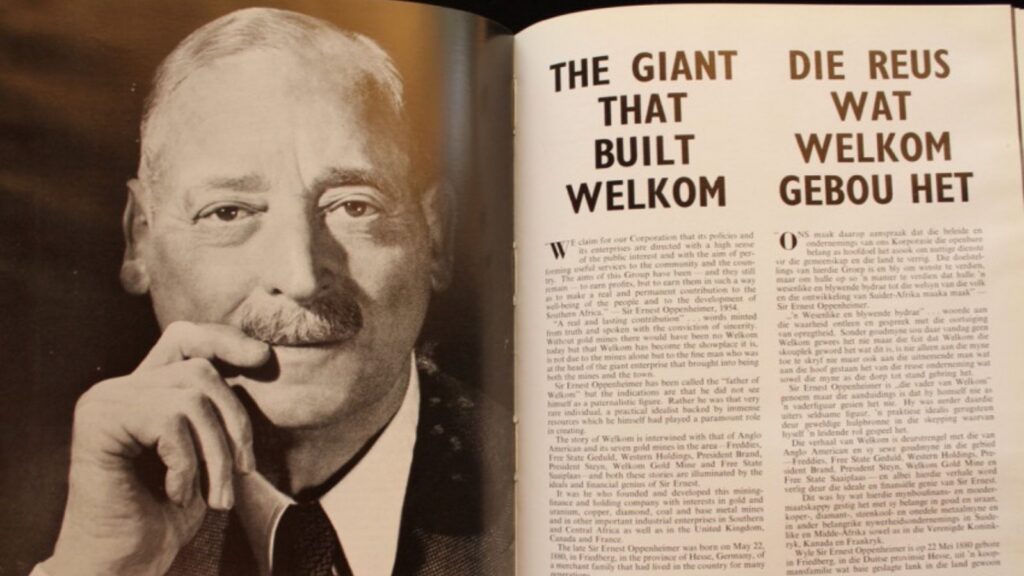
Anglo emerged from the Great Depression and WWII in good shape. Oppenheimer wanted to capitalise on any opportunities to make his company the world’s dominant miner.
For this, he turned to the Free State gold fields and began pumping money into eight mines. He wanted them ready to go in eight years.
Anglo had steadily acquired mining leases throughout its exploration process, allowing it to construct its mines deep underground without waiting for approval.
The construction process and the hope of gold attracted thousands of labourers and speculators to the area, bringing Welkom into existence. One year later, in 1948, it was declared a town.
“Through shared opportunity, we help create thousands of new jobs, while the migration of people to this new goldfield in the Orange Free State led to the establishment of a brand-new town, Welkom,” Anglo says in its company history.
This makes the reality sound much easier than it was. Anglo had built eight mines in eight years at depths of between 1,200 and 1,500 metres.
All of this was done without any roads, rail, or water infrastructure in the region. A town and eight mines had been built from scratch.
Welkom was primarily used to house workers in the mines, with the town made up of businesses that served the mines or sold goods to their workers.
Anglo has been clear throughout its existence that it sought family housing for black workers in Welkom, but the apartheid government denied its requests.
Oppenheimer’s investment in these mines proved instrumental in making Anglo American a global mining giant.
At their peak, 20% of the world’s gold came from these eight mines, which employed 180,000 workers and supported 1.7 million livelihoods.
One advantage Oppenheimer had in making this bet was that the Bretton Woods Agreement pegged the price of gold at $35 per troy ounce. There were no guessing games about its price until 1971.
This gave him the certainty to pump money into the gold fields, knowing that technological advances would make it efficient and profitable.
The aftermath
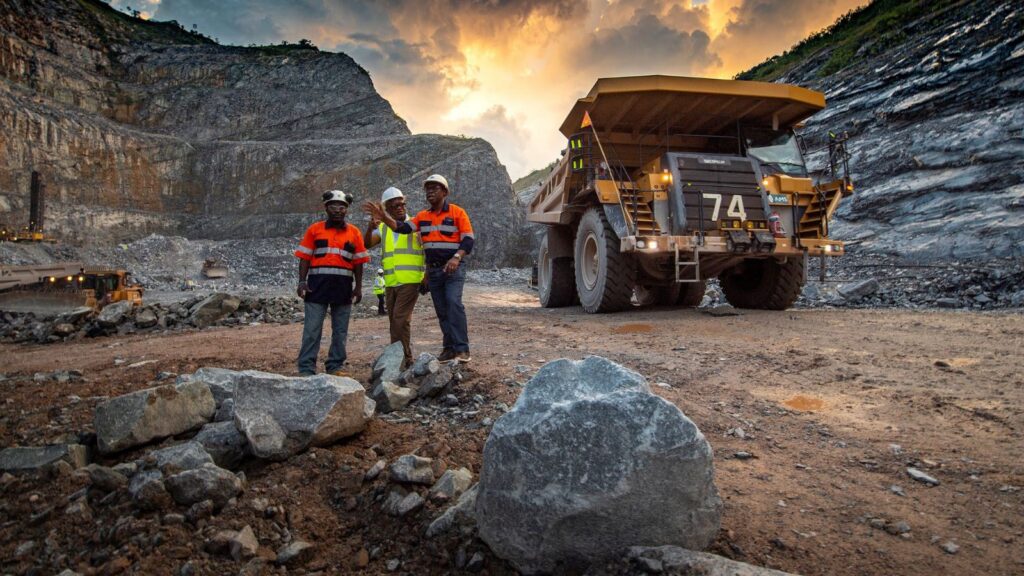
Despite all his effort and investment, it was not Ernest Oppenheimer who benefited the most from the gold fields. It was his son, Harry Oppenheimer.
Harry took the reins at Anglo without his father in 1957, two years after the eight mines in the Free State were completed.
This put him atop the world’s premier miner at the time, which was generating substantial cash every year.
Harry did not sit still and drove the transformation of Anglo into a global mining giant by investing in mines across Southern Africa and the United States.
By the time Harry resigned in 1982, Anglo had assets worth $15 billion. It was the world’s largest producer of gold, platinum, and vanadium.
The company operated across the United States, South America, Europe, Asia, and Australia.
Anglo dominated the South African economy, controlling over 50% of the companies listed on the JSE, and the company itself accounted for 60% of the JSE’s market capitalisation.
All of this was possible because of the eight mines in the Free State that funded Anglo’s global expansion and its investments in South Africa.
The gold assets were consolidated in the 1990s into AngloGold, which became a subsidiary in a similar form to Anglo American Platinum.
AngloGold would later merge with Ashanti to create one of the world’s largest gold-mining companies. Today, it is listed on the New York Stock Exchange and has a secondary listing on the JSE.
Valued at R656 billion, the mining giant was built by the immense success of Oppenheimer’s early bet on the Free State gold fields.


Comments