Federal Reserve hikes interest rates for the first time in three years


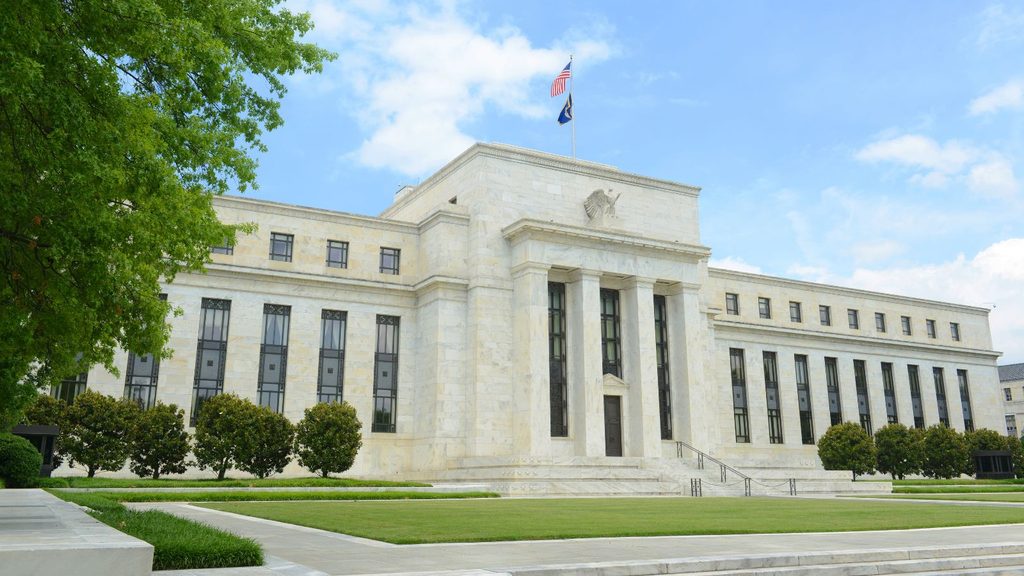
The Federal Reserve raised interest rates by a quarter percentage point and pencilled in an additional hike later this year, steps aimed at containing inflation that will test Chairman Kevin Warsh’s relationship with President Donald Trump.
“Today’s policy action will support a timelier return to the committee’s 2% goal,” officials said in a statement following the move on Wednesday, referring to inflation.
It was the US central bank’s first rate increase since July 2023.
The Federal Open Market Committee voted unanimously to increase the benchmark federal funds rate to a range of 3.75% to 4%. Stocks rose, and US Treasuries held their gains after the decision.
Heading into the decision, investors saw greater than a 90% probability the Fed would lift rates, based on pricing in federal funds futures, and they see another rate hike by year’s end.
In a new set of rate projections released Wednesday, Fed officials’ median outlook for interest rates at the end of 2026 rose to 4.1% from 3.8%, signalling growing support for a series of rate hikes.
Sixteen officials projected at least one additional increase this year, up from six in June, who saw at least two total increases in 2026.
The median projection for 2027 pointed to no additional rate hikes next year.
However, eight policymakers favoured moving another quarter point higher by the end of 2027 compared to where rates stand now.
As in June, when Warsh declined to submit his own forecasts, only 18 of 19 officials provided rate projections for 2026 and 2027.
Warsh is scheduled to hold a press conference at 2:30 p.m. in Washington.
The rate increase comes after the Bureau of Labour Statistics reported last week that core inflation rose at a hotter-than-expected pace in August.
That added to growing concern that inflationary pressures may be broadening beyond the temporary effect of tariffs and the Iran war’s impact on energy prices.
With their decision to raise rates, policymakers also defied Trump, who recently threatened to escalate his trade wars if the Fed doesn’t lower interest rates.
On Sunday, he repeated his argument that US borrowing costs should be the lowest in the world.
Warsh warned last month that inflation was not meaningfully slowing, opening the door to policy tightening.
Friday’s inflation report prompted investors to view a hike as a near certainty.
In the committee’s post-meeting statement on Wednesday, officials again characterised inflation as elevated, yet also described the economy in positive terms.
“Productivity growth is strong, and capital investment is robust,” officials said. “Job gains have kept pace with the workforce, and the unemployment rate has changed little.”
Officials repeated a promise to deliver on price stability.
But even with the rate hike, they pushed out by one year their expectation for when inflation would return to 2%. The median forecast now sees it reaching that level in 2029.
Support for higher rates has been slowly building within the Fed all year. A
At their July meeting, officials left rates unchanged, but three regional Fed bank presidents dissented in favour of a rate hike.
Minutes from that gathering showed many officials indicated policy tightening would be necessary if inflation didn’t decline.
 Loading ...




Comments