Government slowly crushing South Africa’s R1 trillion hidden economy


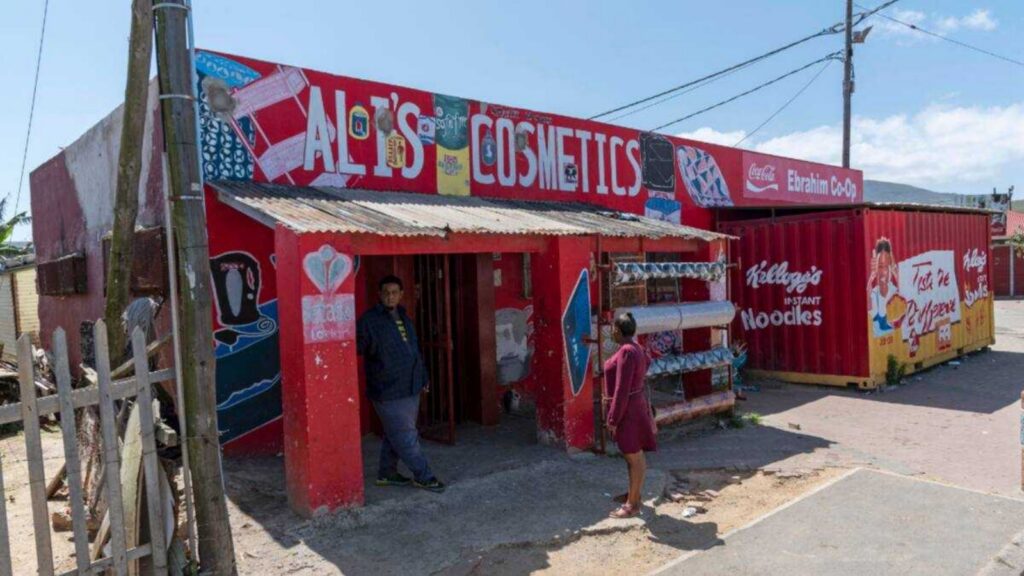
A new report from the Competition Commission has revealed the economic hurdles facing business owners in South Africa’s townships and rural areas.
The Commission published the first edition of its Rural and Township Economy Report on 3 September 2026, during the first day of its 20th Annual Competition Law, Economics and Policy Conference.
The report drew on prior research, the Commission’s own experience, and two nationwide surveys ordered by the Commission, consisting of a Business Survey and a Consumer Survey.
The study aimed to showcase the challenges facing rural and township economic development, as well as potential opportunities that could be unlocked in these areas.
These areas serve as the focal point for South Africa’s informal economy, which has been valued at over R1 trillion.
“These areas were structurally shaped by apartheid spatial and land policies that were explicitly designed to exclude black South Africans from mainstream economic opportunity,” the Commission said.
“The effects of these policies remain visible today in the geography of settlement, the location of businesses, and the concentration of poverty and unemployment.”
According to the report, 39% of survey respondents living in townships across South Africa’s eight metropolitan municipalities earn less than R3,500 per month.
This number sat at 47% among respondents in large townships outside the metros and 53% among respondents residing in South Africa’s rural communities.
The higher prevalence of lower-income households in South Africa’s townships and rural areas affects how businesses in these areas can operate.
Income levels determine what consumers can afford, where they can shop, and how far they can travel, among other important factors.
The report found that business activity in townships and rural areas is dominated by independent, informal, micro and small enterprises mostly owned by historically disadvantaged people.
According to the survey findings, 83% of these independent businesses and 94% of informal enterprises employ between just one and four people.
“A central finding of the report is that businesses in township and rural areas face a combination of market barriers and regulatory barriers,” the Commission said.
“These constrain entry, expansion, and effective participation. On the market side, the report identifies two especially important problem areas: procurement and route to market.”
Barriers blocking informal businesses

Through the report, the Competition Commission found that independent and informal businesses are highly dependent on intermediary wholesalers and small-scale suppliers.
This leads to higher input costs for many of them due to smaller order sizes, limited local supplier availability, and weaker bargaining power relative to larger, better-integrated national chains.
High-footfall formal retail space remains inaccessible to these businesses due to high rental costs, long-term lease terms, and property developers’ preference for established franchises.
As a result, many businesses in townships and rural areas operate through their own physical storefronts, which are often smaller and receive less footfall.
“The limited presence of smaller businesses in formal retail nodes should not be read as a lack of interest in business expansion or formalisation,” the Commission said.
“Survey evidence shows that while many smaller businesses are not currently operating in malls and shopping centres, they would like to do so, but market barriers prevent this.”
Similarly, access to online market channels is often blocked for these businesses by a lack of knowledge, inadequate infrastructure, or failure to meet the requirements to sell online.
In addition to these market barriers, the report indicated several regulatory barriers that prevent businesses in townships and rural areas from entering markets and scaling.
This includes complex and costly processes for obtaining municipal permits, business licences, and zoning approvals.
Additionally, many cite by-law compliance as a hindrance with regard to where and how these businesses are allowed to operate, as well as tax, labour, health, and safety obligations.
The Competition Commission recommended tackling this regulatory “red tape” as a first step to better allow township and rural businesses to scale their operations.
“In this area, the Commission could consider structured engagement to identify which regulatory burdens can be simplified, standardised or better supported,” the Commission said.
For this, the Commission said it would consult South Africa’s municipalities, SALGA, the DTIC, and the Department of Small Business Development, among others.
It also said it would encourage pro-competitive mechanisms such as collective buyer groups, shared logistics, and local sourcing initiatives to promote procurement and upstream access.






Comments