ATMs from big banks disappearing across South Africa


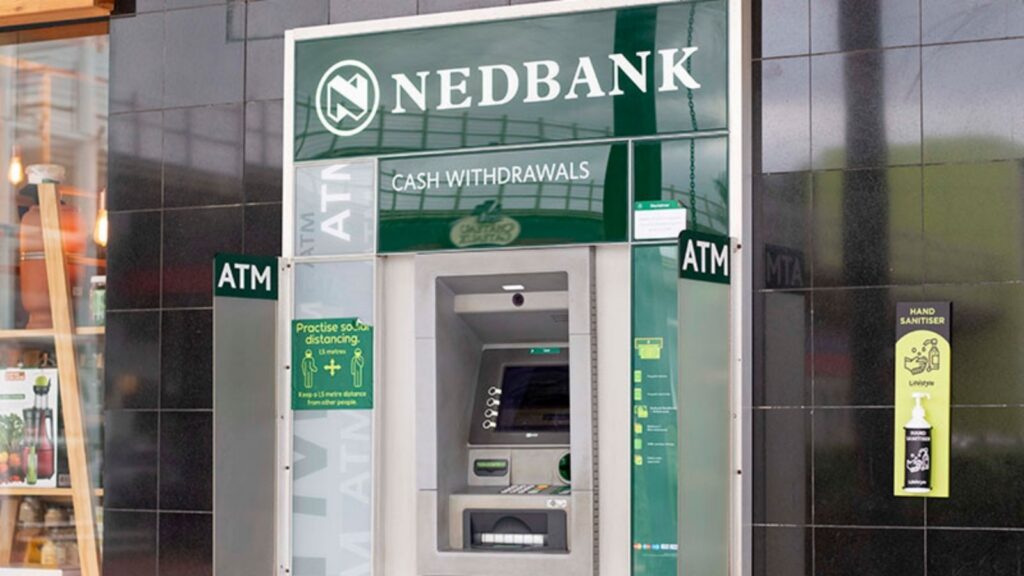
South African banks are increasingly shrinking their ATM footprints as the country moves closer to a cashless society.
To ensure that South Africans who still use cash can access it, especially in rural areas, the Reserve Bank is looking to roll out white-label ATMs nationwide.
Esri South African senior account manager Laurette Coetzee said the country is undergoing a shift towards digital banking.
This shift has been supercharged by the launch of digital-only banks in South Africa, with institutions such as Discovery Bank and Bank Zero opting to operate without physical branches.
The digitalisation of South Africa’s economy has also led traditional banks to reduce their physical footprints, both by closing ATMs and by opening smaller branches.
Coetzee used Nedbank as an example, noting that the bank has reduced its ATM footprint in South Africa by 247 devices between 2021 and 2025.
The bank has also begun reducing the number of cash-accepting ATMs in recent years. This trend is not unique to Nedbank.
In August 2025, MyBroadband reported that Standard Bank, FNB, and Absa have also been shrinking their ATM networks.
Between 2019 and 2024, Standard Bank, FNB, Absa, and Nedbank have reduced their ATM networks by a combined 8,516 machines.
The banks have referred to this as “rightsizing” their networks, as the high cost and operational burden associated with ATMs becomes increasingly incompatible with the shift towards a digital economy.
The Reserve Bank recently estimated that the annual cost of using cash in South Africa is R90 billion, a burden largely shouldered by consumers.
This encapsulates both direct costs, which account for R43.5 billion, and indirect costs, which constitute R46.1 billion.
ATMs account for R21 billion of the annual cost of cash, a huge expense that the Reserve Bank attributes to the high operational demands of maintaining an ATM network.
To maintain an ATM network’s functionality and reliability, operators must pay for constant cash replenishment, deposit-clearing services, balancing, and first-line maintenance.
The table below shows how Nedbank’s ATM network has changed from 2021 to 2025, courtesy of MyBroadband.
| Year | ATMs |
|---|---|
| 2021 | 4,261 |
| 2022 | 4,334 |
| 2023 | 4,199 |
| 2024 | 4,105 |
| 2025 | 4,014 |
| Change from 2021 to 2025 | -247 |
New ATMs set to roll out across South Africa
While banks moving away from ATMs makes sense from a business and financial perspective, Coetzee said it does not remove the importance of location.
“In many parts of South Africa, particularly rural communities and areas where the informal economy is strong, people still depend on access to cash and face-to-face banking services,” she said.
“When banks review their physical networks, they should carefully evaluate where branches and ATMs are most needed.”
The Reserve Bank refers to areas where South Africans need cash but cannot access it as “cash deserts”.
As banks increasingly shrink their ATM footprints, the Reserve Bank is hoping to prevent the emergence of more cash deserts, with rural areas likely to be most affected.
The central bank’s solution is to introduce white-label ATMs in South Africa, which will act as non-branded cash access points.
Coetzee said these white-label ATMs offer an opportunity for South Africa to rethink its banking network across institutions rather than treating each bank’s footprint separately.
“Shared infrastructure could be positioned according to community need, helping to reduce operating costs while protecting financial inclusion,” she said.
“Optimising the location of these shared facilities ensures they are placed where they maximise accessibility, transaction volumes, and community benefit.”
Looking forward, Coetzee said digital banking and physical banking should be viewed as complementary components of the same customer strategy.
“The strongest approach is likely to be a hybrid one, where digital services are supported by a carefully planned physical network that reflects how people live, travel, and transact,” she said.


Comments