Turning R100 into R229,000


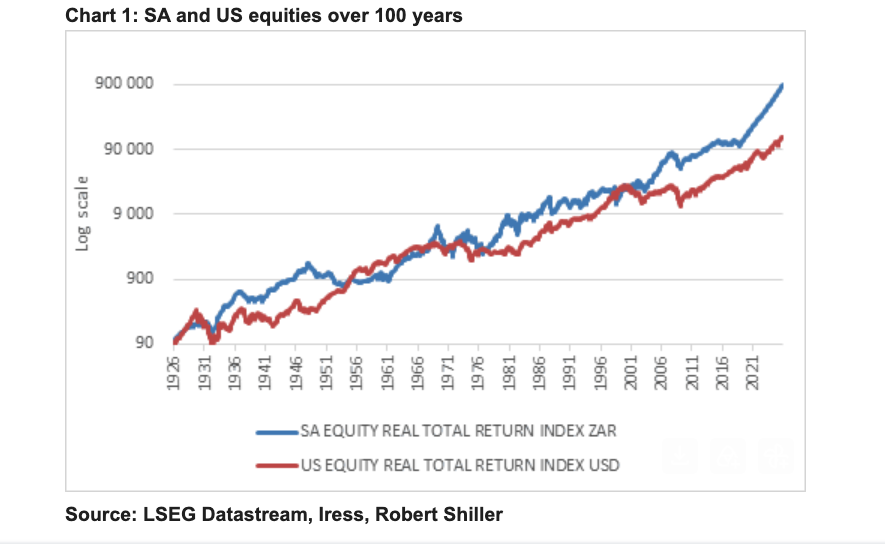
South Africa’s stock market turned R100 of today’s money into R229,000 over the past 100 years, with dividends reinvested.
This is compared to the United States’ stock market, which turned $100 dollars into $317,000 over the past century.
While it is highly unlikely anyone will stay invested for 100 consecutive years, Symmetry chief investment strategist Izak Odendaal explained that this shows the power of compound interest.
Perhaps more importantly, it shows the power of staying invested through wild swings in sentiment and several boom and bust cycles.
These returns occurred during a period with the Great Depression, World War II, the rise and fall of the Berlin Wall, globalisation, and several wars in the Middle East.
In South Africa, the past century included the rise and fall of apartheid, global isolation and integration, political uncertainty, and multiple gold booms and busts.
“At no point did it feel inevitable that the market would continue rising, just as it doesn’t today with geopolitical tension and artificial intelligence and many other things to worry about,” Odendaal said.
But the market did continue rising, and investors continued to benefit if they left their money invested in equities alone, despite what was happening at the time.
“Where do these riches come from? Not from the gods of Olympus, but from the magic of compound growth,” Odendaal said.
“Equity prices are driven by sentiment in the short term and can fluctuate wildly over days, weeks and months.”
“But when we start talking about years and decades, equity prices rise because the profits of the underlying companies grow over time.”
Odendaal explained that companies can capture value from inflation, and they continuously look for innovative ways of growing their revenues and expanding their margins.
A portion of the profits they generate is ploughed back into growing the business, and the rest is paid out as a dividend.
Investors can use these to buy more shares that will pay more dividends, to buy more shares and so on. This creates a virtuous cycle for growth.
Why it is hard
Staying invested sounds incredibly easy on paper, but in reality, it is very difficult, as human emotion plays the greatest role in determining the outcome.
Odendaal explained that the primary reason that most people do not do this is that there are more interesting and pressing things to spend money on.
“Many people don’t earn enough money to set anything aside once the basics are covered, but others prefer the instant gratification of a new car or holiday,” he said.
“Avoiding temptation is key, just like the Odyssey. The most famous episode is the Song of the Sirens, which was so beautiful that it inevitably lured men to their death.”
Odendaal said modern investors face many such Siren songs, including tempting things to spend money on.
Increasingly, investors are also exposed to get-rich-quick schemes that disguise themselves as legitimate investments that can make individuals wealthy.
“Bitcoin is a recent example. However, speculative behaviour is not confined to cryptocurrencies or tulips as was the case in the Netherlands in the 1600s,” he said.
“Mainstream equity markets have also seen bubbles, memorably the internet bubble of the 1990s, and investors need to be careful of being sucked in by hype.”
Once investors have invested money, it all becomes about handling the emotional swings of the market’s rises and falls.
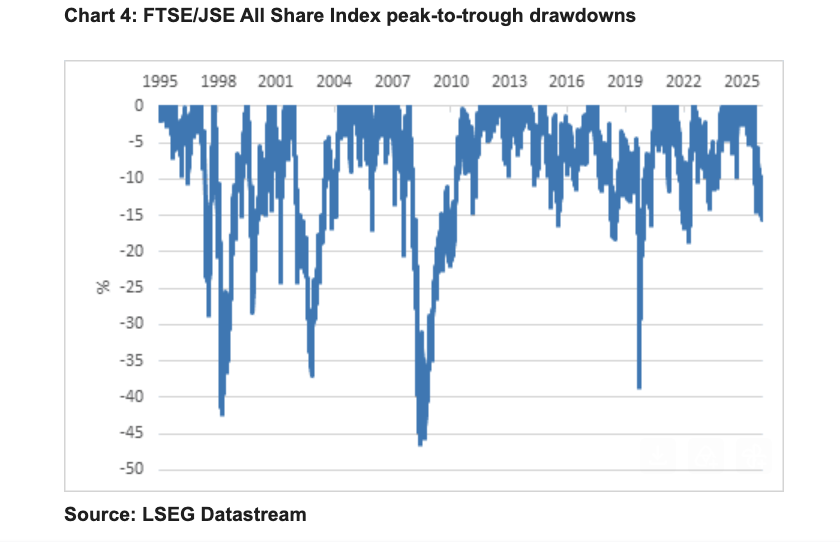
Odendaal explained that the volatility of the equity market scares many people off, especially during bear markets where peak-to-trough declines are 20% or more.
This often results in investors selling out of their positions when there is a downturn in the market. This locks in their losses and disrupts the compounding process.
“There is good news. These equity drawdowns present great buying opportunities. Yet human behaviour works against us,” Odendaal said.
“While malls get very crowded during sales events like Black Friday, people run the other way when markets go on sale.”
An easy way to get around this is to make regular purchases, like a monthly contribution, which ensures that you are buying even when the market falls, thereby getting more shares for each rand.





Comments