South Africa’s oldest company is disappearing in front of everyone’s eyes


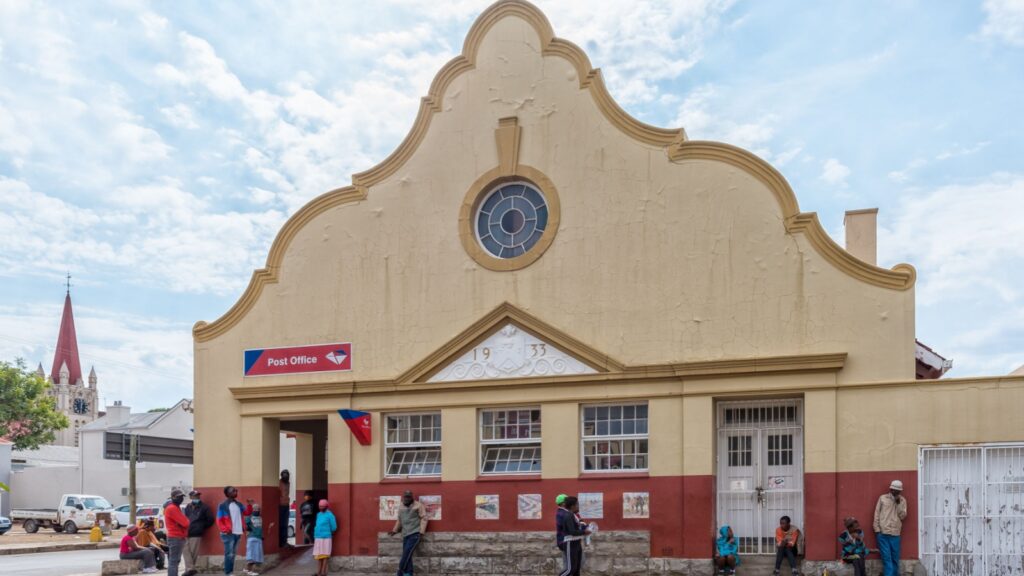
The South African Post Office (SAPO) is disappearing from the lives of people across the country as it closes branches and fails to provide basic services.
This has resulted in it being replaced by private-sector alternatives, providing a warning to other state-owned enterprises (SOE) of what happens when they fail to deliver services.
Companies such as PostNet, Pudo, Paxi and logistics operators in the form of The Courier Guy and other players have eliminated the need for the Post Office in most parts of South Africa.
The institution, which is South Africa’s oldest company, cannot compete with these players and is slowly having its presence whittled down.
Founded in 1792 in Cape Town, the Post Office has served South Africans for 234 years and has a branch network that cannot be replaced.
Over the past 234 years, the Post Office has built a presence in nearly every town in South Africa and can be reached by every community in the country.
This was extremely valuable in a world without modern technology, where the Post Office would often be the only touchpoint for South Africans with the national government.
The Post Office originally began with a single room in the pantry at the Castle of Good Hope in Cape Town, with a handful of people charged with sorting mail.
Its expansion closely followed that of South Africa, with the Post Office opening branches in Kimberley and Johannesburg after the discovery of diamonds and gold.
This also saw the institution invest in railway cars to transport mail and a bank. The bank was managed separately from the Post Office but used its real estate portfolio to serve clients.
South Africa’s Post Office operated on the cutting edge for most of its history, becoming one of the first to introduce four-digit postal codes in 1973 and automated sorting machinery.
It also invested in telecommunications, building the network that would become Telkom after the Post Office’s corporatisation in 1991.
The corporatisation made the South African Post Office a state-owned company and enabled it to operate as though it were a business and not a government department.
However, this period also saw the Post Office begin to lose its monopoly, with it expected to compete against private companies and produce a profit as a normal commercial entity.
Thus, its corporatisation and the government’s unwillingness to maintain its monopoly on logistics laid the seeds for the Post Office’s eventual collapse.
Disappearing act
The Post Office, without government protection and endless resources, quickly found out that it could not compete against private companies directly.
All the effort and investment that had gone into building its extensive branch network and infrastructure made the Post Office extremely expensive to run and unwieldy.
Efficient Group chief economist Dawie Roodt explained that this kicked off the process of the Post Office being replaced by private couriers.
Roodt told State of the Nation that this is a cautionary tale for other SOEs who are going down a similar path of mismanagement and poor service delivery.
“The Post Office is a good example of what is happening at SOEs in South Africa. PostNet is taking over the Post Office,” Roodt said.
“The Post Office is just disappearing. It is gone. It is just not there anymore. The irony of this is that the private sector is taking over all of these things.”
The collapse of the institution occurred despite numerous attempts to save it and R15 billion worth of taxpayer-funded bailouts.
SAPO initially embraced technological advances in the early 2000s to make its operations more efficient and match the services offered by private companies.
However, as with many state-run institutions, the wheels began to fall off in the 2010s. The Post Office’s turn came after three years of strike action from employees in 2014.
In that year, the company posted a R1.5 billion loss and was placed under administration. The Auditor-General began asking questions about whether it could still be considered a going concern.
Businessman Mark Barnes was appointed as CEO of the Post Office in 2016, and it briefly looked as though it was turning the corner.
Barnes oversaw a consistent increase in the SAPO’s equity during his three-and-a-half-year leadership tenure.
When Barnes joined the SAPO in 2016, the enterprise had R10 billion in equity. By the time he left in 2019, this had increased to R16 billion.
During his time at the helm, Barnes unveiled ambitious plans to modernise the SAPO, making it an eCommerce and banking powerhouse to ensure its future viability.
Barnes did not have the time to make this a reality, as he resigned in August 2019 after a clash with government officials regarding the Postbank.
After Barnes left, the Post Office incurred consecutive losses and its asset base plunged to R4.5 billion while its liabilities surged to R12.4 billion.
This resulted in the institution entering a prolonged business rescue process, which has seen 4,342 employees lose their jobs and 336 branches closed.
While the Post Office survived, it is a shell of its former self. It now has 657 branches from a peak of 1,023 and 6,700 employees.






Comments