South Africa kissed R14 trillion goodbye


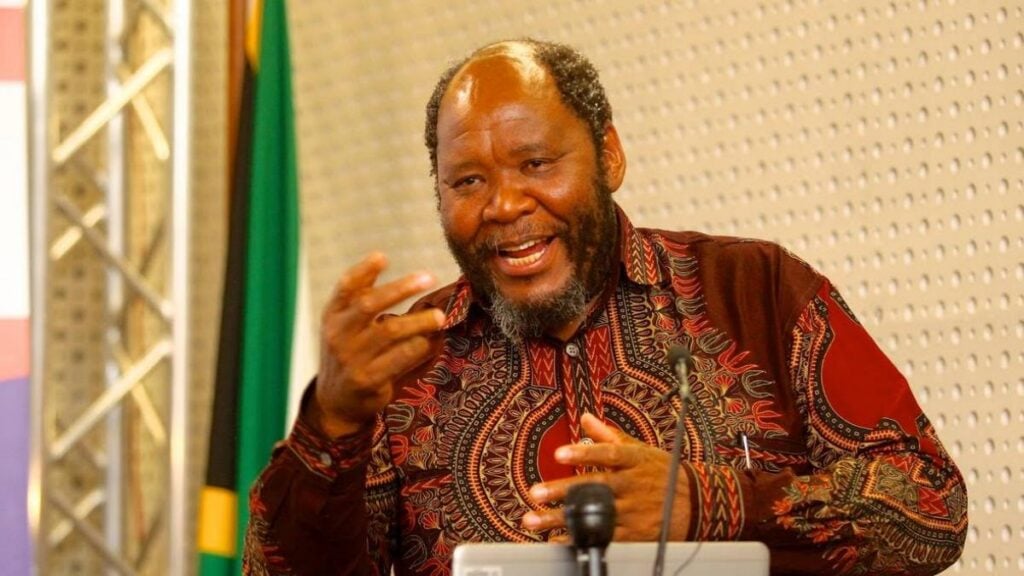
Pali Lehohla, the former Statistician General of South Africa, said that the country lost R14 trillion in gross domestic product (GDP).
Lehohla shared this information during a presentation at the Electoral Commission of South Africa (IEC) Thought Leadership Seminar on 21 July 2026.
He said that South Africa’s economic policies have been misguided, preventing growth, which, in turn, caused high unemployment.
“There is so much wealth in this country. However, we have restrained economic growth through poor policies,” Lehohla said.
He argued that mining and financial institutions have extracted R14.3 trillion from the South African economy over 32 years.
This value extraction, he said, artificially reduced South Africa’s potential economy from R21 trillion to R7 trillion.
“Blacks have lost R12 trillion, coloureds R715 billion, Indians R285 billion, and whites R1.3 trillion,” Lehohla said.
He said that the current government has no understanding of the economy. “They cannot see the bigger picture or abundance,” he said.
“The government officials are always looking to steal. They have no interest in anything to grow the economy.”
He said this economic mismanagement has forced South Africa to borrow from the International Monetary Fund (IMF).
“Until recently, South Africa did not have to borrow money. We used our own resources to get the country back on its feet. Now, we are borrowing from everybody,” he said.
He argued that the economic mismanagement in South Africa has essentially stolen money from young people.
“We have taken R1.5 trillion from them in the last 32 years. This is the democracy we are presiding over,” Lehohla said.
South Africa’s economic growth is much worse than its peers

Lehohla’s view aligns with that of other economic experts, including Investec Wealth & Investment’s Osagyefo Mazwai.
He said the South African economy would look significantly different if economic growth had been in line with that of its emerging market peers since 2010.
Between 1994 and 2010, South Africa was one of the best-performing emerging markets, with growth averaging over 4% between 2004 and 2008.
Had it maintained the emerging market average of 4.5% since 2010, the country’s economy would be R4.1 trillion larger than it is now.
This would also have resulted in much healthier government finances, as the state would have collected an additional R5 trillion in cumulative taxes.
The additional tax revenue would have resulted in a much lower debt-to-GDP ratio, which is good news for any country.
South Africans themselves would also be far richer, with the country’s GDP per capita being above $20,000 on a purchasing power parity basis.
That is double the current level of $10,000, which means that living standards in South Africa would have been much higher.
However, instead of the emerging-market average of 4.5%, South Africa’s economic growth has averaged less than 1% over the past decade.
The country’s economic growth rate was lower than the population growth rate, which means that South Africans have been getting poorer.
For South Africa to return to the global average GDP per capita, its economic performance would have to drastically improve.
Mazwai estimated that to reach the global GDP per capita average, the country’s economy would have to grow by 3% to 5% in real terms over the next 10 years.
He warned that, should South Africa continue on this average-growth trajectory, the dislocation between South Africa and the rest of the world will worsen.




Comments