FlySafair hits a wall at OR Tambo International Airport


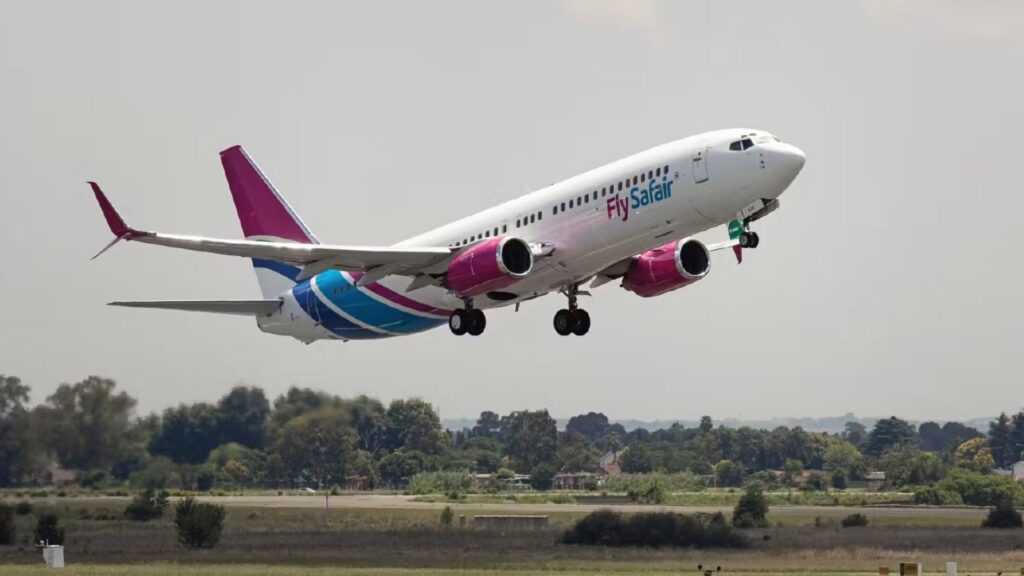
South Africa’s biggest domestic airline says air-traffic control constraints are forcing it to tailor flight schedules to take account of capacity restrictions at the country’s busiest airports.
FlySafair, which carries more than half of South Africa’s domestic passengers, said pressure on aircraft movements, particularly at Johannesburg’s OR Tambo International Airport, has become a constraint on network planning.
This is even as Air Traffic and Navigation Services works to restore staffing levels and modernise systems.
“Runway and air-traffic management capacity are now the low-cost carrier’s biggest operational constraints, principally at OR Tambo, where it shows up as departure delays and extended taxi times,” Chief Marketing Officer Kirby Gordon said.
ATNS acknowledged “operational challenges over the past few years” in an emailed response.
It also pointed to “significant progress that has been made in restoring and strengthening the country’s flight procedure capability and the resilience of the overall air-navigation system.”
While Safair hasn’t delayed or cancelled planned route launches because of ATNS, the limitations have become “a factor we now have to design our schedules around, which means we can’t always build the network we’d optimally like to,” Kirby said.
South Africa’s aviation sector has spent the past two years grappling with shortages of air-traffic controllers and lapses in maintaining instrument flight procedures — the pre-approved routes pilots rely on when visibility is poor.
More than 340 procedures expired or were suspended last year after ATNS failed to complete their maintenance on time, contributing to repeated flight delays and, in some cases, cancellations during poor weather.
Transport Minister Barbara Creecy appointed an expert intervention team in late 2024 after the problems escalated.
Its findings pointed to critical shortages of air-traffic controllers, unreliable communications and navigation systems, suspended instrument procedures and weaknesses in safety governance.
While the government has begun recruiting staff and upgrading systems, it warned earlier this year that many procedures wouldn’t be restored before temporary exemptions expired, requiring authorities to prioritise the country’s busiest airports.
Similar air-traffic control staffing shortages have disrupted operations at airports around the world, from Newark to Sydney.
“Flight schedules should be developed with due regard to operational realities and safety considerations, and not solely on commercial objectives,” ATNS said.
“Unrealistic scheduling assumptions can contribute to operational inefficiencies, stakeholder frustration, and increased safety risk for both pilots and air traffic controllers.”
Despite the problems, Gordon said South Africa continues to maintain a strong aviation safety record, and the industry and ATNS remain aligned on ensuring it is never compromised.
ATNS’s challenges are adding to broader pressures on airlines. FlySafair has said weaker demand following fuel surcharges introduced as oil prices climbed because of the US-Iran war has made expansion less attractive, and fuel costs have weighed on margins.
For now, what the industry needs is stability and certainty, Gordon said. “A stable, well-resourced air-traffic system serves all of us.”






Comments