South Africa heading for widespread social unrest


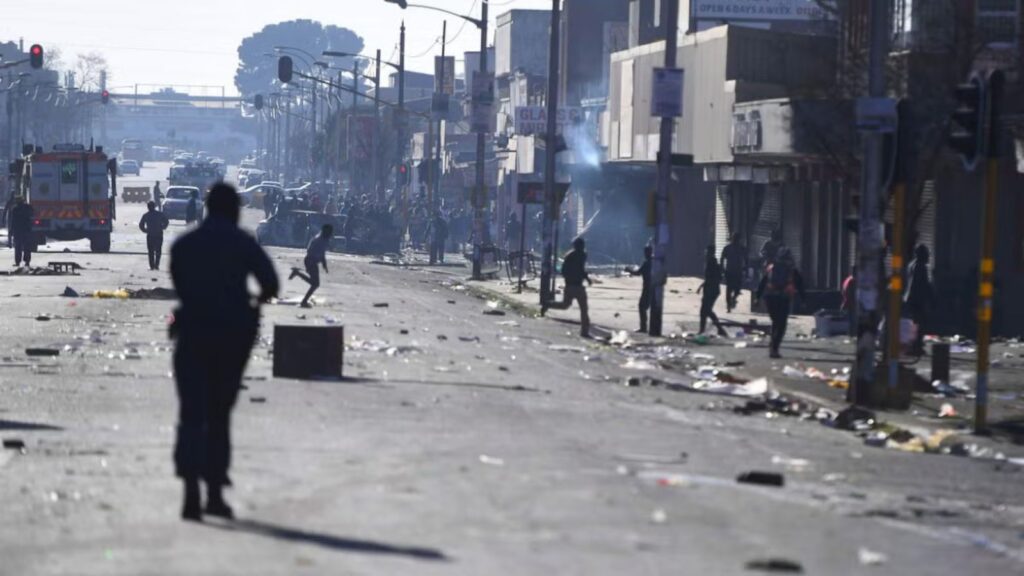
South Africa is on the edge of widespread social unrest as the number of service delivery protests rises to over 300 a year.
A growing share of these protests is turning violent, indicating a severe decline in state capacity and the police’s inability to manage protests and unrest.
Frans Cronje Private Clients revealed in its recent The Shadow State Rising report that there has been a surge in public protests since 2008.
The firm argues that this is due to South Africa’s stagnant economy, which has grown at an average of 1% per annum for the past 15 years.
This has resulted in growing dissatisfaction with the status quo in the country and falling support for the African National Congress (ANC).
So far, rather than switching allegiance to a new party, thousands of South Africans have taken to the streets to voice their unhappiness.
The rise in protest action has coincided with the emergence of a shadow state that is effectively running a parallel country and economy to the legitimate version.
This state is highly organised and operates according to its own rules, which are enforced without any oversight from the central government.
The combination of these two elements is of great concern to Frans Cronje Private Clients, as it could result in more organised forms of violence to destabilise the state.
Increasingly, the state also lacks the ability to combat these illicit traders and criminal syndicates due to historic mismanagement and destruction of government institutions.
The firm revealed that the consequence, so far, has been a 500% rise in public protests from 2008 to 2025 as service delivery collapsed.
It also noted that the share of those protests turning violent has risen from under 10% to over 30% in the same time period.
This reflects a fraying social contract and declining state legitimacy, it said. It also exposes the state’s inability to combat organised violence.
As protests become more violent, there has also been a reversal in the decline of the murder rate in South Africa. There are 44 murders per 100,000 people in the country.
Local government is to blame
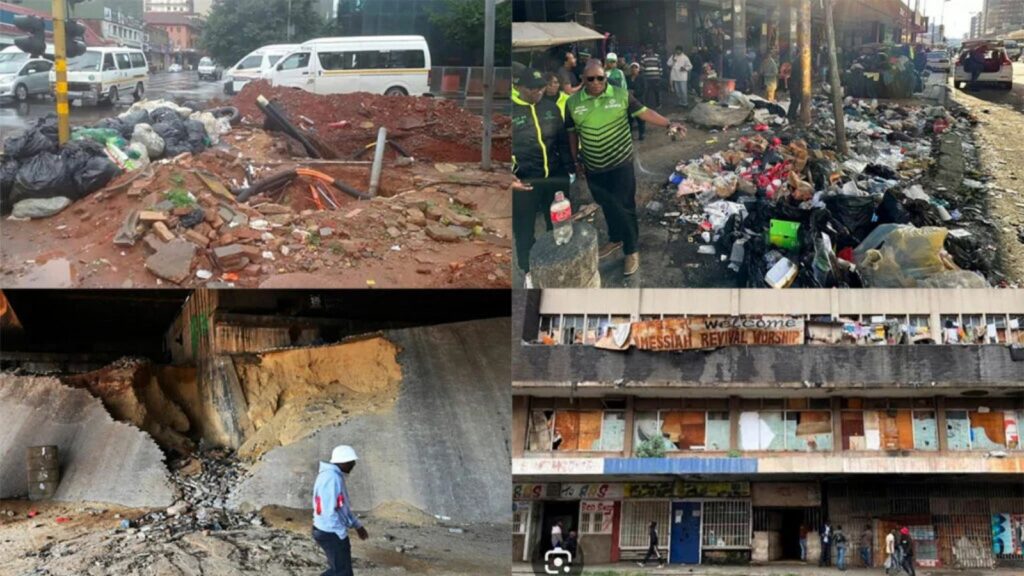
Much of the recent rise in violent protest action is due to the collapse of South Africa’s municipalities, which are responsible for the delivery of most services in the country.
Significant progress has been made in improving things at a national level, from the state’s finances to a lower inflation target and rising disposable income.
South Africa appears to have turned the corner and is exiting its lost decade of little to no economic growth.
Standard Bank chief economist Goolam Ballim described these as directional improvements earlier this year, with a miracle unlikely to occur in 2026 or 2027.
Crucially, however, these improvements place South Africa on the right path for faster economic growth in the near future.
Ballim also explained that this does not necessarily translate into improving sentiment on the ground among ordinary people who are not exposed to financial markets in a meaningful way.
The overall feeling in South Africa is still one of frustration, as many do not ‘feel’ policy changes or improvements at a national level.
Instead, they more vividly experience local government failures, such as electricity not working, water not running, and the collapse of infrastructure.
“Local government determines macroeconomic outcomes to a significant extent, so it is critical. The functioning of local government is what touches society in a universal way,” Ballim said.
“Society does not really touch policy, national policy, even though it matters enormously. It is not something they feel as viscerally as local government.”
Thus, while things appear to be improving at a high level in South Africa, dissatisfaction remains high on the ground.
This is also what makes the looming local government elections so vital for South Africa, as they are likely to determine the performance of the economy and the satisfaction of citizens to a significant degree.
Ballim pointed to the decline in democratic participation as a concerning trend, indicating that South Africans do not believe electoral change can drive meaningful improvement in their lives.
As a result, they tend to turn to protest and disruption as means of driving change in their municipalities, as the government has proven more responsive to this.
“Over the last few election cycles, South Africans have become disenamoured with elections. Participation has plummeted to 46% of registered voters and 30% of eligible voters,” Ballim said.





Comments