Cyril Ramaphosa has made South Africans poorer


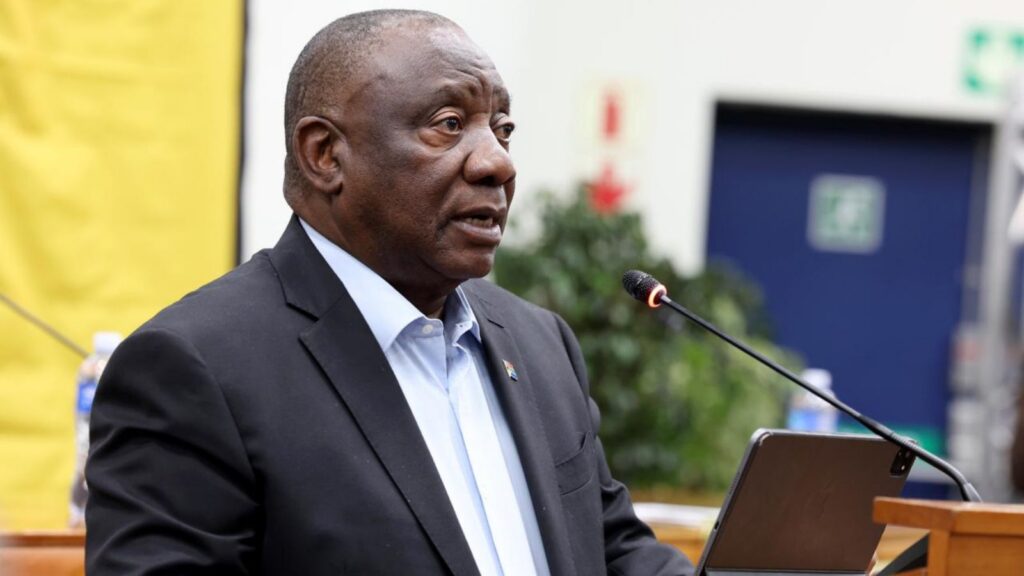
South Africans are materially worse off under President Cyril Ramaphosa than they were prior to his presidency, despite some positive changes.
Citizens are fundamentally poorer due to the country’s stagnant economic growth, which has averaged less than 1% under Ramaphosa.
This growth rate is worse than that of any of his predecessors and is well below the rate of growth in the country’s population.
As a result, South Africa has been, on average, getting poorer every year under Ramaphosa. This has been compounded by collapsing service delivery.
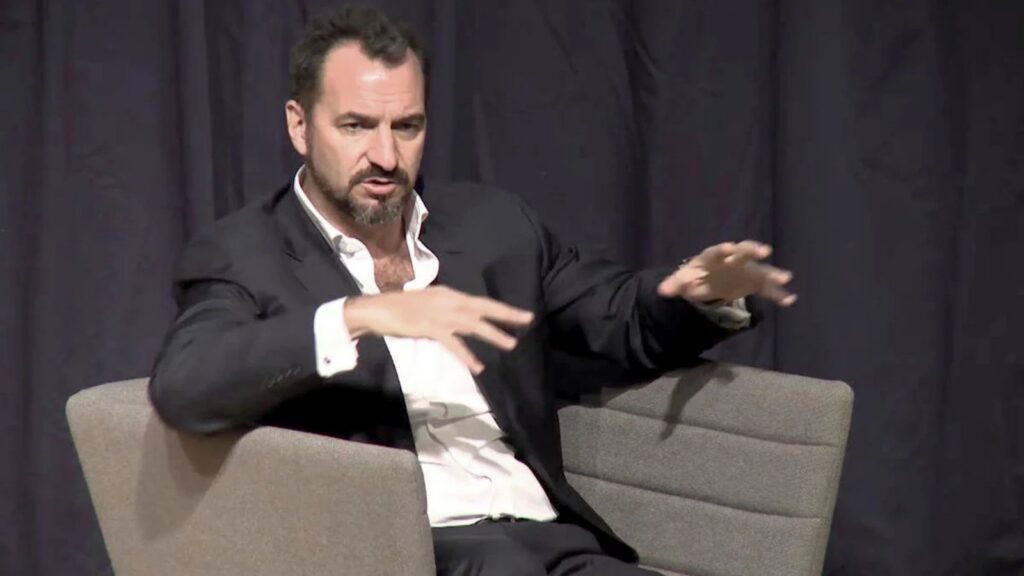
Former Goldman Sachs Sub-Saharan Africa CEO Colin Coleman explained that all Ramaphosa has managed to do is slow South Africa’s decline.
Coleman has a history of being a key business representative to the state. He was part of the CODESA negotiations to end apartheid and has more recently co-founded the Youth Employment Service.
Speaking to the State of the Nation podcast, Coleman said that South Africa is in a very bad place, but it is not broken yet.
He said that there is a high likelihood of significant political change in the coming years, which could be the making or the breaking of South Africa.
The country finds itself in this situation after a lost decade of low economic growth that has turned into a lost 15 years under Ramaphosa.
It began in the late 2000s with the replacement of Thabo Mbeki with Jacob Zuma, which brought South Africa’s era of rapid economic growth to an end.
Mbeki had overseen a decade of growth and fiscal consolidation that ensured South Africa was seen as a major emerging market economy alongside India, China, and Indonesia.
South Africa’s economy grew at an average annual rate of 4.1% during Mbeki’s tenure from 1998 to the end of 2007.
This created over two million jobs and helped the country post its first budget surplus in the 2008/09 financial year.
However, this would prove to be the last full budget surplus for the next 15 years and marked the peak of South Africa’s economic growth.
A lost 15 years
What followed was a lost decade of flat economic growth under the Zuma presidency, with state capture and mismanagement weighing on the economy.
Economic growth during the Zuma years averaged 1.5% per annum, below South Africa’s population growth rate of 1.6%.
The rise of Ramaphosa to the presidency was met with widespread optimism and hope that South Africa’s economy would be revived.
This period, termed Ramaphoria, saw billions of foreign investments flow into the country and financial markets respond positively.
Ramaphosa made all the right noises, promising the unbundling of Eskom, an end to corruption, increased private sector participation in the economy, and the rebuilding of the state.
However, eight years later, the country’s economy is worse off than when Ramaphosa took charge, Coleman said.
“What President Ramaphosa is trying to do is to return South Africa to days with faster economic growth and greater investment,” Coleman said.
“He has not done that. What he has managed to do is slow the decline of South Africa. He has managed to turn things around in some respects.”
Coleman pointed to the example of Eskom’s restructuring, improved fiscal health, and some progress being made in the logistics sector.
“But, by and large, the overall state of our country is materially worse today than it was when he took over,” Coleman said.
“He has not managed to turn it around. That is just an objective statement, which is disappointing to say the least.”
Coleman said South Africa’s challenges are multifaceted, with one policy or individual being to blame, but rather a combination of factors.
This makes it very difficult to get South Africa out of this quagmire, with it requiring significant reform and an extended period of positive momentum.
The poor performance of South Africa’s economy under Ramaphosa can be seen in the table below.
| Leader | Tenure | Average Annual Real GDP Growth Rate |
| Louis Botha | 1910–1919 | 2.8% |
| Jan Smuts (1st Term) | 1919–1924 | 1.8% |
| J.B.M. Hertzog | 1924–1939 | 4.2% |
| Jan Smuts (2nd Term) | 1939–1948 | 4.5% |
| D.F. Malan | 1948–1954 | 4.6% |
| J.G. Strijdom | 1954–1958 | 4.7% |
| Hendrik Verwoerd | 1958–1966 | 5.1% |
| John Vorster | 1966–1978 | 3.4% |
| P.W. Botha | 1978–1989 | 1.8% |
| F.W. de Klerk | 1989–1994 | 0.6% |
| Nelson Mandela | 1994–1999 | 2.7% |
| Thabo Mbeki | 1999–2008 | 4.1% |
| Jacob Zuma | 2009–2018 | 1.7% |
| Cyril Ramaphosa | 2018–Present | 0.9% |


Comments