South African farmers declare war


South African farmers have condemned the International Trade Administration Commission’s (ITAC) decision to keep the reference price of wheat at its current value.
The decision was announced in the Government Gazette on 17 June 2026 and followed a 19-month investigation by ITAC into the issue.
An application to adjust the wheat price was initially submitted by Grain SA, together with the South African Cereals and Oilseeds Trade Association (SACATO), in June 2024.
The applicants called for the dollar-based reference price (DBRP) of wheat to be increased from $279 per tonne to $289.
Tariffs on imported wheat are typically increased whenever the price of wheat drops below the $279 per tonne DBRP benchmark for a period of more than three weeks.
Adjusting that benchmark up to $289 per tonne would have made tariff adjustments on wheat imports more frequent, providing better protection for local wheat farmers.
Additionally, the applicants requested that the implementation of wheat tariff adjustments be automated similarly to the monthly fuel price adjustments, to reduce delays following trigger events.
After concluding its investigation into the matter, ITAC announced that the current DBRP of wheat would remain unchanged at $279 per tonne.
The commission said that the current price provided sufficient protection for domestic wheat producers, whilst also ensuring the affordability of basic food products such as bread.
And while ITAC acknowledged the issue around tariff implementation delays, it said an automated mechanism was not possible under current regulatory constraints.
As such, none of the major requests made by Grain SA and SACATO was approved, which Grain SA CEO Tobias Doyer called a severe blow to the South African wheat industry.
“We are not satisfied with this outcome, and we do not accept the reasoning on which it is based,” Doyer said. “The decision fails to reflect the reality of wheat farms across South Africa.”
“Producers are under pressure from rising input costs, volatile markets, high financing costs, logistics challenges, and unfair internal competition.”
Doyer said ITAC’s assertion that the current tariff framework provided sufficient protection for local wheat producers was simply untrue and did not take the above challenges into account.
Farmers prepare to take action
Following ITAC’s announcement to keep the DBRP at its current price point, Grain SA said it would explore all available options to oppose the decision.
In a statement, the organisation said it would intensify its engagement with government and industry stakeholders in an attempt to overturn ITAC’s ruling.
While the group said it would remain committed to constructive engagement, it also warned that it would not stay silent on issues that threaten the sustainability of local wheat production.
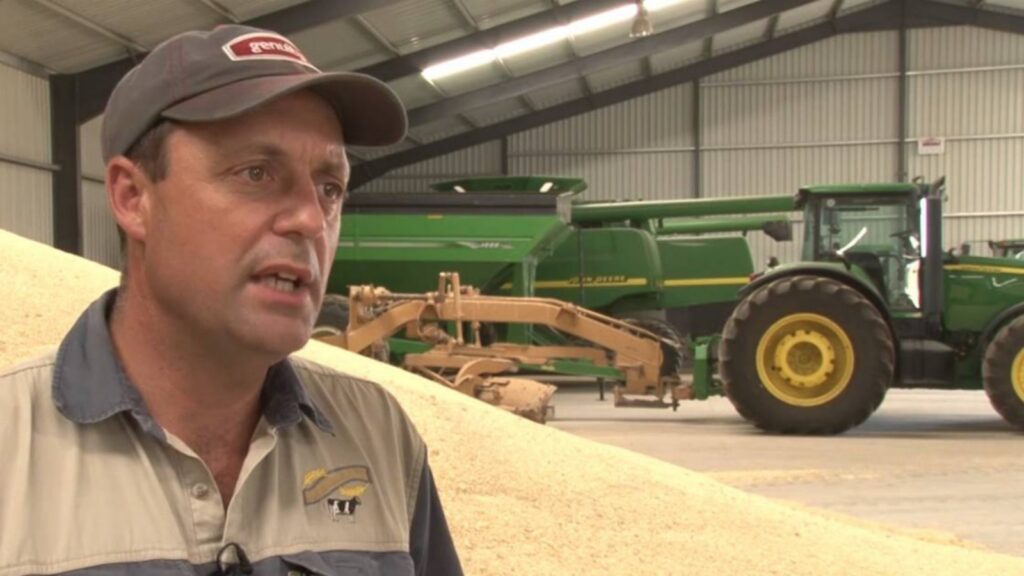
In an interview with 702, wheat farmer and Grain SA board member Koos Blanckenberg said the application stemmed from increasing imports and declining profitability for local wheat producers.
“We’ve seen a 20% decline in our wheat price over the last 3 years,” Blanckenberg said. “Producers are not making money, so they are getting out of wheat production.”
“Local production is going to go below 50% of our total consumption in South Africa. We asked for a $10 increase to give a better floor price for our producers to stay in business.”
This $10 adjustment would allow local wheat farmers to reclaim between R160 and R170 more on every tonne of wheat they produce, based on current rand-dollar exchange rates.
Additionally, Blanckenberg said this would result in only a 9-cent increase in the price of bread for South African consumers.
Blanckenberg warned that a decline in local wheat production and an increased dependence on imports would open up South African consumers to global price risks.
“There could be a war, like we’ve had in Russia or Iran,” Blanckenberg said. “Or if, for instance, we import out of Europe and they experience a massive drought, then prices rise.”
“Our consumers would be much more open to worldly problems such as wars and droughts, and I don’t think that is what we want for the South African economy.”




Comments