The government is taking more money from taxpayers


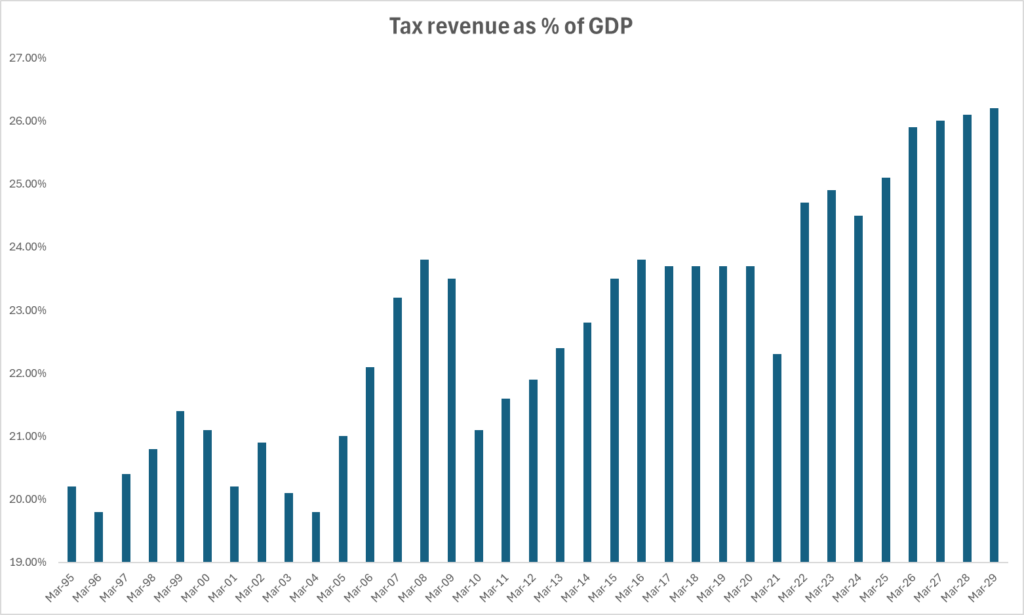
The government expects to increase South Africa’s tax-to-GDP ratio to its highest level in history, which means it will take more money from citizens than ever before.
Finance Minister Enoch Godongwana delivered his 2026 Budget on 25 February 2026, which showed that more tax was collected than expected.
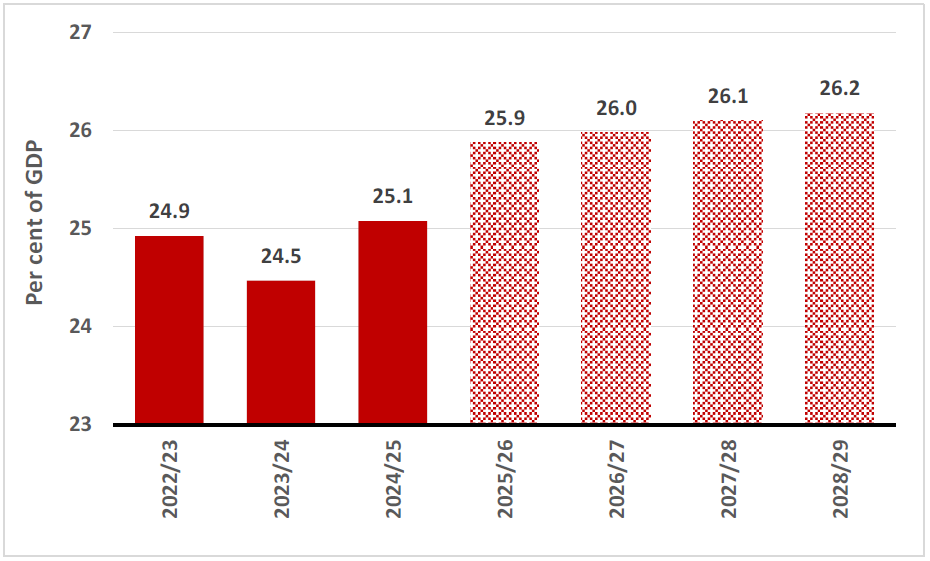
South Africa’s tax-to-GDP ratio increased from 25.1% in the 2025 financial year to 25.9% in the 2026 financial year.
The tax-to-GDP ratio is the total tax payments for a fiscal year as a fraction or percentage of that year’s GDP.
It also measures the overall tax burden for a given period. The higher the percentage, the bigger the tax burden on citizens and companies.
The International Monetary Fund, the World Bank, and other organisations use this ratio to analyse and compare countries’ tax systems.
In his 2026 Budget Review, the Finance Minister said that despite challenging economic conditions, South Africa’s tax system has performed well.
The tax-to-GDP ratio increased by 0.8% to 25.9% and is expected to reach 26.2% by 2028/29 as economic growth improves.
“Sustained investment and economic growth, and further improvements in tax administration, would support higher revenue collection,” Godongwana said.
Although this may seem positive, it shows that the government is extracting more money from the economy than before.
SARS is taking more money from hard-working South Africans and successful companies and giving it to the state.
South Africa’s government is known for mismanagement, corruption, and poor capital allocation. Simply put, it wastes a large portion of taxpayers’ money.
This is why money is far more valuable in the hands of citizens and companies than it is in the hands of the government.
The chart below shows South Africa’s expected tax-to-GDP ratio from the current financial year to the 2029 financial year.
Pay as little tax as possible
Renowned economist Dawie Roodt previously advised South Africans to pay as little tax as possible, as this is good for the economy.
He explained that taxpayers should object to the government’s overspending by using legal means to pay as little tax as possible.
“I encourage people not to break any laws but to make use of every possible loophole to pay as little tax as possible in South Africa,” he said.
“One rand in your pocket is worth much more than one rand in the pocket of the civil servants and the government.”
He added that the only way to stop politicians, and hence, the government, from excessive spending is to give them less money.
Roodt explained that politicians are under immense pressure to maintain or increase spending, which makes it difficult for them to implement fiscal discipline.
He cited the Social Relief of Distress grant, originally a temporary pandemic-era measure, which is still being paid to recipients.
“There is nothing as permanent as a temporary state expenditure item. Politicians find it nearly impossible to stop such programs once they are established,” he said.
He added that South Africa is facing a ballooning civil service wage bill, where the services delivered are of a very low quality.
“The state is a massive destroyer of capital, often borrowing long-term money to fund short-term current expenditure,” he said.
“This has led to a situation where South Africa pays nearly R14,000 per second in interest on outstanding debt.”
To fund all these items, the state is taking more money from citizens and companies. This, in turn, negatively affects economic growth.
The chart below shows South Africa’s tax revenue as a percentage of GDP.



Comments