South Africa’s tricky balancing act


South Africa is playing a tricky balancing act between the United States and China, with escalating tensions between the superpowers posing a serious risk to global and local growth.
Consequences for South Africa in choosing the wrong side, or choosing any side at all, could include declining investment and thousands of job losses.
While many of South Africa’s challenges are local in nature, resolving them could take years, and in the interim, the country cannot afford heavy blows to its key export industries.
South Africa is, in effect, being buffetted around by far larger global economies, with its fortunes as a small, open economy reliant on global trade and growth.
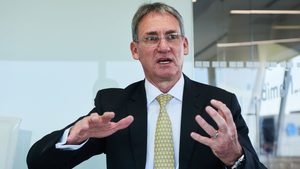
This is feedback from RMB chief economist Isaah Mhlanga and Allan Gray portfolio manager Thalia Petousis, who outlined the potential fallout for South Africa of an increasingly fractured global economy.
Speaking at Allan Gray’s Through the Noise conference, Mhlanga said that South Africa is already feeling the consequences of trade tensions and higher tariffs.
China is redirecting exports to markets outside of the United States, including South Africa, which has the potential to decimate local industries.
“We are going to see a flood of imports because of these tensions as China redirects exports away from the US, where they are now less competitive,” Mhlanga said.
“We are going to have job losses if we can’t diversify our export destinations quickly enough, bearing in mind that other countries are going to do the same.”
While China remains the largest consumer of South African exports, its economy has come under pressure in recent years.
As its economy slows, potentially accelerated by US tariffs, Chinese demand for exports will ease. This has the potential to push South Africa into a vicious cycle.
Lower commodity prices from lower demand in China will result in a balance of payments shock to South Africa and other African economies.
Due to this balance-of-payment shock, a reduction in commodity volumes and prices can weaken currencies. Weaker currencies lead to higher inflation, which can trigger higher interest rates.
Therefore, low commodity prices and volumes can foster a vicious cycle of reduced exports, a weaker currency, high inflation, tighter monetary policy, weaker consumer spending, weaker investment appetite, and slower growth.
This can also work in the inverse way, with stronger demand from China driving African currencies higher, resulting in lower inflation and faster economic growth.
South Africa cannot alienate the United States

While China may remain South Africa’s most important trading partner, the United States remains a vital export destination and, crucially, the financial capital of the world.
Over two-thirds of all investable capital is held in the United States, which makes it a significant source of potential investment that South Africa desperately needs.
Petousis said the global shift created by the rise of China is likely to play out over decades and not overnight, meaning that South Africa cannot be rash in choosing one over the other.
“We likely need a balanced foreign policy stance, engaging with both the BRICS nations and the West,” Petousis said.
“The US remains the world’s largest consumer market, accounting for roughly 30% of global consumption – a position that cannot simply be replaced by China, which has been unable to grow domestic consumption meaningfully.”
The failure to navigate the changing world order has the potential to derail South Africa’s economic recovery in the coming years.
Petousis said there are green shoots appearing in the areas of logistics and energy. However, reforms may take years to get off the ground and translate into economic gains.
Many of the Transnet rail slots awarded to the private sector will require new locomotives to be ordered, for which the lead time is three to five years.
Mhlanga said there are challenges in the short term for South Africa to grapple with, including navigating policy uncertainty after 2024’s global year of elections.
However, the medium-term outlook appears promising, with growth forecast to rise for South Africa as a result of structural reform initiatives.
Mhlanga also said he is encouraged by the collaboration between government and business, with greater confidence in the country dependent on a convergence of political willingness and business support.
 Loading ...



Comments