How much tax Vodacom CEO Shameel Joosub paid since 2022


Vodacom’s latest annual report revealed that Vodacom chief executive Shameel Joosub paid R31 million in tax over the last financial year.
This brings Joosub’s total tax contribution over the last four years, between the 2022 and 2025 financial years, to R119 million.
In 2022, he paid R30,380,345 in tax, followed by R28,951,296 in 2023, R27,783,793 in 2024, and R31,995,422 in 2025.
Vodacom’s chief financial officer, Raisibe Morathi, paid R14.1 million in tax in the 2025 financial year, slightly more than the R13.5 million she paid the year before.
This information was revealed in Vodacom’s latest financial results, which include a tax transparency report for the year ended 31 March 2025.
As part of its annual report, Vodacom also released a tax transparency report, which showed that the company paid R36.1 billion in taxes over the last year.
This figure represents the sum of total taxes borne, taxes collected on behalf of governments, and other payments made to governments.
The R36.1 billion public finance contribution included:
- R11.2 billion in corporate taxes, irrecoverable withholding taxes, and other direct taxes.
- R16.9 billion in employment taxes, telecommunication-specific excise duties, VAT, and airtime and mobile money levies.
- R8.0 billion in spectrum fees, business licence fees, and universal service fees.
These significant contributions to the state, which fund social programmes, education, healthcare, and policing, show the value Vodacom brings to the countries in which it operates.
Other large South African companies, such as MTN, Standard Bank, Nedbank, Remgro, FNB, Absa, and Discovery, also make similar contributions.
For example, MTN recently told parliament that it contributed R58 billion in tax revenue in South Africa over the last five years.
Despite these large tax contributions, companies are often lambasted for high profits and large salary packages paid to their top executives.
However, while politicians love targeting profitable companies and highly paid executives, they fail to mention that these are the state’s primary source of income.
South Africa’s latest tax statistics revealed that only 1,051 companies pay 72.3% of all company income tax in the country.
72.3% of company income tax was paid by companies with taxable incomes of more than R100 million, and 66.5% by large companies with taxable incomes of more than R200 million.
People working at these companies are also the largest contributors to personal income tax in South Africa
Approximately 978,140 South Africans, or 1.5% of the population, pay 60.9% of all personal income tax, the government’s largest revenue source.
Even more concerning is that only 235,542 South Africans, or 0.4% of the population, pay 33% of all personal income tax.
Instead of thanking this small number of people and companies for their contribution, the government paints them as dirty capitalists.
Well-known billionaire and South African-based Remgro and Switzerland-based Richemont chairman Johann Rupert best describes the situation.
“In Switzerland, I got a letter of ‘Thank You’ from the taxman. In South Africa, they harassed me for eight years.”
 Loading ...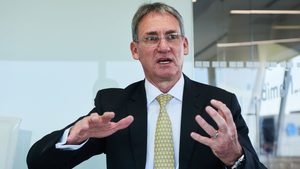



Comments