South Africans are dumping Mercedes-Benz and BMW


South Africa’s luxury German car brands are losing ground as buyers increasingly turn to more affordable alternatives, including Chinese vehicles that offer modern features at lower prices.
Audi and Mercedes-Benz have seen their monthly sales fall sharply over the past decade, while Chinese manufacturers have expanded their share of the local market.
Speaking on the CheckPoint podcast, economist and strategist Xhanti Payi explained that affordability pressures are changing how South Africans approach car ownership.
He said the shift is particularly relevant to middle-income households that need private vehicles because public transport is not a reliable alternative.
Data from the National Association of Automobile Manufacturers of South Africa (Naamsa) shows how far some premium brands have fallen from their previous sales levels.
In February 2013, Audi sold 1,512 vehicles in South Africa. By February 2026, its monthly sales had dropped to 319.
Mercedes-Benz sales fell from 1,574 to 459 over the same period. BMW Group, including Mini, recorded 1,237 sales in February 2026, compared with 2,423 in February 2013.
The declines are notable because South Africa’s overall new-vehicle market was of a similar size in the two periods. Total sales reached 53,179 units in February 2013 and 53,455 in February 2026.
This suggests that the reduced volumes at these premium brands cannot simply be explained by a smaller overall market.
Speaking on the podcast, Payi noted that Audi is struggling to make ends meet locally and is even seeking government support.
This pressure is being felt across traditional German luxury vehicles, which have historically appealed to South Africans looking for vehicles associated with status and success.
However, it should be noted that the figures reflect new-vehicle sales rather than all ownership changes. They do not necessarily mean that existing owners are abandoning German cars altogether.
Chinese cars are gaining popularity
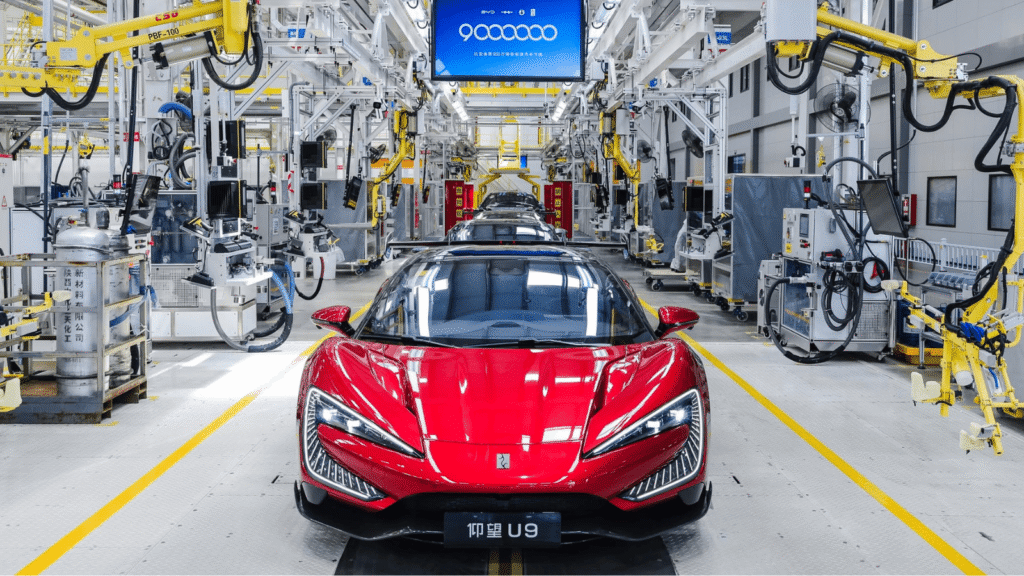
While traditional luxury brands have seen sales decline, Chinese manufacturers have been expanding rapidly in South Africa.
According to Naamsa, Chinese brands increased their share of the passenger-car market from 11.2% in 2024 to 16.8% in 2025.
The number of Chinese brands operating locally also increased from eight to 15 over that period.
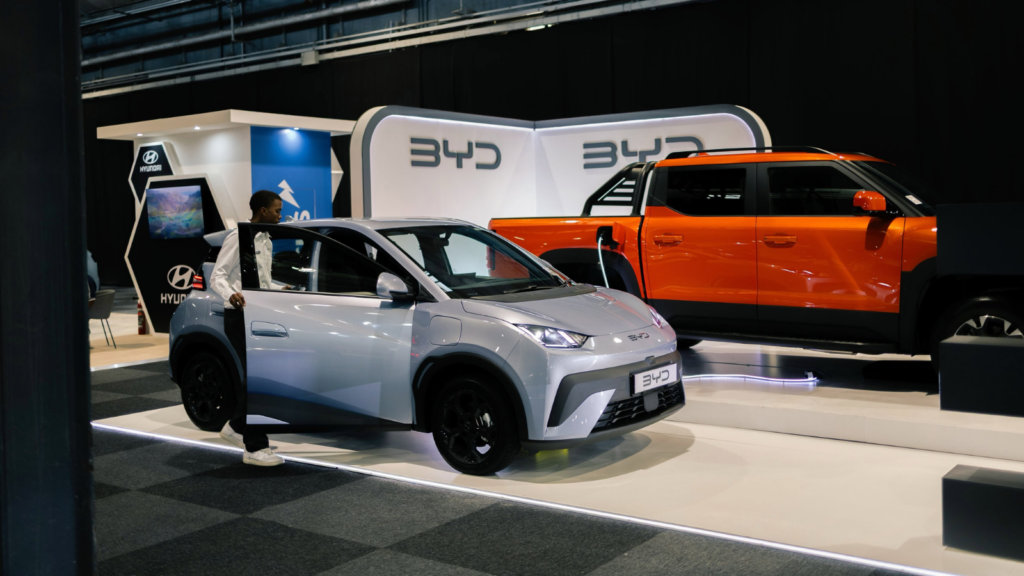
Manufacturers such as Chery, GWM, Haval, BYD, and Omoda & Jaecoo have gained attention by offering competitively priced vehicles with features previously associated with more expensive models.
These vehicles often offer technology-rich interiors, advanced driver-assistance features, and long warranties, giving buyers more options when comparing the value of different brands.
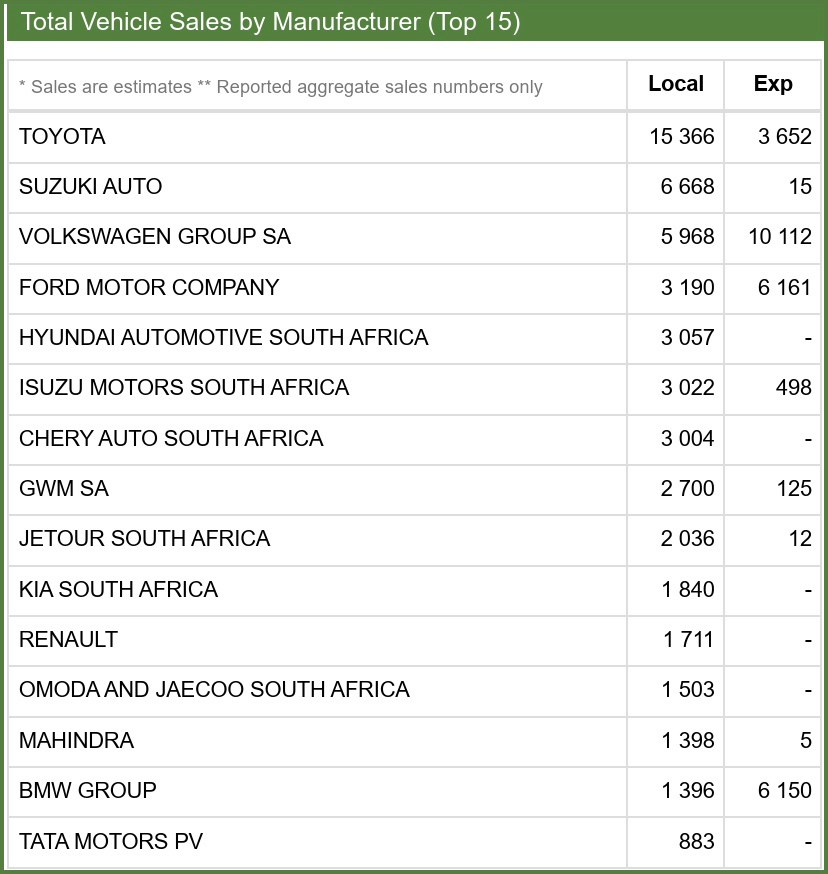
The latest stats released by Naamsa also showed that Chinese vehicle brands now account for three of the top 10 best-selling car manufacturers in South Africa.
Only one German car brand, Volkswagen, made the list, although it still outperformed all the Chinese brands.
Even anecdotally, Payi said Chinese manufacturers were becoming an increasingly visible presence on South African roads.
“Perhaps they are now the new way in which you still get to access a car,” he said, referring to the role vehicles play in signalling financial success.
This points to a shift in what some buyers may prioritise. Rather than paying a premium for a particular badge, motorists can choose a less expensive vehicle with modern features and a similar perceived level of comfort.
The change also reflects a wider automotive market in which affordability and value have become increasingly important considerations.
Payi explained that the pressure on premium German vehicles is linked to the financial strain facing South African households.
Private transport is often a necessity because public transport does not provide a sufficiently reliable alternative for many commuters.
Since households are increasingly under pressure, many now have to be even more deliberate about not only the vehicle’s purchase price but also the costs of financing, fuel, insurance, and maintenance.
The choice between a premium German vehicle and a more affordable alternative can significantly impact monthly expenses.
Payi added that Chinese cars are entering the market at a time when some German manufacturers are using promotions and incentives to attract buyers.
The growing availability of cheaper alternatives could make it harder for traditional premium brands to maintain their position among buyers who want an aspirational vehicle but cannot justify the higher cost.
That does not mean the German brands have lost all their appeal. Research from Cars.co.za’s 2026 industry report found that the Mercedes-Benz C-Class remained among the most searched-for used models on its platform.
This shows that interest in premium German vehicles remains, even as buyers weigh their options more carefully.