South Africa in a very dangerous situation


Renowned economist Dawie Roodt said South Africa is in a dangerous situation due to poor leadership, with police service leaders starting to point to the state’s failings.
Roodt referenced recent allegations by KwaZulu-Natal Police Commissioner, Lieutenant-General Nhlanhla Mkhwanazi, about rot in the criminal justice system.
He also pointed to the South African National Defence Force’s (SANDF) Rudzani Maphwanya visit to Iran, where he said the countries have common goals.
Mkhwanazi accused Police Minister Mchunu and Lieutenant General Shadrack Sibiya of colluding with criminal syndicates, effectively obstructing critical investigations.
He said these syndicates wielded influence across police forces, metro police, correctional services, prosecutors, and the judiciary.
Mkhwanazi alleged that criminal syndicates and their associates effectively control key parts of South Africa’s criminal justice system.
Roodt said that although it is good that these things are said, it should not come from a leader in the South African Police Service (SAPS).
Maphwanya’s visit to Iran and expressing solidarity with the country following a meeting with the army Commander in Tehran is more concerning.
The SANDF General highlighted that South Africa has been given a prioritised position in the Islamic Republic’s foreign policy.
The Department of International Relations and Cooperation distanced itself from Maphwanya’s remarks.
“The President should have fired him straight away,” Roodt said. “He cannot make these statements regarding South Africa’s political alignments. It is not his job.”
“What it tells me is that the President and the government are very weak, and I will not be surprised if we see dramatic changes.”
Roodt added that he is concerned about the political stability in South Africa, referencing the SAPS and SANDF.
“I become concerned when a senior police officer or anybody from the South African National Defence Force makes such comments,” Roodt said.
“I am uncomfortable that we increasingly see senior military and police leaders pointing out obvious problems in South Africa.”
He said it is more natural in a democracy for other political parties to point out the country’s problems.
“If you look at the history of Africa and developing countries, when policemen and military people become important and start to speak out, the outcome is not good,” he said.
He added that the government, through weak leadership, has lost control over important institutions, like the SAPS and the SANDF.
Coup d’état risk in South Africa
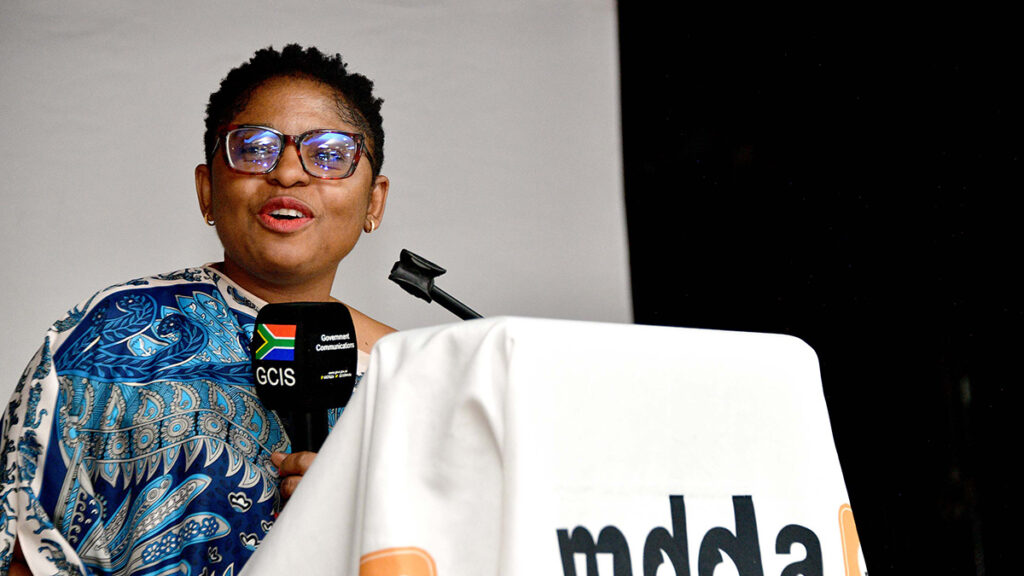
In July 2025, Minister in the Presidency Khumbudzo Ntshaveni named a coup d’état as one of the risks the national intelligence had identified and took action against.
Ntshavheni shared this information during a media briefing on the National Intelligence Estimate and redacted National Security Strategy.
She highlighted that no one has planned or attempted a coup d’état in South Africa. However, she said it was a threat which they have identified and that they continuously monitor.
Roodt is not overly concerned about a coup d’état in South Africa, partly due to the dysfunctional state of the army.
“The South African National Defence Force is so useless that we basically don’t have an army in the country,” he said. “The same goes for the police.”
“I don’t think there is a real threat of a coup in South Africa. The SANDF and the SAPS are just too unorganised.” However, Roodt is concerned about a political collapse.
Keeping track of the bond market and the rand

Roodt said the local situation has resulted in South African bond yields rising to the highest in the world in real terms.
Apart from the political instability and related risk factors, South Africa also has an undervalued currency and a highly liquid financial market.
Considering the high yield combined with the undervalued currency, many foreigners are buying South African bonds.
The inflow of foreign money into the local bond market is positive. However, Roodt warned that it can change quickly.
“If the flow of money into the South African bond market reverses, it can lead to all kinds of serious pain – financially and economically,” he said.
Roodt closely tracks the flow of money into the South African bond market and the currency’s strength to assess the country’s political risks.
He said the South African bond market is currently doing well, which shows that investors are not overly concerned about local political developments.
 Loading ...





Comments