Kganyago sends a serious warning to South Africa


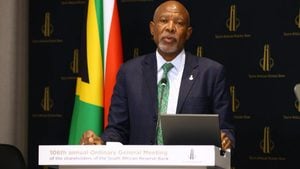
Reserve Bank Governor Lesetja Kganyago said South Africa has had it easy over the past three decades, but current changes in the global environment will not be as favourable going forward.
Therefore, he said South Africa faces significant challenges amidst a less open, prosperous and tolerant world order.
In the South African Reserve Bank’s (SARB) latest annual report for the 2024/25 financial year, Kganyago said the world is changing drastically.
“Sadly, it appears to be moving towards a more fragmented and less growth-friendly state compared to what we have experienced over the past three decades or so,” he said.
“South Africa has had it easy during this time, but for most of those years, the environment was favourable to our country and economy.”
During this time, the governor said global support drove demand for South Africa’s exports, advanced the country’s productivity through technology and facilitated investment through capital flows.
However, Kganyago warned that South Africa now faces a less open, prosperous and tolerant world order, which will present profound challenges for the country.
The governor attributed this changing world order to a shift from globalisation and integration towards acute trade tensions.
“Conditions remain highly uncertain, making it difficult to guess how the dust will settle,” he said.
“However, it seems highly probable that global conditions will be less benign than before, with worse growth prospects and heightened geopolitical risks.”
The latest example is Trump’s broad-based tariffs on goods imported into the United States, which will take effect at the beginning of August 2025.
Starting in August, South Africa will face a 30% tariff on the goods it exports to the United States, with the automotive and agricultural sectors set to be hit hard.
These tariffs are also expected to lead to an overall economic downturn for South Africa, as the United States is the country’s second-largest trading partner after China.
As a small, open economy, South Africa heavily relies on demand for its exports, especially its commodities. High tariffs could threaten this demand, severely harming the local economy.
While Ramaphosa has reassured South Africans that the Trump administration may lower the planned 30% tariff on goods, this has not yet been confirmed.
South Africa left vulnerable

Kganyago said that, amidst this changing world order, it matters more than ever that South Africa gets its domestic policies right.
“Unfortunately, we are still struggling to escape our protracted growth stagnation,” he said.
“The economy expanded by only 0.5% last year. The sovereign debt burden has yet to stabilise. Until we achieve debt sustainability and improve growth, South Africa remains vulnerable.”
The National Treasury expects South Africa’s debt-to-GDP ratio to stabilise at 74.3% this year. The Treasury plans to run sustained primary budget surpluses over the next three fiscal years to reduce the government’s immense debt burden.
Allan Gray director Jithen Pillay recently explained that, even if South Africa were to solve all its problems locally, the weak global growth environment will make a turnaround far more difficult.
He explained that if South Africa wants to ease its social and economic challenges, the country needs to grow its real GDP meaningfully.
Over the past decade, South Africa’s economic performance has declined significantly, with an average annual growth rate of 0.8%.
Concerningly, GDP per capita growth has been negative or nearly zero over the past decade, excluding the post-pandemic boom in 2021 and 2022.
Positively, Kganyago said South Africa has significant strengths to rely on to help the country break out of its low-growth trap.
For example, he said the country’s floating exchange rate regime, consolidated over a quarter of a century, is well-suited to managing volatile global conditions, absorbing shocks and supporting the country’s competitiveness in foreign markets.
In addition, South Africa’s inflation targeting framework is also effective in protecting the value of the rand.
Overall, Kganyago said that as predictability becomes an ever-scarcer resource, the SARB’s role in providing stability is more crucial than ever.
“Fortunately, the SARB remains robust. With record foreign exchange reserves, a superior inflation performance and a solid capital position, we are well-equipped to anchor the economy.”
“This alone won’t be sufficient to achieve balanced and sustainable growth as outlined in our constitutional mandate, but it is the right place to start.”


Comments