Adrian Gore’s advice to grow South Africa’s economy


Job creation, professionalising public service, and public-private partnerships are crucial to hastening South Africa’s economic development.
This is feedback from Investec, Discovery and Standard Bank’s leaders, who spoke to Bruce Whitfield on 702’s Money Show about the country’s economic growth.
The three leaders shared the “one thing” they believe would improve South Africa’s banking, investment, and economic sectors.
For Adrian Gore, the founder and group chief executive officer of Discovery Limited, economic growth, job creation, and a narrative focus on creating hope was key.
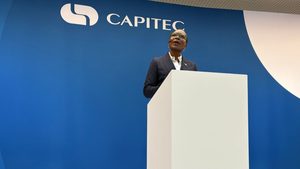
Sim Tshabalala, the CEO of Standard Bank, focussed on professionalising public service and the Public Service Amendment Bill.
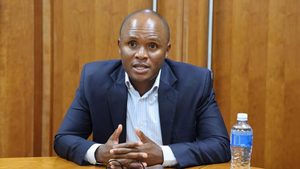
Cumesh Moodliar, the CEO of Investec Bank, explained that public-private partnerships are essential to growing the country’s economy.
Gore and Tshabalala specifically highlighted Operation Vulindlela (OV).
This project, overseen by Deputy Minister David Masondo and reporting directly to President Cyril Ramaphosa, aims to accelerate structural reforms and support economic recovery.
It focuses on modernising network industries such as electricity, water, transport, and digital communications, which are critical for economic growth and global competitiveness.
The initiative targets 19 priority reforms to transform South Africa’s economic direction by effectively implementing existing plans.
Structural reforms aim to reshape the economy by reducing costs, lowering barriers to entry, and enhancing competition, which will boost economic competitiveness and foster sustained growth.
“That’s got fantastic traction over the years on a number of things. There’s amazing goodwill in the country. There’s amazing expertise in both the public and private sector,” Gore said.
South Africa increasingly favours privatisation and public-private partnerships, particularly with Eskom and Transnet.
The Electricity Regulation Amendment Bill aims to establish an open-market platform for competitive electricity trading. Signing the Economic Regulation of Transport (ERT) Act signals rail reform and privatisation progress.
Adrian Gore

Gore said that his entire focus is on economic growth to create jobs. “Fundamentally, we need economic growth. It’s a fundamental issue to lift everything. It creates jobs.”
“Our economy is pretty resilient. Our GDP is resilient. Even with load shedding, the economy did not contract, as you can see from the data,” he said.
He pointed out that when the economy grows, jobs are created. “If you look at the data when the economy grows at 3% or more, and it’s done that in the past, you get 0.7% of that in jobs.”
He also highlighted the success of Operation Vulindlela. “We need to harness it. We’ve seen this business-government partnership working with excellent people in the public sector.”
“You can get change quickly. In eight months, load-shedding has turned the corner. It’s remarkable.”
Gore proposed taking the Operation Vulindlela idea and creating a unit focused on economic growth and creating jobs.
This can be achieved by establishing clear workstreams supported by strong public and private sector partnerships.
These workstreams should focus on well-defined areas of the economy, such as energy, crime, logistics, and transportation infrastructure.
He emphasised the importance of hope as an economic stimulus since narrative drives fundamentals.
As an example, he pointed to what happened to the country’s fundamental economic indicators, including the stock market and interest rates, when the GNU was announced.
“I think we’ve got catalysts of change right around us now. This election, this GNU, it offers the potential of the right leadership, both in the public and private sectors in government.”
“As soon as people get a sense of hope, the entire environment changes. And I think that we’ve got elements of that.”
Narrative is an important aspect of growing the economy. “Publish targets that have to be achieved by it, get the public behind it, celebrate successes, explain failures, and communicate every single month to the public.”
“Make it fashionable, to progress, to create targets, to succeed. And in that process, create a defibrillator that just turns the economy back to where it should be.”
“The economy has amazing potential. If we grow it, we’ll create jobs. If we create jobs, we create prosperity, we reduce poverty. It’s a fundamental issue.”
Sim Tshabalala

Tshabalala said the one thing he would do to fix the economy is capacitate those parts of the state that need it and work in partnership with civil society and business to accelerate growth.
He echoed Gore and said that the country needs growth.
According to a report by the BER (Bureau for Economic Research), if Operation Vulindlela was implemented, it could add growth of 1.5% to the country’s GDP. “That gets us to R5.5 trillion in 2029 – that is huge.”
That creates more jobs and gives the country more fiscal space.
He said the one thing he would do to drive that is professionalise the public service, using the momentum already existing in several public sector organisations, like the FIC, Reserve Bank, and the Department of Science and Technology.
He pointed out that South Africa’s education and health systems have some excellent aspects. Building on this capacity and fostering strong, effective partnerships is crucial.
On a smaller scale, though, Tshabalala said that his focus would be on accelerating the passing the Public Service Amendment bill.
This would involve navigating the legislative system to get it signed and implemented.
It would introduce transparent and competitive recruitment processes in the public service, improve pay, and elevate the status of civil servants.
Cumesh Moodliar

Moodliar explained that the one thing Investec would focus on would be public-private partnerships.
The opportunity to unlock private capital through public-private partnerships is significant, as evidenced by several successful projects, including the Gautrain and various toll roads.
Investec plans to build on this success, particularly in renewable energy projects like the REIPPPPs (Renewable Energy Independent Power Producer Procurement Programme).
“My personal focus would be on rail and ports,” he said.
South Africa has established manufacturers, producers, and mining companies who rely on this capacity to maintain existing employment, export products, and ensure efficient distribution within the country.
Consider the motor industry in the Eastern Cape. Transporting vehicles from the coast to Gauteng takes 84 hours by road but only 16 hours by rail. This highlights a significant opportunity for efficiency.
“Those are some really quick wins available to us right now that we could partner with private sector and public sector entities to bring together a solution, which firstly preserves existing employment, but potentially unlocks and grows further employment.”
“Public-private partnerships lead to infrastructure development, job creation, innovation and technology transfer, skills transfer, improve service delivery, and ultimately revenue generation.”
The goal is to create an environment that attracts private capital without mandating investment through prescribed assets. The focus should be on fostering incentives for voluntary investment.
“I believe those incentives are already in place,” Moodliar explained.
Private sector partners are willing to sign appropriate offtake agreements to support some of those initiatives, and others are ready to provide essential services under these agreements.
“But you need the regulatory environment to allow that.” A collaborative approach is needed when engaging with Transnet and other SOEs.
The goal is to ensure that, after a set period, these assets revert to the state in an improved condition. For example, a functioning and efficient rail corridor would ultimately return to state control, providing ongoing revenue and benefits.

Comments