South Africa’s most important port going from zero to hero


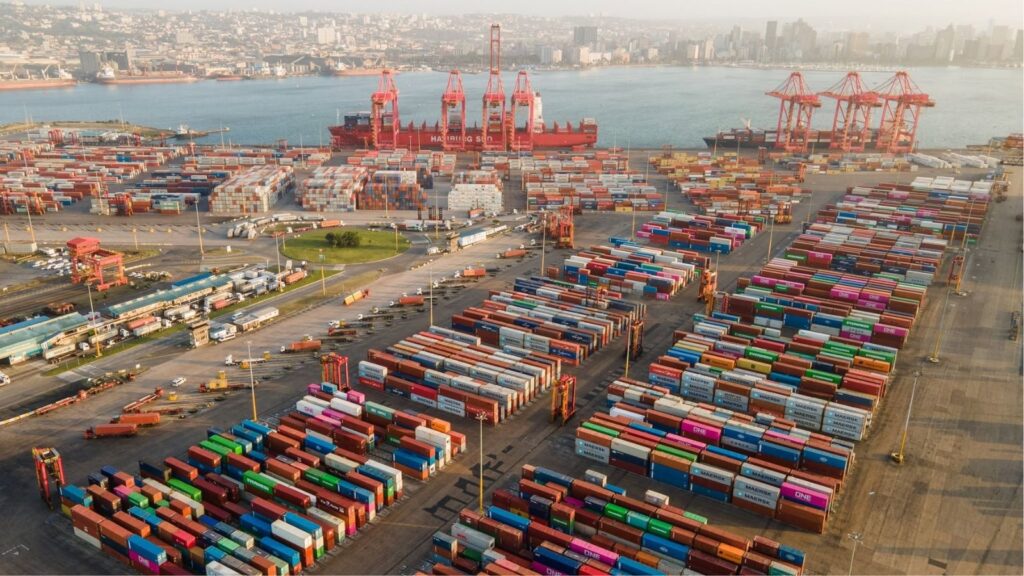
South Africa’s busiest port has shown a partial recovery, with many of its extreme backlogs cleared.
However, the Port of Durban continues to miss some of its performance targets and faces operational instability.
The port’s main operator and owner, Transnet, hopes that concessions with private companies will address many of these shortfalls.
In a recent Parliamentary response, Transport Minister Barbara Creecy outlined the Port of Durban’s performance in 2025 compared to 2024.
This port plays a critical role in South Africa’s economy, serving as the primary economic gateway for the country and the wider Southern African Development Community.
The Durban Port handles 60% of South Africa’s container traffic, making it the largest and busiest container terminal on the continent.
The government said it plays a critical role in the national economy by facilitating trade and managing large volumes of cargo. This includes containers, vehicles, dry bulk, break bulk, and liquid bulk.
“This activity supports business operations, job creation, factory productivity, tourism, and ultimately helps bring revenue into the country,” it said.
In addition to its cargo operations, the Port of Durban offers marine services such as dredging, navigational aids, ship repairs, and pilotage.
Despite its essential role, the Port of Durban’s performance has deteriorated significantly over the past decade.
It is currently ranked as the least efficient port in the world in the Container Port Performance Index (CPPI).
This is the result of decades of underinvestment by Transnet, coupled with corruption and corporate mismanagement during the State Capture era.
These decades of structural decay have seen the Port of Durban slip from 317th in the world in the 2020 CPPI rankings to 403rd – dead last – in 2024.
Measured improvements
In response to a Parliamentary question from MP Alan Beesley, the Transport Minister revealed that there have been some improvements at the Port of Durban in 2025.
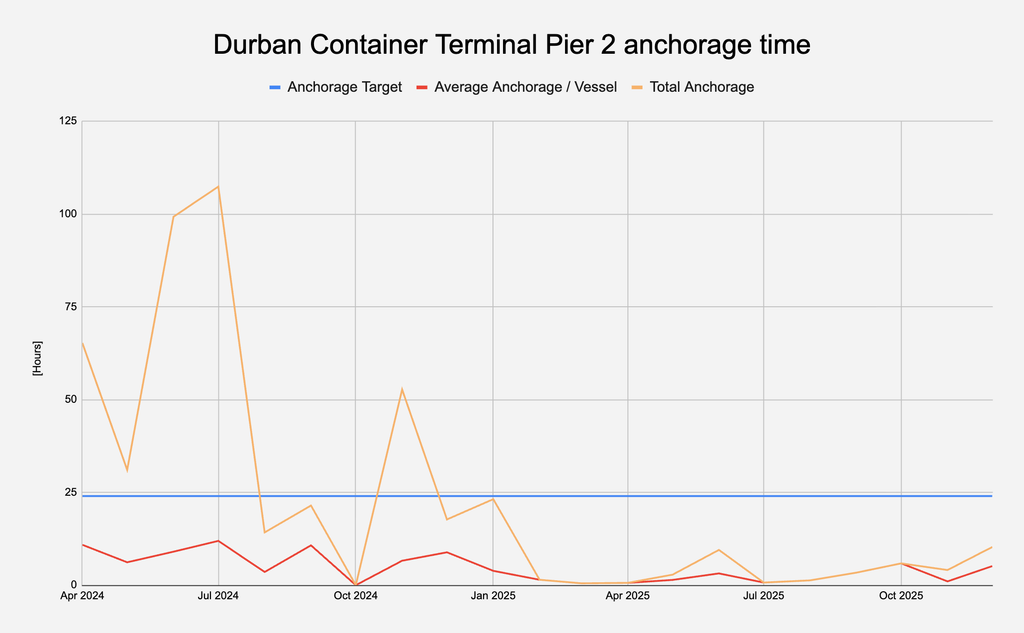
For example, the port’s goal at Container Terminal Pier 2 is for cargo ships to wait no more than 24 hours before entering the port.
During the Port of Durban’s worst stretch in 2024, ships were waiting between 10 and 12 days, or between 257 and 286 hours.
Wait times improved in 2025, with average anchorage times remaining consistently below target, though delays would still sometimes jump back up to between 123 and 141 hours.
However, not all aspects of Pier 2’s performance improved in 2025 compared to 2024.
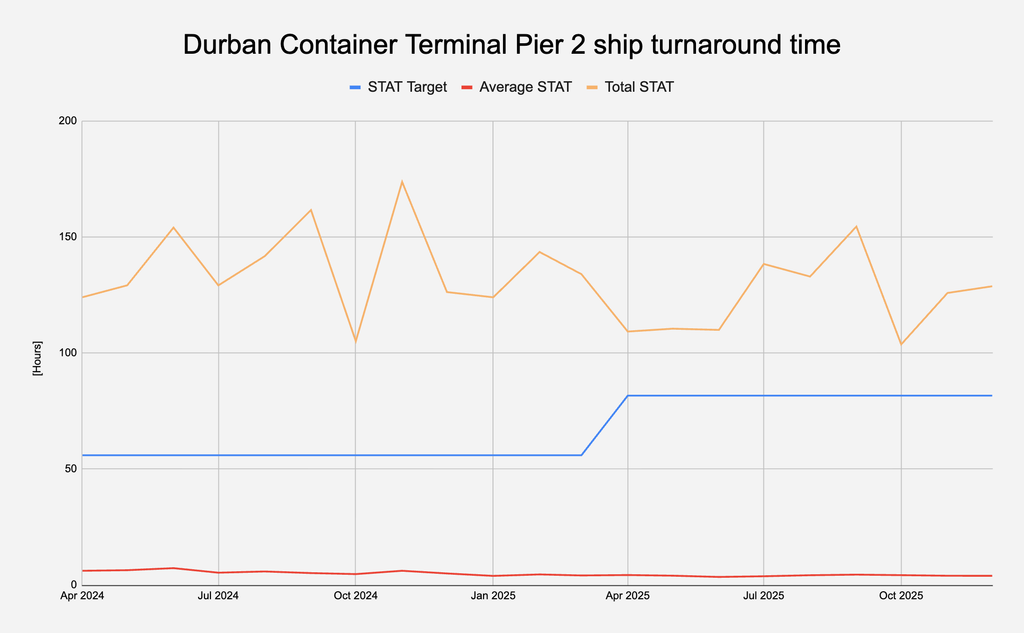
After docking, ships are supposed to be processed within set turnaround targets. In 2024/25, the port’s target for this was set at 56 hours, which was upped to 81.7 hours in 2025/26.
Across both years, the port missed this target in every single recorded month.
To address these deficiencies, Transnet took a significant step in December 2025 by signing a concession agreement with International Container Terminal Services, Inc. (ICTSI).
This Philippines-based company was awarded the right to buy almost half of Durban’s Container Terminal Pier 2 for R10.5 billion and manage the facility for 25 years.
The ICTSI agreement marked the first step in a broader strategy Transnet is undertaking to bring in private expertise to its ports and rails.
However, the ICTSI takeover has not been smooth sailing. When the company took over in January 2026, it faced heavy operational setbacks.
This resulted in ICTSI’s original six-month transition period being extended by another six months to the end of December 2026 to prepare a formal recovery plan.
Despite these setbacks, there have been improvements since ICTSI took over. Logistics giant DHL reported in July 2026 that the impact of the firm’s takeover is already being felt.
“Crane moves per hour are climbing from a sluggish 18 to a much sharper 28, and vessel turnaround times are tightening,” it said.
“Every gain here has a direct knock-on effect for supply chains across the country. Exporters who’ve spent years dodging bottlenecks are now seeing real, measurable improvements.”
Addressing deficiencies at Durban’s Container Terminal Pier 2 is considered critical to the port’s overall turnaround.
Pier 2 handles 70% of Durban port’s total throughput and 40% of South Africa’s container volumes.
Login or register for unlimited free access.





Conversation
2 commentsSamuel sekhwela I’m impressed for investment