Thousands of jobs in two sectors on the line after United States’ new blow to South Africa


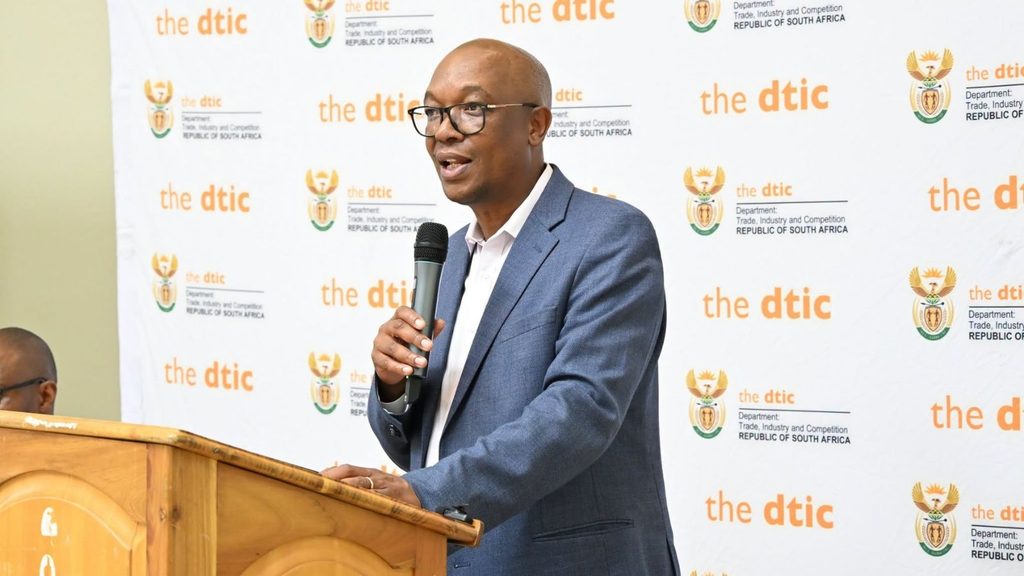
South Africa’s exit from the United States’ African Growth and Opportunity Act (AGOA) puts thousands of jobs in the agriculture and motor industry at risk.
While only 10% of local exports to the United States are subject to AGOA, they are heavily concentrated in these two sectors, which will bear the brunt of South Africa’s exclusion.
This is according to North-West University Business School Professor Raymond Parsons, who said the United States’ latest move was widely anticipated.
On Monday, 2 November, US Trade Representative Ambassador Jamieson Greer announced that South Africa will no longer be part of AGOA.
South Africa has been a member of this agreement since its inception in 2000, and is now set to lose access on 1 January 2027.
Under AGOA, some South African products have duty-free access to the world’s largest economy, the United States.
Despite South Africa’s efforts to retain this access, United States President Donald Trump found that the government is engaging in practices inconsistent with AGOA’s eligibility criteria.
“These concerning and pervasive practices include, but are not limited to, barriers that undermine American trade and investment that pose a threat to US national security,” Greer said.
Parsons explained that South Africa’s exclusion will have a minimal impact on the country’s economy as a whole, since only 10% of local exports to the US are subject to AGOA.
However, certain sectors will be adversely affected and bear the brunt of South Africa’s removal.
He highlighted agriculture and the automotive industry as two of these sectors, saying South Africa’s exit from AGOA puts thousands of jobs in these sectors at risk.
“Although the loss of AGOA preferences is highly regrettable and the specific sectoral impact may be painful, the situation is manageable if the right market adaptations are made,” he said.
Parsons said that addressing the negative economic consequences of losing AGOA preferences will continue to require close collaboration between government and the relevant business interests.
South Africa’s response to AGOA exclusion

Following the United States’ move on Monday, South Africa’s Department of Trade, Industry, and Competition released a press statement.
The department noted the decision, saying it may create concerns for workers, exporters, businesses, and communities linked to AGOA-supported value chains.
“The impact will differ across sectors, and government is working closely with affected industries to assess the implications and will continue to provide appropriate support,” it said.
“AGOA remains important to South Africa, but it does not constitute the totality of the economic relationship between South Africa and the United States.”
The department pointed out that, in 2025, 90% of South African exports to the US entered under ordinary World Trade Organisation most-favoured-nation terms.
This means 10% entered under AGOA in 2025, down from 28% in 2024. AGOA exports represented 1% of South Africa’s total global exports in 2025.
Parsons made a similar point, saying that the overwhelming bulk of South Africa’s exports to the US fall outside AGOA preferences.
“The non-AGOA trade relationships are therefore reinforced by a robust footprint that goes beyond trade balances,” he said.
“The AGOA result still means that the core economic pipeline of trade and investment connecting SA and the US remains intact, and must continue to be nurtured.”
However, Parsons said South Africa’s exit from AGOA also underscores the need to accelerate its market diversification strategy.
This can be done by expanding South Africa’s market access in East Asia to the region’s growing economies and leveraging economic opportunities through the African Continental Free Trade Agreement.
Parsons added that South Africa’s government must aim to make the domestic economy more internationally competitive by reducing the costs of doing business locally.
“This in particular encompasses expediting logistics reform, especially in rail and port facilities, that will help to offset the AGOA loss by keeping South Africa globally competitive,” he said.





Conversation
2 commentsBut of course Cyril and his gang knew better. There’s nothing worse than being thick.