One South African university drilled its own boreholes and spent R15.15 million on water because service delivery is so poor


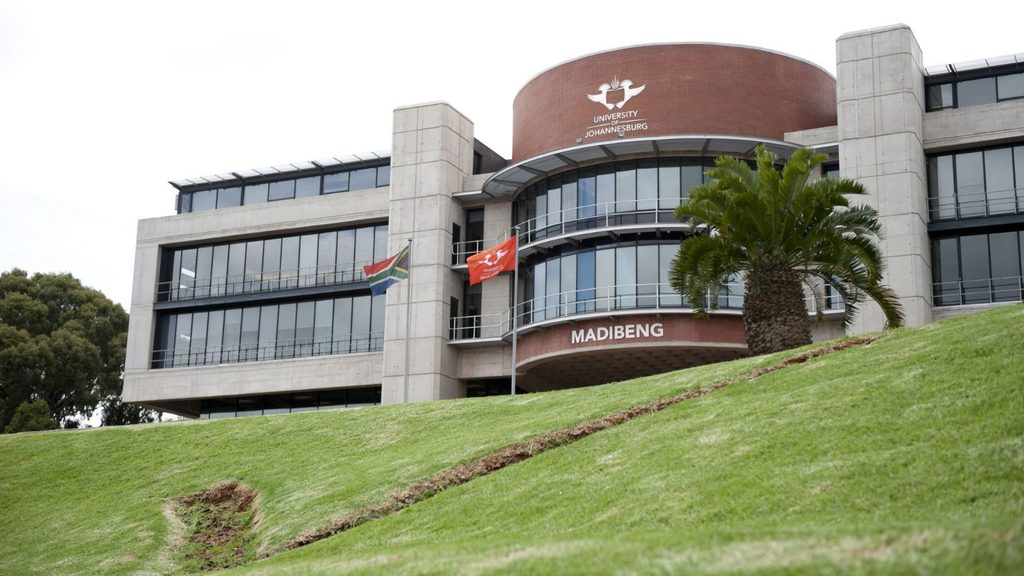
The University of Johannesburg (UJ) spent R15.15 million on external water, while also buying its own water trucks and drilling boreholes to cope with deteriorating municipal supply in Johannesburg.
This comes as water provision has grown into a widespread issue in South Africa’s richest city, with outages becoming more frequent.
In its 2025 Annual Report, UJ explained that this deteriorating water supply by the City of Johannesburg was one of the main reasons its water consumption dropped by 5.6% year-on-year.
Between the 2015 and 2025 financial years, UJ’s water consumption declined by 32.1%. “Using water sparingly has become a necessity at UJ,” the university said.
“While load-shedding decreased in frequency, a major challenge in 2025 was the numerous water outages.”
The institution reported that in 2025, a “very significant number of days” occurred across all its major campuses where no water was supplied at all.
This was either due to load-shedding, load reduction, water supply infrastructure failure, or local water infrastructure maintenance.
“This resulted in a great deal of direct water purchases from commercial suppliers – more than 12.8 million litres at a cost of more than R8.1 million,” UJ said, referring to only part of its financial year.
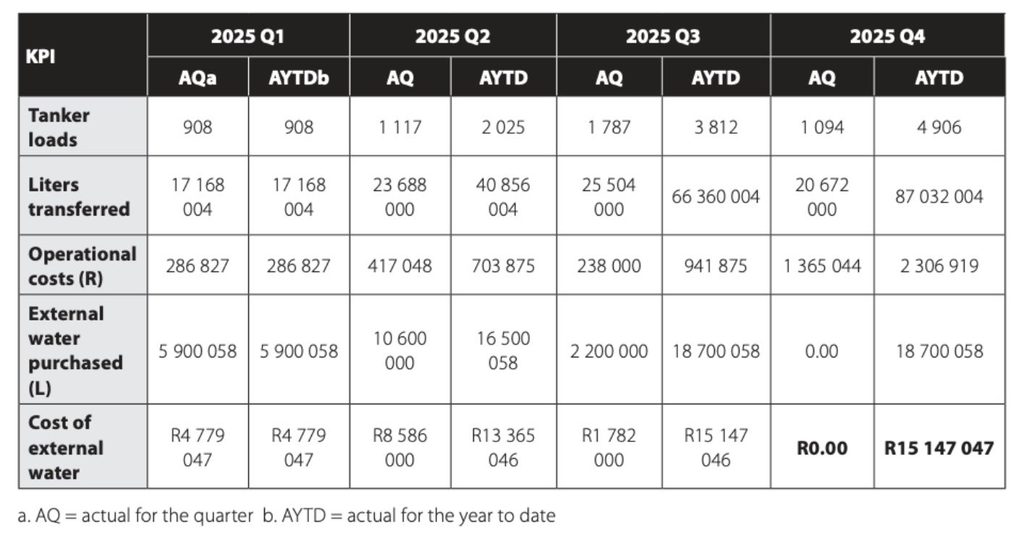
Throughout the 2025 financial year, UJ spent R15.15 million to purchase 18.7 million litres of emergency bulk water from commercial suppliers to keep campus taps running.
To protect itself against these interruptions and the high costs associated with them, UJ has invested in its own water sources and infrastructure.
In 2025, UJ trucked 106 million litres of water between campuses using its own tankers to reduce water purchases.
UJ’s Logistics Department deployed a fleet of six water trucks to ferry water between campuses during periods of municipal “water shedding”.
The fleet completed 4,906 tanker loads over the year. By using its own tankers, UJ saved R74 million compared with the cost of purchasing that volume commercially.
While UJ spent R15.15 million on water from private vendors in the first nine months of the 2025 financial year, this spending dropped to zero by the end of the year because it had acquired its own tankers.
UJ’s boreholes and engaging with the City of Johannesburg
The university has also made increasing use of its boreholes, aiming to use them as much as possible on all campuses.
UJ uses its borehole water across its four campuses, primarily to irrigate the grounds and sports fields.
In 2026, UJ said it planned to schedule a comprehensive project for borehole rehabilitation, certification, and strategy across its four main campuses.
The university also commissioned a greywater recycling plant in 2024, which saved it 4 million litres of water in 2025, amounting to R2.8 million in savings.
More of these systems are planned for other campuses and student residences at UJ, aiming to recover an additional 15 million litres of water annually.
While UJ has managed to find workarounds for the inconsistent service delivery in Johannesburg, it has continued to engage with the municipality over these issues.
In 2025, UJ held structured dispute meetings with Johannesburg’s executive mayor and municipal leadership.
It also conducted a joint water-meter audit with the City of Johannesburg to eliminate arbitrary municipal billing estimates.
In its 2025 financial statements, UJ revealed that it carries a R50.76 million provision for unbilled and under-billed municipal utility charges.



Conversation
1 commentsCost to society is rising alarmingly as cadres fail to deliver services.
This is reason for the structural inflation we see around us every day.
Why are taxes so high? Because the cadres waste so much. Why are your rates and utilities so high? Because the cadres waste so much. Why do you need your own water and electricity? Because ethe cadres waste so much….