Transnet spent R16.51 billion on 455 trains that it cannot use


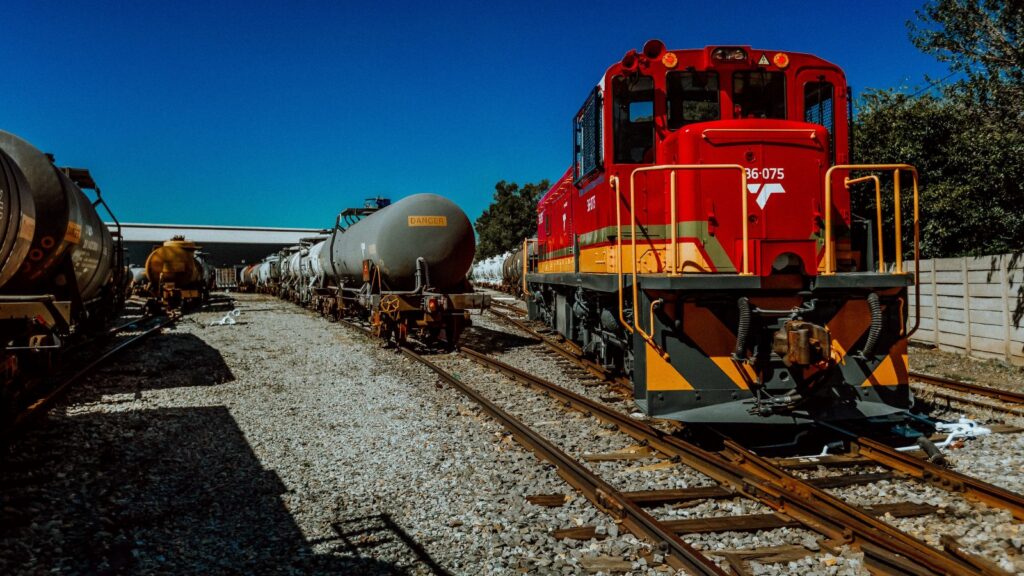
Transnet has spent tens of billions of rands over the past 14 years to expand its locomotive fleet, yet many of these trains remain inoperative to this day.
Many of these grounded trains relate back to three separate locomotive procurement contracts, which Transnet awarded during the early 2010s.
The first of these was granted to China South Rail in October 2012 to provide Transnet with 95 new electric locomotives, valued at R2.69 billion.
A second contract was given directly to China South Rail in March 2014 to provide a further 100 electric locomotives for R3.871 billion. This was later adjusted up to R4.480 billion.
The third project, which began in March 2012, was to procure 1,064 new locomotives for freight trains, with 465 diesel and 599 electric.
By April 2013, the expected cost of the “1,064 project” was R38.6 billion, and contracts were signed in March 2014, with Transnet paying an upfront cost of R7.37 billion.
Four companies were commissioned to provide the locomotives. China North Rail and General Electric South Africa were to provide 232 and 233 diesel trains, respectively.
China South Rail and Bombardier Transportation South Africa were hired to build the electric locomotives, with the former set to provide 359 and the latter 240.
In May 2014, the project cost was revised to R54.5 billion on the recommendation of Transnet Group CE Brian Molefe, CFO Anoj Singh, and Transnet Freight Rail CEO Siyabonga Gama.
All three of these contracts missed their initial delivery deadlines, and by 31 March 2019, the cumulative spend on the “1,064 project” alone had reached R33.6 billion.
By the end of Transnet’s 2018/19 financial year, only 525 of these locomotives had been accepted into Transnet’s operations.
That same year, Transnet flagged R41.5 billion spent on locomotive procurement contracts from before 2015 as irregular expenditure.
Trains that can’t run
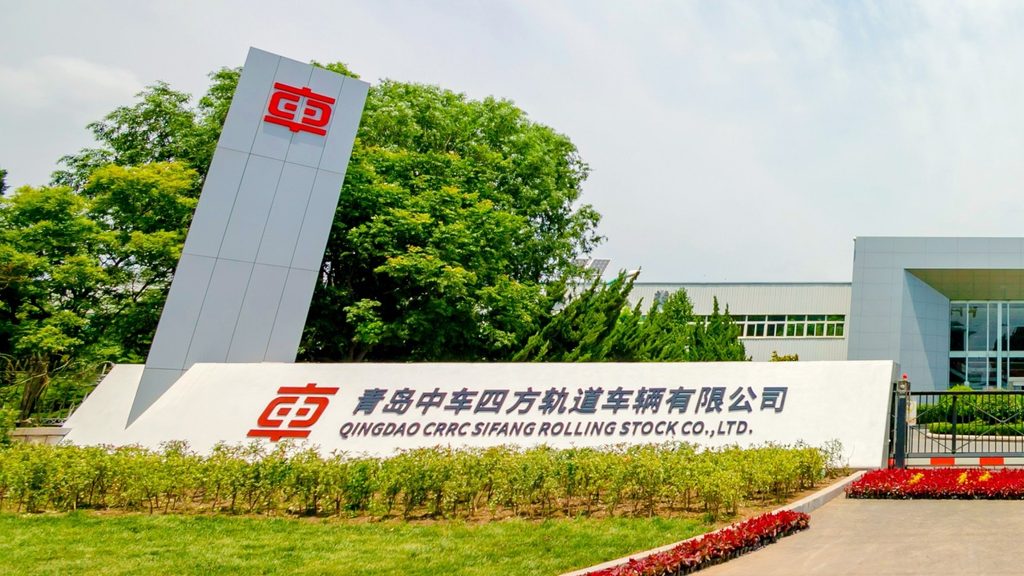
On 9 March 2021, Transnet and the Special Investigating Unit (SIU) applied to the High Court to have the four contracts for the “1,064 project” set aside.
The complainants argued that these contracts had been awarded irregularly and illegally, alleging ties to the Gupta family and state capture.
CRRC, which was created from the merger of China South Rail and China North Rail in 2015, subsequently halted the delivery of remaining locomotives and spare parts to Transnet.
In Transnet’s 2023 integrated report, it stated that much of its new fleet had effectively been grounded due to a lack of access to these spare parts.
161 of these had already been supplied by CRRC, bringing the number of locomotives up to 1,174.
“455 of the 1,174 new-generation locomotives are either sterile or increasingly unreliable as we are unable to secure spares and parts until the suspension of the contract is lifted,” Transnet said at the time.
“Consequently, we’ve had to depend on an ageing, unreliable locomotive fleet that is prone to failures, adding to our challenges of reliability, spares availability and rising unscheduled maintenance costs.”
Daily Investor’s calculations, using the project’s original cost, show that the utility effectively spent R16.51 billion on 455 locomotives it cannot use.
In April 2025, the Pretoria High Court ruled in favour of setting aside the R8 billion contract awarded to General Electric South Africa, now known as Wabtec South Africa Technologies.
This is the first of the four contracts to be officially set aside, with Transnet retaining the 233 locomotives delivered by Wabtec.
Wabtec will also retain all payments made to it by Transnet under the contract, while also providing Transnet with R70.35 million credit to fulfil outstanding supplier obligations.
While the Wabtec contract was set aside, the other three contracts from the “1,064 project” remain suspended until the High Court can finalise its decision on them.
As a result, the dispute between Transnet and CRRC remains in effect, with the company stating in its latest financial results that it had 361 long-standing locomotives.
Last October, the High Court ordered CRRC to release spares it had withheld from Transnet, with 120 of its CRRC-supplied locomotives still out of service.
While Transnet did not mention the CRRC dispute in its 2026 Integrated Report, CEO Michelle Phillips briefly touched on it when answering questions during its results presentation.
“We’ve not mentioned anything about ‘1,064’ and whether or not the Chinese impasse has been resolved,” Phillips said. “I can say it has, to date, not yet been resolved.”

Comments