One South African industry has been in recession for nine years straight


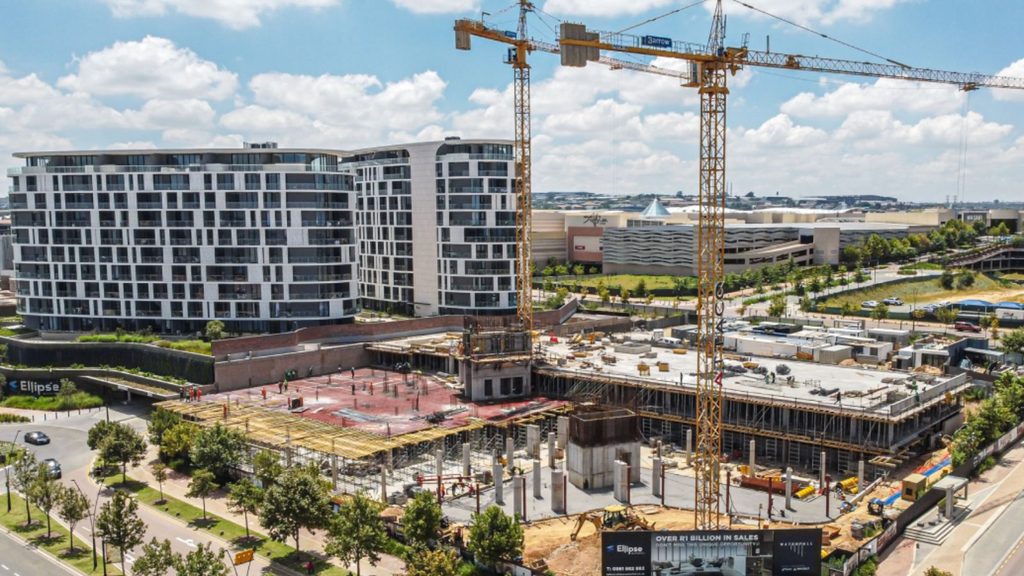
South Africa’s construction industry has been in recession for the past nine consecutive years, leaving it in a state of crisis.
This means the industry’s output has declined year-on-year for nearly a decade, despite promises of renewed government infrastructure spending.
Stanlib chief economist Kevin Lings told the INN8 Investment Summit 2026 that this is incompatible with economic growth.
This is because a poorly performing construction industry indicates minimal fixed investment in the country.
Fixed investment refers to capital allocated to infrastructure development, machinery, and equipment that increase workforce productivity.
Lings explained that construction is not something South Africa’s economy does well at the moment, as it is not a major focus area.
South Africa’s economic growth has been driven by consumer spending and the financial services sector over the past few years.
“South Africa excels at shopping and financial services, largely banking. We are world-class at that, and it shows in the data,” Lings said.
“The problem of the South African economy lies in the other sectors, what we call the productive sectors of mining, manufacturing, and construction.”
Lings pointed out that South Africa’s construction sector has suffered for nine consecutive years of recession, with manufacturing posting two years of decline.
These sectors are vital for employment as they can rapidly absorb thousands of unskilled and semi-skilled workers.
“South Africa cannot be economically successful as an emerging market while construction collapses, as expanding infrastructure is key to growth,” Lings said.
President Cyril Ramaphosa has vowed to turn South Africa into a construction site, with the National Treasury outlining plans to invest R1 trillion into infrastructure over the next three years.
This spending is desperately needed by the construction industry and the broader economy, as the country’s infrastructure decays.
However, this spending is yet to materialise in the data, with Lings pointing out that the fixed investment remains stagnant at 13.2% of GDP.
South Africa’s emerging market peers spend 30% of their GDP on infrastructure, while developed economies spend 20%.
Apart from infrastructure investment, the construction industry has been hit hard by the construction mafia.
The mafia has embedded itself across South Africa and actively prevents infrastructure construction, Public Works Minister Dean Macpherson said.
Speaking at the 9th BizNews Conference, Macpherson said the mafia delays projects and scares off investors.
“They were increasingly confident that they could arrive on construction sites, intimidate workers, demand money, and shut down economic development without consequence,” he said.
“This not only delays a project. It changes the entire investment decision and narrative about South Africa.”
Macpherson said no investor, local or international, is willing to invest capital into sites where criminal organisations run riot.
The direct cost of the construction mafia is R17 billion in lost economic output per year, with billions more being lost before a project gets off the ground.