South Africa’s most important city has only 16 days’ worth of cash to meet operational requirements


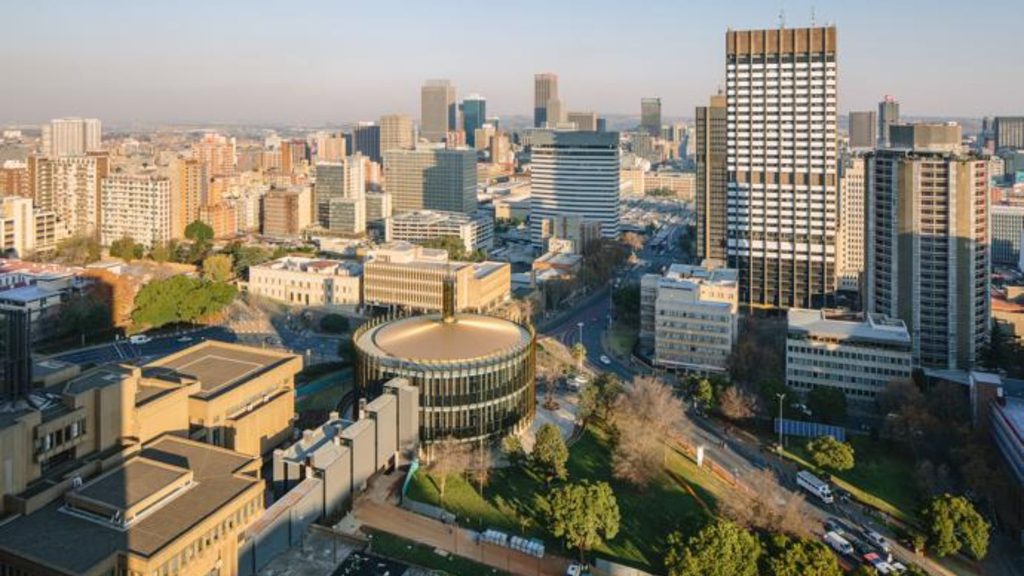
If Johannesburg, with all its resources and financial might, cannot be fixed, then it is likely that South Africa cannot be fixed.
This is feedback from the Centre for Development and Enterprise’s (CDE) executive director, Ann Bernstein, who said South Africa’s financial hub cannot be allowed to fail.
“If you think about it, if you cannot turn Johannesburg around, you have to ask a very serious question about whether we can really fix South Africa,” Bernstein told Newzroom Afrika.
“Look at the resources we have in Johannesburg. We have 70% of corporate headquarters. Look at the universities and talent that we have. Look at the resources we have.”
“If we cannot fix a city with all that Johannesburg has as South Africa’s most important economic hub, then the country is in very serious trouble.”
The City of Johannesburg has been beset by severe leadership instability, with seven mayors in seven years.
This has left the city unable to implement reforms needed to ensure service delivery for its residents and has created chaos in which its resources can be looted.
The city also faces a unique set of financial challenges, with Mayor Dada Morero saying it has only 16 days’ worth of cash on hand to meet operational requirements.
This is far below the 30-day limit the National Treasury demands, albeit a significant improvement from a few months ago when Finance Minister Enoch Godongwana criticised the city’s fiscal mismanagement.
For years, the city has directed funds towards salaries and short-term consumption rather than entities responsible for service delivery and infrastructure.
This has left organisations that have historically been well run, such as Pikitup and Johannesburg Water, without the funds necessary to maintain adequate service delivery.
As a result, the city is unable to collect revenue to deliver services, creating a financial death spiral.
“If we continue in Johannesburg with the dysfunction that we have had for the last decade, with no mayor finishing their term, the decline will continue,” Bernstein said.
“This will be a disaster for all of us who live in Johannesburg and for the rest of the country, with the city being responsible for 16% of South Africa’s GDP.”
Johannesburg can crush South Africa

There is a close link between Johannesburg’s economic performance and that of the rest of South Africa, given its position as the country’s financial hub.
Johannesburg accounts for 16% of the national GDP and is the country’s most populous metro, with 4.8 million residents.
These residents are spread across 1.84 million households, placing an enormous burden on service delivery in the city.
Despite this hefty burden, the city invests relatively little in maintaining and upgrading its infrastructure.
The Bureau for Economic Research’s Vuyo Gama calculated that only 9% of Johannesburg’s budget goes towards capital investment. A further 7% goes towards other operating costs.
Employee costs and debt servicing account for a large share of the budget, consuming 45% of the city’s funding. It is only second to payments to bulk suppliers like Eskom and Rand Water.
Gama said Johannesburg’s consistent capex underspend is the most reliable forward indicator of service collapse.
“Despite facing a R220+ billion infrastructure backlog, the city consistently fails to spend the money it does allocate for capital works – the very expenditure that could begin to arrest deterioration,” she said.
To change this, Bernstein said the city needs a change in leadership and newfound stability from a mayor who preferably has an outright majority in the council.
Bernstein explained that only a mayor with a majority can enact the change Johannesburg needs, because bold choices must be made.
Whoever wins the mayoral vote in November should prioritise the basics in the form of water, electricity, and financial stability, Bernstein said.
This requires tough choices, including cutting spending on salaries and consumption, with the money redirected to infrastructure projects.
Bernstein said there is no technical reason for the failure of Johannesburg’s water and electricity systems, with their collapse entirely being driven by poor governance.
With the right leadership in place, this problem can be solved.
 Loading ...




Comments