Great news about food prices in South Africa


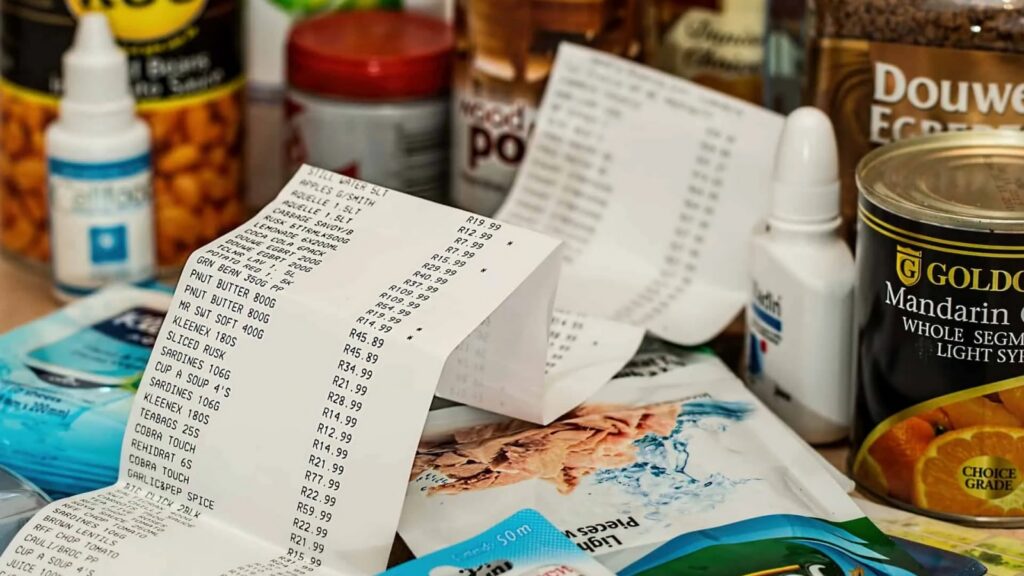
South Africa’s food price inflation declined to its lowest point in more than 16 years during the month of July 2026.
The latest consumer inflation report from Stats SA showed the annual rate for food and non-alcoholic beverages (NAB) dropped to 0.9% in July.
This is the lowest print recorded for food and NAB since it hit 0.7% in June 2010, the same month that South Africa hosted the FIFA World Cup.
Stats SA attributed this mostly to changes in the prices of cereal products and meat, with the former recording an annual change of -2.0%.
AgBiz chief economist Wandile Sihlobo said this was mainly driven by a strong grain harvest last season, supported by heavy rains associated with La Niña.
Annual meat inflation slowed from 5.1% in June to 1.5% in July, despite several processed meat categories reflecting price increases.
“Also positively, meat price inflation has slowed from recent levels, as slaughtering continues and supplies recover,” Sihlobo said.
“The meat supply had been a concern due to foot-and-mouth disease in cattle and African swine fever cases in the pork industry.”
While Sihlobo said these issues remained prevalent, he added that increased vaccination efforts were assisting these sectors in their slow recoveries.
Looking ahead, Sihlobo pointed to several risk factors which could see food price inflation rise in the near future, most notably an El Niño drought forecast.
However, Sihlobo said this would only affect the next season, which will be planted from mid-October, and as such, the effects of this would most likely only be visible in 2027.
The price of fuel also remains a concern, as uncertainty surrounding the US-Iran war and the Strait of Hormuz could lead to higher fuel costs in the short-term.
“Fuel accounts for a substantial share of the distribution costs of food products,” Sihlobo said. “Notably, over 80% of staple food products are transported by road.”
“Still, the ample agricultural harvest will help keep consumer food price inflation under pressure throughout 2026.”
Overall consumer inflation in South Africa slowed for the first time in five months to 4.3% in July, easing more than the expected 4.5%.
Foot-and-mouth disease still a risk
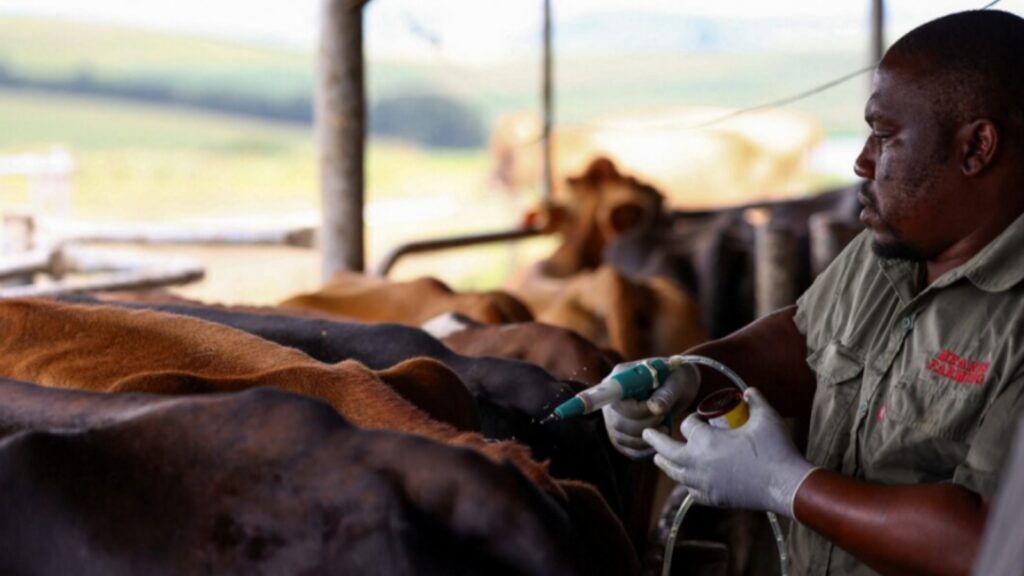
Despite improved access to vaccinations, South Africa’s fight against foot-and-mouth disease (FMD) continues to fall short of its targets.
While unprocessed beef products saw negative annual price changes last month, further FMD outbreaks could push up meat price inflation, which hit an 8-year high of 13.5% in January.
According to the FMD Industry Coordination Council dashboard, the country is vaccinating fewer than 100,000 cattle per week.
Industry stakeholders have said that eradicating FMD would require vaccinating almost the entire country’s 14 million-strong national herd within an 8-week window.
This would require vaccinating 1.75 million cattle every week, far exceeding current vaccination numbers.
In July, Minister of Agriculture Willie Aucamp announced a settlement to allow private-sector farmers to procure and administer their own FMD vaccines.
This came just a week after Aucamp took over the position from his predecessor, John Steenhuisen, who had faced criticism during his tenure for his state-controlled approach to vaccinations.
FMD Response SA spokesperson Andrew Morphew told Newzroom Afrika that while Aucamp’s settlement would aid farmers in the long term, it was not enough.
“We need the government to speed up their vaccinations for communal and small-scale farmers to allow them to be vaccinated in the same windows,” Morphew said. “We’d like to see a plan around that.”
“The other thing we need is for the government to coordinate these campaigns. Farmers are getting vaccines and are physically available, but are now looking for leadership around the organisation of campaigns.”
The World Organisation for Animal Health recommends that 90% of a national herd be vaccinated within a six-to-eight-week timeframe, with boosters given six months later.
Six months after South Africa’s first FMD vaccinations were administered, the country has vaccinated only around 65% of the national herd.
While Aucamp’s willingness to open vaccination efforts to the private sector was welcomed, Morphew said more could be done.
“It is a huge gap, so somehow they need to deal with that,” Morphew said. “Maybe opening it up, taking hands with the private sector, and allowing farmers like myself to help the communal farmers around them.”
“There’s a willingness to do that. We want to. It’s in our interest to make sure everyone in our area is vaccinated.”
“If we can cooperate better in getting those vaccines into animals, I think we can do it a lot faster.”
 Loading ...


Comments