I paid R200,000 to SARS for saving and investing my money



I worked hard, saved my money, and invested it for the future. SARS’ response was to tax me R200,000.
This was the reality I faced when filing my tax returns this July.
My tax burden began in May 2017, when I took a large chunk of my life savings – R14,000 – and purchased Nvidia shares.
Nvidia shares were trading at the equivalent of $2.58 at the time, with my purchasing decision based on the fact that they made great graphics cards and I liked PC gaming.
I bought more Nvidia shares in June 2017, to the value of R9,600, and then held onto them for several years.
The money I used to buy Nvidia shares was from my post-tax income. I was paid a salary for working, SARS took income tax from me, and the money I had left over I invested in Nvidia.
One bite at the cherry was not enough for SARS, however.
50x growth
Fast forward to November 2025, and Nvidia shares had seen huge growth, increasing in value 50-fold.
During the period of 2017 to 2025, I had also purchased a few shares in Microsoft and Apple, which had both seen decent growth.
My investments were therefore worth a lot more, and as a result, it was time to “rebalance my portfolio”.
This is a fancy way of saying that I was scared Nvidia, Microsoft, and Apple share prices would drop, and my on-paper profits would vanish.
To do this, I sold half of my Nvidia, Microsoft, and Apple shares in November – and reinvested the money that same day into an S&P 500 ETF.
The S&P 500 is seen as a “safer” investment in the world of share trading and is often used as part of a “buy and hold” investment strategy.
Despite my taking all the proceeds from the share sale and reinvesting them, SARS was ready and waiting for a slice of the pie in the form of Capital Gains Tax.
Punishment tax
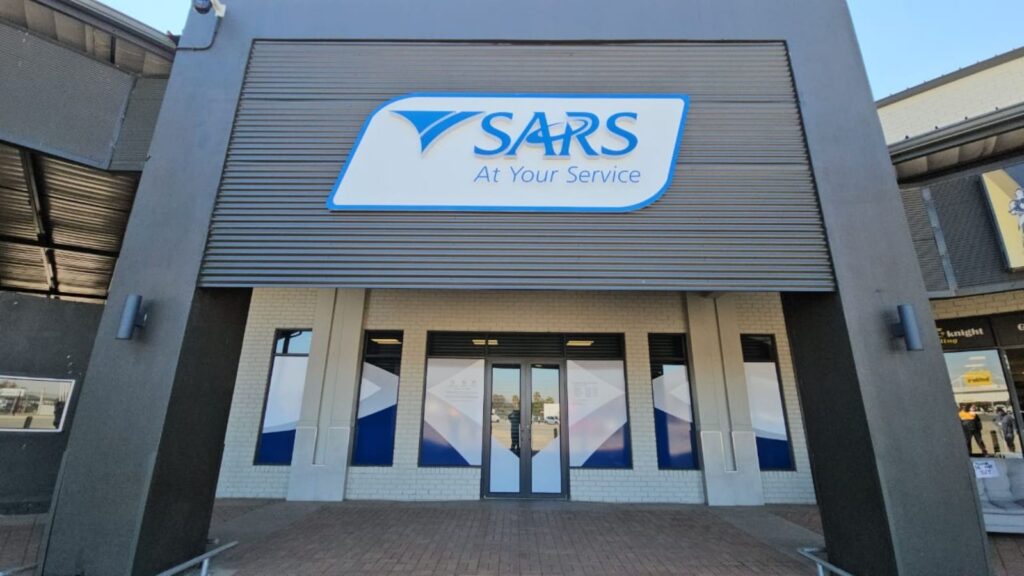
Capital Gains Tax has been described by South African financial experts as a punishment for being a good saver and investor.
For individuals, Capital Gains Tax is essentially a tax on the profit you make when selling an asset.
It works on a 40% inclusion rate of the profit from the sale, which is added to your total taxable income for the year and taxed at the top marginal rate bracket you fall into.
In my case, it was as follows:
- Investment Cost (What I paid for the Nvidia, Microsoft, and Apple shares) – R97,353
- Investment Sale Proceeds (What I sold the Nvidia, Microsoft, and Apple shares for) – R1,260,272
- Total Gain (The profit from the share sale) – R1,162,919
- Annual Exclusion (Granted to individuals) – R50,000
The Capital Gains Tax was then calculated as follows:
- R1,162,919 – R50,000 = R1,112,919
- R1,112,919 has the 40% inclusion rate applied – R445,167
- The top-bracket marginal tax rate (45% in my case) is applied to the amount – R200,325
Paying SARS R200,325
I knew it was coming, but this did not make it any less painful when I filed my income tax return, and SARS told me I had to pay them over R200,000.
An even bigger annoyance, however, is how the South African government charges Capital Gains Tax while at the same time stating that people are not saving enough.
In his 2026 Budget Speech, Finance Minister Enoch Godongwana said our country’s national savings and investment rate “is far below the levels needed to truly create generational wealth and support local investment in the economy”.
South Africa also observes “National Savings Month” every July – ironically, the same month I was taxed for investing my money – which aims to “encourage a stronger saving culture”.
If the government wants to encourage savings and investment, it should scrap the Capital Gains Tax for individuals, following Mauritius’s example.
Mauritius, regularly crowned Africa’s most attractive investment destination, has zero Capital Gains Tax and has seen a massive boom in investments from South Africans as a result.


Comments