Transnet wants the private sector to save the worst port in the world


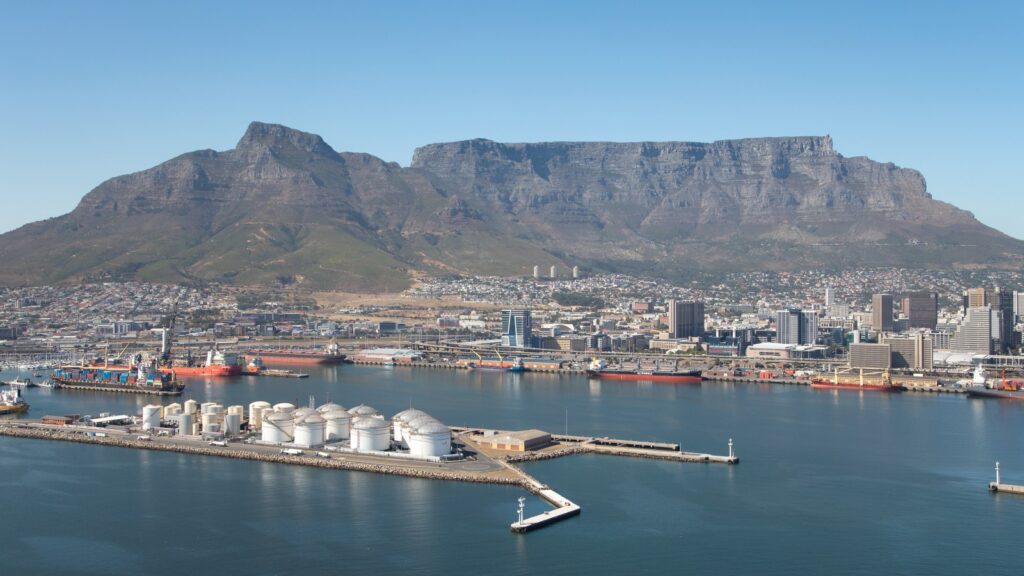
The Transnet National Ports Authority (TNPA) has launched a bid to find a private-sector partner to run the multi-purpose terminal at the Port of Cape Town.
The winning bidder will be designated responsible for operating and upgrading the terminal over the next 25 years, including additional construction work if it is deemed necessary.
After the 25-year time period has lapsed, the port will be handed back over to the TNPA either to run themselves or to find a new private partner.
The multi-purpose terminal handles regular cargo, dry bulk cargo such as coal and ore, and breakbulk cargo, which is too large to fit into standard shipping containers.
A similar concession was granted by the TNPA to Filipino port operator International Container Terminal Services in 2025 to take over operations of the Pier 2 Terminal in Durban.
However, this new tender is reported to be structurally different from that deal, according to the Head of Ports, Transport and Logistics at Bowmans, Andrew Pike.
“Transnet will retain ownership of the land and the infrastructure, but the superstructure and so on will all be provided by the private-sector party,” Pike explained in an interview with 702.
“So it’s quite a different arrangement. You don’t have that equity sharing position that you had at Pier 2, and it looks more like what we recognise as an old-fashioned concession.”
Cape Town’s port efficiency has declined significantly in recent years, being ranked last in the World Bank and S&P Global Market Intelligence’s Container Port Performance Index (CPPI).
The CPPI measured the turnaround time of container vessels at 400 ports around the world, effectively meaning Cape Town has the “worst port in the world” in terms of efficiency.
The port was specifically highlighted by the World Bank as an example of how external factors could exacerbate structural decline, impacting port performance.
“Persistent weather-related disruption, combined with equipment reliability issues, led to high variability in ship times in port despite periods of easing supply chain stress,” the World Bank said.
“This deterioration was accompanied by a decline in berth utilisation, suggesting that vessels increasingly accumulated time outside productive berth operations.”
While Cape Town dropped to last place on the CPPI, Durban saw itself climb to 398th on the back of a notable improvement in port performance and vessel turnaround time.
City of Cape Town welcomes tender

Cape Town Mayor Geordin Hill-Lewis welcomed the launch of the tender as the next key step in revitalising the city’s struggling port.
In a statement, Hill-Lewis said the city had been petitioning the TNPA to speed up its efforts to restore efficiency to Cape Town’s ports.
“This is exactly the major reform we in the City have long been calling for,” Hill-Lewis said. “A more efficient port means more job-creating economic growth for Cape Town.”
“We are optimistic about an economic boost for our region due to greater private sector involvement at the port, as well as Transnet’s R3.4 billion in capital investments to improve operations.”
The TNPA’s latest tender follows similar calls for private-sector partners to run the Liquid Bulk and cold storage terminals at the Port of Cape Town.
According to the Western Cape government, a more efficient Cape Town port would unlock an additional R6 billion in exports, supporting 20,000 jobs and generating R1.6 billion in tax revenue.
Cape Town’s strategic location on one of the world’s busiest shipping routes has made port efficiency a top priority for economic growth in the Western Cape.
However, Pike stressed that it was important to note that the multi-purpose terminal only handled a relatively small percentage of the Port of Cape Town’s total container cargo.
“If this were to be a silver bullet, it would be putting the container terminal on concession rather than the multi-purpose terminal,” Pike said.
“In terms of the containers that pass through this terminal, it’s probably about 10% of the total of Cape Town’s containers. Cape Town does around 730,000 odd containers a year.”
While he said the TNPA’s long-term plans with regard to private-sector partnerships remained unclear at this stage, Pike said it seemed to be slowly moving towards reform.
He also conceded that certain issues which affected Cape Town’s CPPI ranking, such as delays caused by heavy winds, were issues which Transnet had no control over.
Cape Town recently introduced a predictive wind model, developed alongside the Council for Scientific and Industrial Research, to hopefully reduce weather-related disruptions at its port.





Comments