Cleaning up John Steenhuisen’s mess


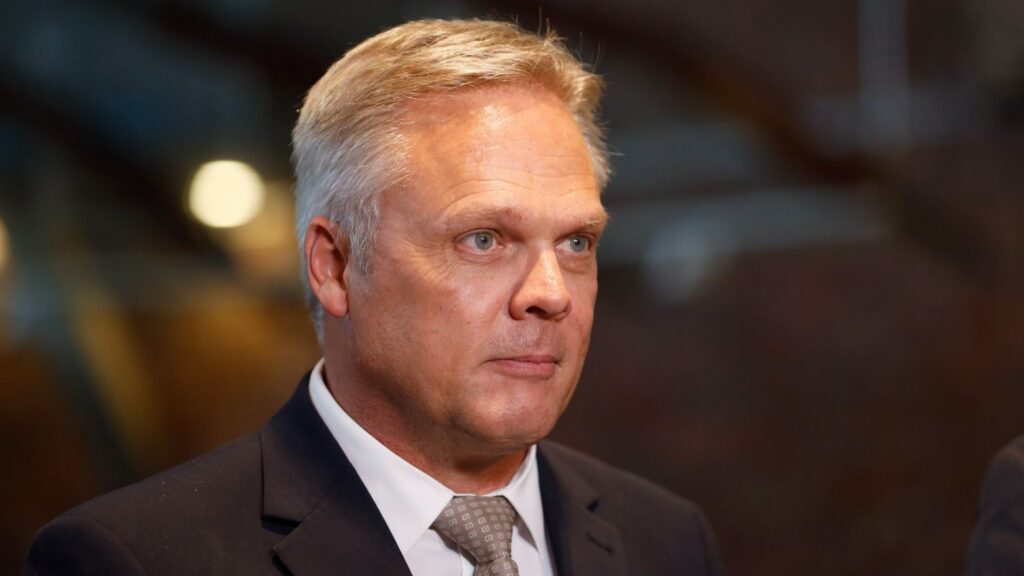
South Africa’s newly appointed Minister of Agriculture, Willie Aucamp, aims to make quick work of turning around the country’s foot-and-mouth disease (FMD) situation.
Only a week after taking over from his predecessor, John Steenhuisen, Aucamp announced a settlement to allow private-sector farmers to import and administer their own FMD vaccines.
Under this agreement, farmers will be allowed to voluntarily vaccinate their own animals, provided they comply with certain legal, biosecurity, traceability, and reporting requirements.
This marks a dramatic shift in policy from Steenhuisen’s tenure as minister, during which he advocated for a strictly government-controlled vaccination response to FMD.
Speaking with Newzroom Afrika, Aucamp firmly stated that no one should hold a monopoly in times of crisis, such as the current outbreak, not even the government.
“I think this sends the right message to the people out there, that government is not here to do things alone,” Aucamp said. “In actual fact, we can’t do things alone.”
“We will never be able to successfully fight this disease on our own. That’s why we need the buy-in from the private sector, and they are more than willing to do that.”
Aucamp explained that before, any companies which imported vaccines into the country were required to distribute them through Onderstepoort Biological Products (OBP).
As part of the settlement, these companies are now allowed to distribute these imported vaccines themselves, removing a large bottleneck.
In addition, all private farmers in South Africa have now been granted the authority by Aucamp’s Director of Animal Health to be able to apply to administer their own vaccines.
Steenhuisen’s approach to handling the outbreak had been criticised by numerous farmers advocacy groups as being too slow and ineffective at containing the spread of the disease.
This was speculated to be the reason behind DA leader Geordin Hill-Lewis’s call for a cabinet reshuffle, which saw Steenhuisen reassigned as Deputy Minister of Trade, Industry and Competition.
Aucamp described the reshuffle as a “win-win” for the country, and said he firmly believed Steenhuisen would perform exceptionally well in his new role.
“The former minister did an excellent job when it came to creating markets and marketing our excellent agricultural products to countries out there,” Aucamp said.
“I thank him for the foundation that he laid in his position as the former Minister of Agriculture for establishing these markets. I think he will be great in his position.”
Aucamp’s efforts welcomed by farmers

The quick turnaround in reaching a settlement under Willie Aucamp as agricultural minister has been welcomed by farmers groups such as FMD Response SA.
In a statement, the organisation praised the agreement for effectively ending the monopoly which OBP held on the importation and distribution of FMD vaccines.
FMD Response SA spokesperson Andrew Morphew said the deal marked an important step towards a more collaborative effort between government and private farmers.
“Allowing the private sector to procure and distribute vaccines will speed up vaccination and strengthen South Africa’s ability to control and ultimately eradicate FMD,” Morphew said.
“This ultimately supports the Department of Agriculture’s own goal of ensuring the economically important sector of agriculture remains vibrant, and will reduce the risks of rising beef and dairy prices.”
FMD Response SA commended Aucamp specifically for his willingness to embrace private partnership, as well as the urgency with which he reached a deal so soon after being appointed.
However, while the group welcomed the easier access to vaccines, it said that the Department now needed to ramp up its efforts to ensure they are administered.
Aucamp said he still aimed to have at least 80% of the national herd vaccinated by December 2026, a target carried over from Steenhuisen’s tenure as Minister of Agriculture.
“The World Organisation for Animal Health states that at least 80% of cattle must be immune at the same time to stop the transmission of FMD,” Morphew said.
“Vaccinating 80% of the country’s cattle by December will not achieve this simultaneous immunity and will not halt the spread of the virus.”
Morphew explained that the cattle would need to be vaccinated within a window of six to eight weeks, including booster shots for those which were vaccinated in February.
This, he said, would be more in line with the outbreak responses of countries which had already successfully eliminated the disease, such as Argentina.
FMD Response SA said they looked forward to a closer working relationship with the Department of Agriculture in implementing a stronger, more timeous vaccination programme.





Comments