The ANC was set up to fail – Mbeki


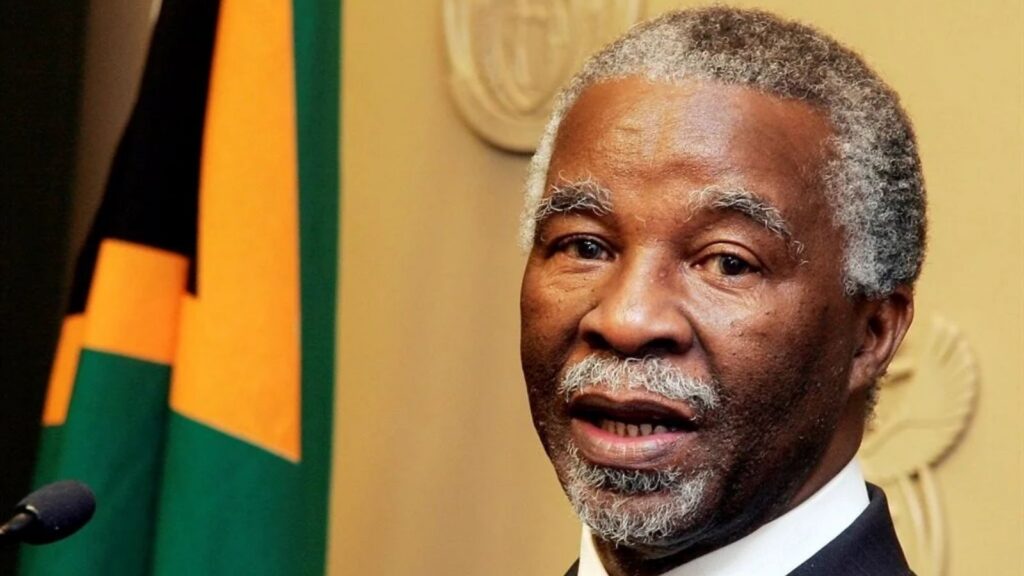
Former President Thabo Mbeki said the ANC government was set up to fail as part of a broader agenda in which the counter-revolution systematically worked to dismantle the state’s capacity.
This, he said, could be seen in the collapse of South Africa’s state-owned enterprises (SOEs), like Eskom, Transnet, Denel, and South African Airways, which were deliberately sabotaged.
The collapse of these SOEs can be traced back to South Africa’s State Capture era under former President Jacob Zuma.
During Zuma’s Presidency, private interests, such as the infamous Gupta family, colluded with high-ranking politicians to systematically hollow out vital state-owned institutions
For example, during this period, Eskom’s boards were replaced with pliant cronies who diverted billions into fraudulent coal and supply contracts.
This saw vital maintenance at the utility being neglected for years, in favour of short-term looting through awarding contracts to suppliers and other workers who could not perform their functions sufficiently.
Similarly, Transnet – which has a monopoly on South Africa’s rail and port logistics sector – was stripped of billions through inflated locomotive procurement deals.
This resulted in the decay of South Africa’s rail infrastructure, which severely bottlenecked the country’s mining and export economy.
Another victim of the State Capture era, which has yet to recover, is Denel. Once a world-renowned state defence and aerospace manufacturer, the SOE was hollowed out under Zuma’s presidency.
In fact, Denel was nearly liquidated after its intellectual property and cash reserves were siphoned off by corrupt, politically linked joint ventures.
The destruction of South Africa’s SOEs happened in plain sight, yet it was only through the Zondo Commission that most of the details were brought to light.
Unfortunately, by that point, the damage was already done, and many of South Africa’s SOEs are still trying to recover.
Many have been left financially crippled, with mounting liabilities and severe maintenance backlogs.
This has seen private companies step in to fill the void left by the state, performing functions typically provided by the government, such as water, waste removal, and public transport.
Set up to fail
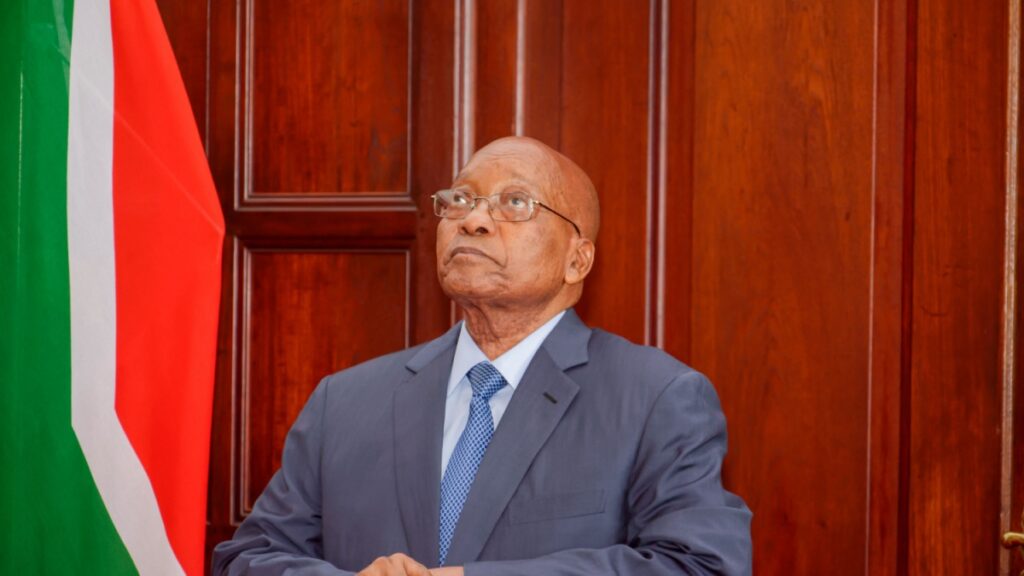
In a presentation at the NDR Seminar in Johannesburg on 3 July, Mbeki explained that the collapse of South Africa’s SOEs was the work of a counter-revolutionary movement that sought to destroy the ANC.
“Here was Eskom, a superstar among utilities globally, which then started going down. Transnet, Denel, SAA – the whole bundle of state corporations – began to decline from 2009 onwards, Mbeki said.
The former president explained that there has been a radical reduction in the state’s role in South Africa’s mixed economy, with private-sector players taking over functions typically performed by the government.
For example, as Transnet’s capacity to transport goods via its rail network declined, private trucking companies have had to step in to fill the void.
“This systematic destruction of the state corporations did not happen on its own,” Mbeki said.
“The counter revolution takes a decision: the ANC must not only be defeated, it must also be destroyed.”
He said the liberation movement suffers from serious levels of infiltration by these counter-revolutionaries, which have put people in place to make decisions that will destroy the ANC from within.
“I know from the ANC side, they did everything to make sure to try very much to weed out this sort of people,” he said.
“We didn’t succeed entirely. I don’t know the percentage of success either, but I know for a fact that many of those agents remained in the movement.”
Mbeki’s examples of how the ANC was set up

As an example of this, Mbeki pointed to a supply crisis Eskom faced in 2007 and 2008, which saw a deliberate sabotage of the utility’s operations.
An investigation following the supply crisis found that the managers of the power stations involved ignored warnings from the utility’s systems.
“When the system indicated that they needed to replenish coal stocks, they did not do so. That is why there was a complete power cut in January 2008,” Mbeki said.
“The station managers deliberately did not replenish the coal. Under the rules and regulations of Eskom, once a situation like that occurs, you declare an emergency.”
By declaring an emergency, workers at the utility no longer need to go through the standard tender process.
“You can simply buy coal from whoever has it available. That immediately doubled the price of coal. It was a deliberate, conscious decision,” Mbeki said.
Another example Mbeki gave was about the construction of Eskom’s Kusile and Medupi Power Stations.
“They started constructing Kusile in 2008, and it should have been completed in seven or eight years,” he said.
“Both of these power stations have six operating units. Ten years after the start of construction at Kusile, not one of these units was operating.”
According to Mbeki, Eskom’s management issued a tender for someone else to come and help them solve this problem, as they had failed to build even one of the six units.
That tender was eventually won by an Indian company belonging to the Tata brothers, which managed to complete the power station within the time frame and the budget provided.
“Everything was fine. However, people expected that Eskom would extend their contract,” Mbeki said.
“Instead, they were told: ‘Very well done, but for us to be able to give you the next contract, you must have a black economic empowerment partner.’”
“When the company asked what that meant in practical terms, the matter was never resolved.”
As a result, Mbeki said, the contract was never renewed, and the next power station unit at Kusile was only concluded around 10 years later.
“It was a deliberate decision; that power station could have been finished a long time ago, but it was part of the counter-revolutionary agenda that the ANC government must fail,” he said.
 Loading ...


Comments