One of Eskom’s biggest customers now gets electricity at a discount


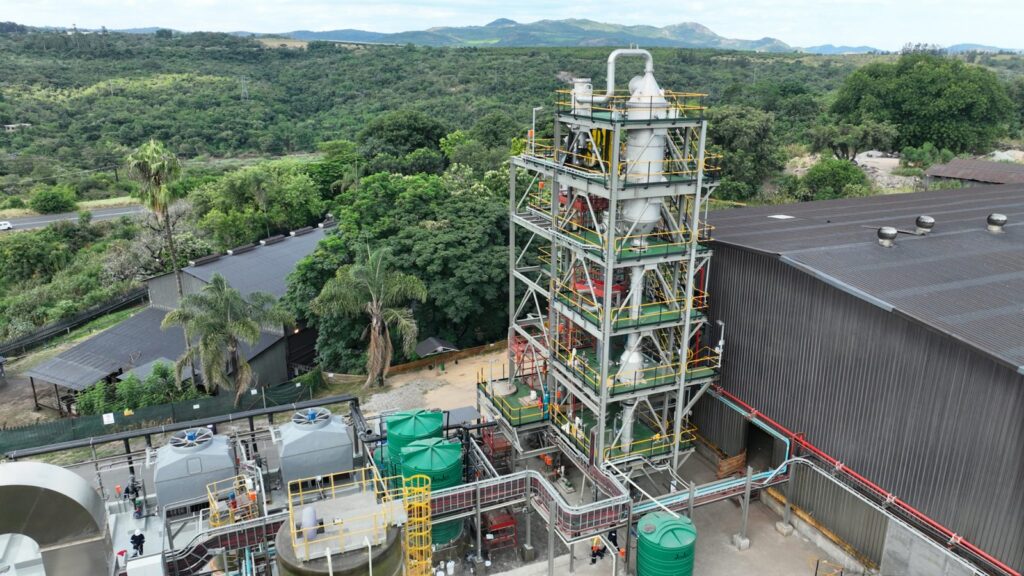
The National Energy Regulator of South Africa (NERSA) has approved a two-year negotiated pricing agreement (NPA) between Eskom and Manganese Metal Company (MMC).
In a recently published statement, NERSA confirmed that the approval of the NPA had been granted during a meeting held on 30 July 2026.
The NPA, which concerns MMC’s manganese metal production in Mpumalanga, came into effect the following day, and will remain in place until July 2028.
In addition, the Energy Regulator approved Eskom’s request to charge MMC a special base tariff, which will run for the same duration as the NPA.
This tariff will increase every year on 1 April until the end of the agreement period, by a rate of Producer Price Index (PPI) + 1%.
“MMC will be liable for a minimum consumption payment based on 80% of normal consumption, measured over each calendar quarter,” NERSA said.
“They will equally share with Eskom on an annual basis any gross profits above projections of 6%, limited to the rebate provided against the Megaflex tariff.”
Eskom will be required to submit progress reports to NERSA on the implementation of the reduced tariff every three months for the duration of the NPA agreement.
These will include information around MMC’s actual electricity consumption, as well as the costs and socio-economic benefits associated with the special price arrangement.
MMC was founded in 1974, and is the world’s only producer of high-grade electrolytic manganese metal (EMM) not based in China.
It is also the largest refiner of 99.9% selenium-free EMM in the world, with 95% of its total production volumes being exported to 120 customers across 20 different countries.
The company reportedly employs more than 400 workers at its production facility in Mbombela, which produces approximately 28,000 tonnes of EMM per annum.
MMC is one of Eskom’s top 10 consumers, with electricity accounting for approximately 41% of the company’s production costs.
Willy Majola, a regulator member responsible for electricity regulation at NERSA, said the MMC deal would protect local communities and the South African economy.
“This approval will help safeguard critical industrial capacity, preserve thousands of direct and indirect jobs, and support local beneficiation,” Majola said.
More companies receiving cheaper electricity
MMC is the third company to be approved for an NPA with Eskom this year, with even more companies expected to follow in future.
NERSA previously approved two separate NPAs in May for ferrochrome producers Samancor Chrome and Glencore-Merafe Chrome Ventures.
The two companies were granted a special tariff of R0.62/kWh, a 54% discount over what they had paid for electricity at the end of 2025.
While the exact price of the tariffs granted to Samancor and Glencore was made publicly known, NERSA has decided not to disclose the pricing details of the new tariff for MMC.
The disclosure of such information would, according to the energy regulator, allow MMC’s international competitors to determine the company’s breakeven price.
More companies have engaged with Eskom and NERSA over reduced electricity prices, as many continue to be outpaced by rapidly rising energy costs.
Transalloys, South Africa’s last manganese smelter, suspended operations last month as it waits to hear a final decision on a special tariff.
ArcelorMittal SA has also approached Eskom to secure a more favourable pricing arrangement, with the company spending an estimated R3.5 billion a year on electricity.
Electricity Minister Kgosientsho Ramokgopa recently announced an amendment to South Africa’s electricity pricing policy that would allow these NPAs to be extended to more sectors.
Following the approval of special tariffs for Samancor and Glencore, Ramokgopa said a further seven companies were currently under consideration for special tariffs.
He also said these tariffs would be made available to companies which are not financially distressed, but would be able to use the reduced tariff to drive growth and create jobs.
“If you look at the current articulation of the negotiated pricing agreement, the only trigger to qualify for an NPA is when you are in distress,” Ramokgopa said.
“We are introducing another criterion for industries that are not in distress, but if they were to get concessional funding they are able to support national interests.”


Comments