Over 85% of South African schools are dysfunctional


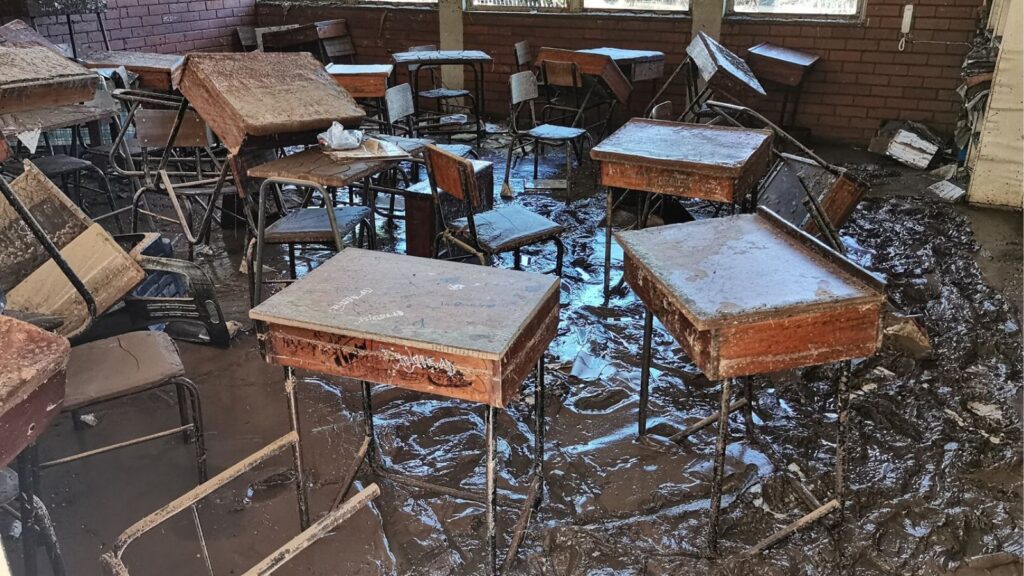
South Africa’s public education sector has effectively collapsed over the past decade, with 85% of schools being largely dysfunctional.
The other 15% are among the best in the world, with this category being dominated by private schools and former Model C public schools.
This two-tier system has become entrenched rather than diminished by the ANC-led government’s policies since coming to power in 1994.
Access to education as a result of its policies has greatly increased at the expense of the quality of education.
This means many scholars who finished matric cannot get into university and study further to become more productive members of the economy.
A vicious cycle has been created where the productivity of labour in South Africa has stagnated and declined in the past decade, dragging down economic growth and limiting the resources that can be invested into education.
Econometrix chief economist Dr Azar Jammine explained to the Palatable Politics podcast that many individuals entering university will never be productive in a modern economy.
“The way that poor basic education shows up in the data is that much of the youth does not study in the areas where jobs are being created and are really needed,” Jammine said.
“This is going to become even more critical in the years to come as the economy becomes increasingly digital, maths-based, and computer-based.”
The sectors that are growing fastest in South Africa’s economy require mathematics in many ways. Maths is not just about counting, but it is also about processing information logically, Jammine explained.
“The education system in South Africa is not developing those skills sufficiently. Much of that has to do with schooling rather than university,” Jammine said.
“85% of South African schools are largely dysfunctional. We are fortunate that we have 15% of excellence made up by private schools and former Model C schools.”
This means that of the 24,000 schools across South Africa, only 4,000 of those schools are really effective at creating skilled individuals.
More money is not the answer
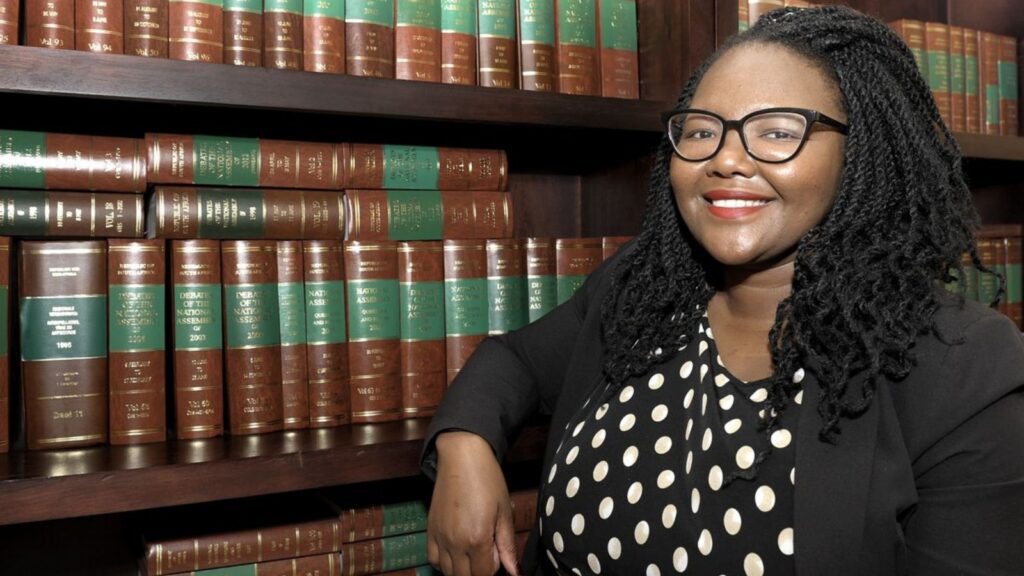
South Africa spends a significant share of its budget on education, with it consuming around 6% of the entire country’s GDP on an annual basis.
This puts South Africa among the world’s highest spenders on education relative to the size of its economy. Despite this, it has some of the worst education outcomes globally.
“The government is already spending a high proportion of the budget on education, but it is not being spent effectively,” Jammine said.
Much of this money is spent on administrative staff within the government department and provincial departments, rather than on teachers and educational material.
As such, while the state spends a lot of money on education, very little of it ever reaches the classroom where it can improve outcomes.
Another challenge South Africa’s education system faces is the rapid rise in access to education without increased capacity and investment in classrooms.
This has translated into quality declining as more scholars are entering school but do not have access to good teaching, textbooks, and facilities.
In particular, many of these scholars do not receive good-quality maths and science education, which is vital for a modern economy.
Grade R enrolment has risen by 222.4% in the past 25 years, with the government rightly celebrating this achievement. However, only 63% of the pupils who enter school actually finish matric.
When accounting for access to university, the outcome is even worse, with just four in ten scholars who write matric gaining a university entrance pass.
“Part of our problem as South Africa is that we have not sufficiently considered what the transformation of education is about,” former finance minister Trevor Manuel said.
Manuel explained that education policy has failed to break the two-tier model of education in South Africa, with there being islands of excellence amid a sea of low-quality education.
“It is a huge achievement that 80% of school children in South Africa are at no-fee schools. But no fees frequently also means no maths, no science, and no discipline,” Manuel said.
“And so this notion of transforming the education system is a curious thing that we have not been able to master in South Africa.”
“Bantu education was built in the 1950s without mathematics. That was in 1953, and in 2025, the mathematics is still not there,” Manuel said.
“You have taken quantitative skills out of a generation of learners and successive generations of teachers, and so it is still not there.”


Comments