South Africa needs a miracle


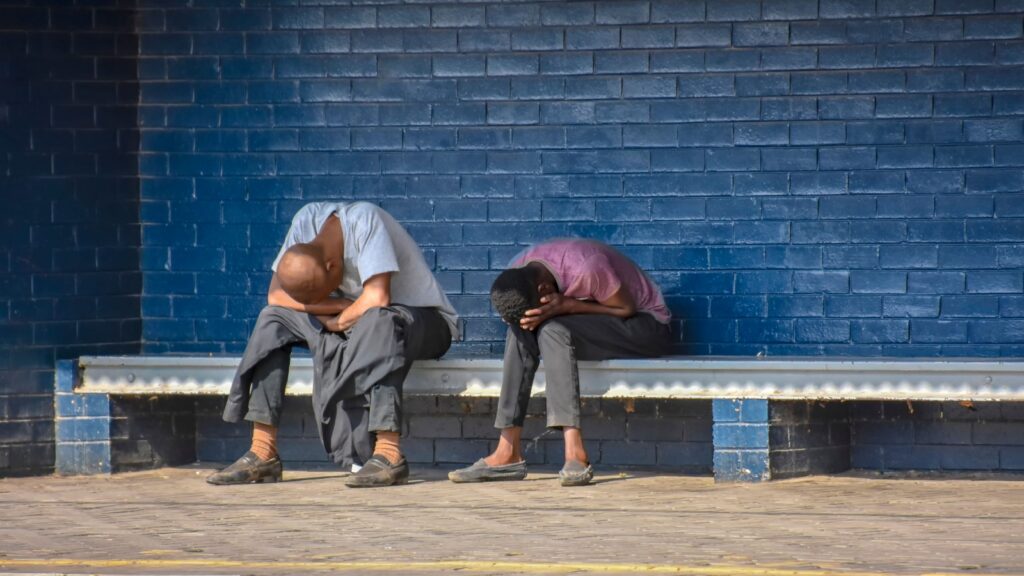
A decade of tax data has revealed the extraordinary scale of South Africa’s employment crisis, with formal-sector job creation falling dramatically short of what is needed to absorb millions of unemployed people.
Speaking on The Money Show, Wits University’s Southern Centre for Inequality Studies’ Associate Professor, Justin Visagie, said the numbers paint a bleak picture of an economy that is simply not creating enough jobs.
Visagie explained that the findings have left him deeply concerned about South Africa’s future. “It’s something that’s been keeping me up at night because the numbers really don’t add up,” he said.
Visagie has been analysing tax data made available through a secure National Treasury facility designed to help researchers better understand the South African economy.
The data revealed that over the past decade, South Africa created only 130,000 new formal-sector work opportunities.
However, over the same period, the number of unemployed job seekers increased from 8 million to 12 million.
“We’ve reached a point where you would need to double the size of the formal economy overnight just to break even in terms of solving that unemployment problem,” Visagie said.
The findings suggest that even under highly optimistic economic growth scenarios, millions of South Africans may never find work in the formal economy, Visagie said.
“It’s not just a marginal or small issue. It really is extraordinary. What this implies is that even our best-case growth scenarios still won’t be enough for millions of South Africans looking for work within their own lifetime,” he said.
“My main challenge to ordinary South Africans is to think: Is this acceptable? Is it acceptable for us to have millions of people who want to work, are willing to work, but are forced to go hungry?”
The informal economy
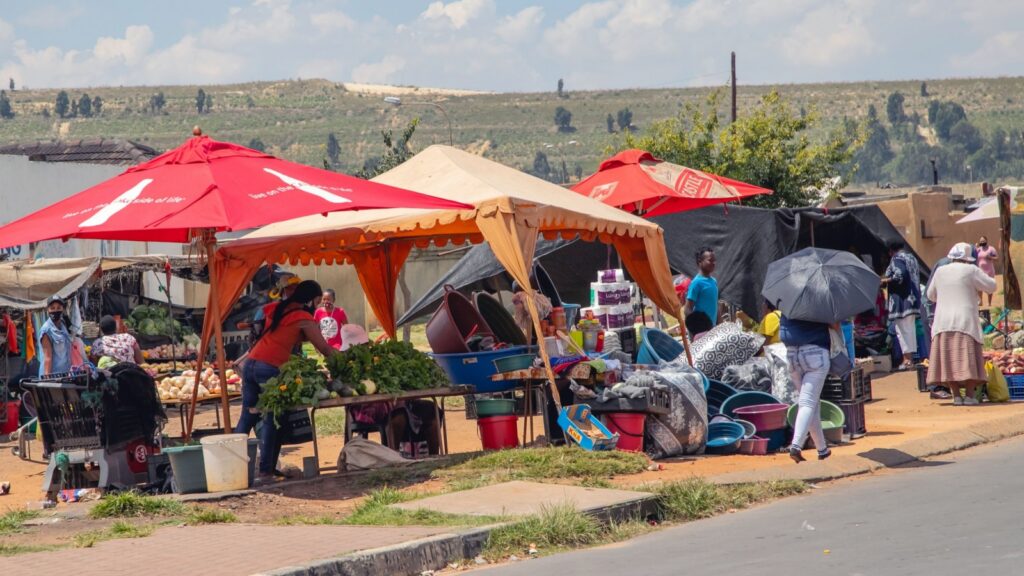
One area that deserves greater attention is the informal economy. While some commentators argue that South Africa’s informal sector is undercounted, Visagie believes the problem is deeper than that.
He argued that South Africa’s informal economy is unusually small compared with that of many other developing countries.
In large parts of Latin America and Sub-Saharan Africa, lower unemployment rates are often supported by larger informal sectors that provide livelihoods for millions of people.
“Part of the reason we have such large unemployment is because our informal economy isn’t playing the role that it plays elsewhere,” he said.
Visagie explained that there are two major reasons. The first is the destruction of small-scale subsistence agriculture, which historically provided livelihoods for many households.
The second is the continued spatial segregation of South African cities. “I think our level of segregation within our cities and urban spaces hampers the size and the opportunity for informality,” he explained.
“If you live in a township, you’ll find that there’s a lot of informal activity around you, whereas if you live in a more affluent area, it’s far more unlikely that you’re going to come into contact with informal traders.”
Visagie stressed that policymakers should view informal traders and small-scale operators as entrepreneurs rather than as a problem to be managed.
“We need to have the right attitude and mindset towards informal trading and to see many people as small-scale entrepreneurs.”
While regulation remains necessary, he argued that the government often applies standards that are unrealistic for small operators.
“There needs to be this middle ground where we don’t make the bar too high, but we see the opportunity for people to really make a livelihood and contribute meaningfully to South African society,” he said.
Young South Africans are paying the highest price
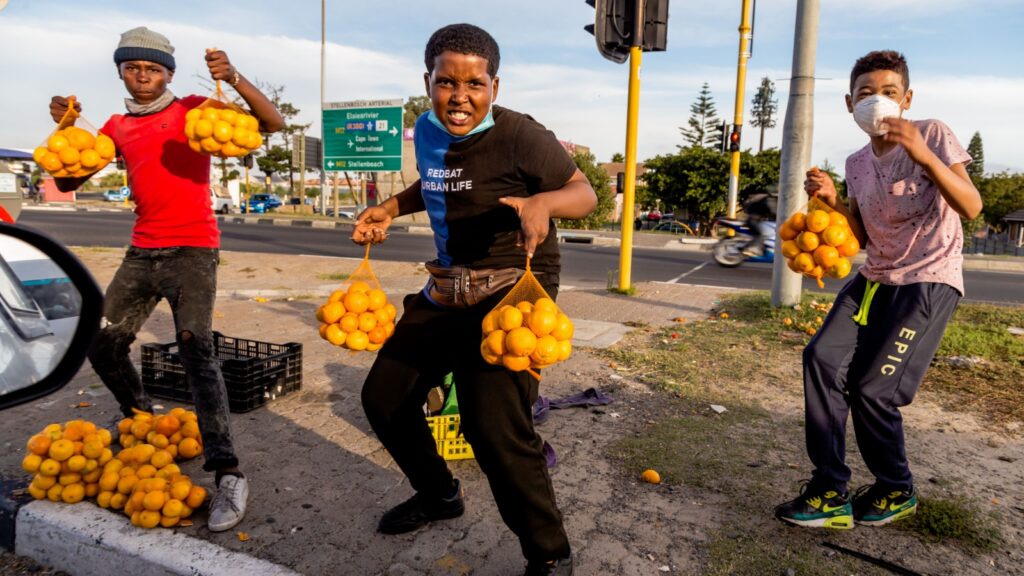
One of the most concerning findings the tax data revealed is the growing divide between younger and older workers.
According to Visagie, the Covid-19 pandemic had only a limited impact on employment among people aged 35 and older.
However, younger workers experienced severe losses from which many have yet to recover. “It was one of the most striking things that we found,” he said.
Workers aged 25 to 35 remained roughly 6% below their pre-pandemic employment levels, while employment among those aged 15 to 25 fell more than 15% below pre-pandemic levels.
“We haven’t actually seen them recover back to their pre-pandemic level,” Visagie explained, adding that the issue extends beyond mere employment rates.
“It’s not just a crisis in jobs. It’s also a crisis in the quality of jobs and which segment of South African society is being excluded.”
The long-term implications are significant because young people who fail to gain an early foothold in the labour market often remain excluded for years.
“We know if young people aren’t able to get a foot into the labour market early on, their chances of being structurally excluded within the economy increase in the long term,” he said.
While it may be easy to brush off South Africa’s high unemployment rate because of how long it has been a problem, Visagie made it clear that these rates are historically exceptional.
“During the Great Depression in 1933, countries such as the United States and Britain had unemployment rates reaching 20% to 25%,” he said.
“In South Africa, we talk about a 40% unemployment rate, including discouraged work seekers, and that’s been going on since Covid.”
While Visagie said he is not pessimistic about the future, he believes the scale of the problem means it is not likely to be fixed by the market alone.
“The formal economy, even if it grows at 3% and creates 3% more jobs every year, would take us 50 years to wipe out the problem,” he said.
“If we grew at 5%, it would take us 20 years. That’s still a very long time.” This growth rate is also very unlikely to be achieved, Visagie said.
As a result, South Africa needs a more active state that works alongside the formal economy to create opportunities for people who remain excluded from the labour market.
According to Visagie, the formal economy remains a foundational and essential part of South Africa’s job market.
“But it needs to be combined with a much more active and caring state that can think about what other options we can provide to an underutilised resource, which is many warm bodies in South Africa who don’t seem to be participating meaningfully,” he said.




Comments