Rich South Africans are moving into enclaves with their own electricity, water, security, healthcare, and education


Renowned political economist Frans Cronje said that South Africa is balkanising into elite, middle-class enclaves with their own power, water, and security.
Cronje shared his views about South Africa’s economic and political situation during a Biznews Podcast with Alec Hogg.
He argued that the political union formed in 1910 is fundamentally breaking apart because the central government can no longer project authority.
“The fragmentation we’re seeing now means that there will not be such an authority into the future anymore,” he said.
“As the South African state has retreated from being able to fulfil its functions, private actors have entered to take that over at a macro level.”
The outcome is that the South African union will break up into Balkans. “There’ll be different kinds of Balkans, including elite middle-class enclaves,” he said.
“These enclaves will be home to richer South Africans and offer them a sustainable long-term future in the country.”
He said many of these people will be highly skilled entrepreneurs who are well hedged against South Africa and don’t do business with the state.
This group, which does not typically work for large corporations, is globally mobile in terms of where they can work and where their money is.
“These enclaves are going to be as strong as the state is weak. If the state collapses into anarchy, you will be infinitely strong, and you’ll withstand that,” he said.
Cronje said that due to these enclaves, the elite middle classes in South Africa no longer face a long-term downside.
“This is the first time in South Africa’s history where this holds true. These enclaves are very good and resilient in the face of every man-made disaster,” he said.
He added that, despite being criticised in some quarters as bastions of elitism, these enclaves are extremely valuable.
“It means that the country can now go through a decade of real trouble and still retain the entrepreneurial, capital, and skills base,” he said.
He added that people who live in these enclaves form the core of the tax and employment base, and they would have left if the enclaves did not exist.
The good news is that the enclaves are resilient in the face of every man-made disaster you can imagine.
Large security estates across South Africa

One example of an elite middle-class enclave is a large security estate, which is a mini-society which isolates residents from state failure.
There are many of these estates across South Africa, including Midstream in Gauteng, Val de Vie in the Western Cape, and Waterfall in Johannesburg.
Midstream, for example, is much more than a group of houses with heightened security and access control.
It is truly an exclusive town with its own schools, hospitals, shopping centres, restaurants, churches, and a retirement village.
From the outset, the founders envisaged developing a town that would offer residents a relaxed and safe environment and a small-town lifestyle.
To safeguard the town, it has a 50-kilometre-long and 5-meter-wide double security wall surrounding the 1,300-hectare estate.
Midstream differs from regular security estates in that it contains many smaller estates, such as Midstream Heights, Midstream Meadows, and Midstream Ridge.
It also has its own retirement village, Retire@Midstream, with a frail care facility and a dementia facility.
Midstream has 6,300 houses in its numerous separate estates, which is larger than many smaller towns in the country.
It also has some of the best medical facilities in South Africa. The Midstream Mediclinic hospital inside the estate provides world-class specialists and facilities.
It also has a Midstream Medical Centre, which includes a Cure Day Hospital, a step-down centre, and local medical practices of general practitioners.
This is a good example of an enclave, which Cronje is referring to, where people do not rely on state services.
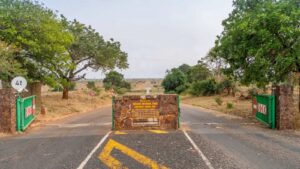
Photos of Midstream Estate







Comments