John Steenhuisen’s monopoly is backfiring


The Department of Agriculture’s (DoA) insistence on state oversight has greatly hindered the efficiency of its foot-and-mouth disease (FMD) vaccination rollout.
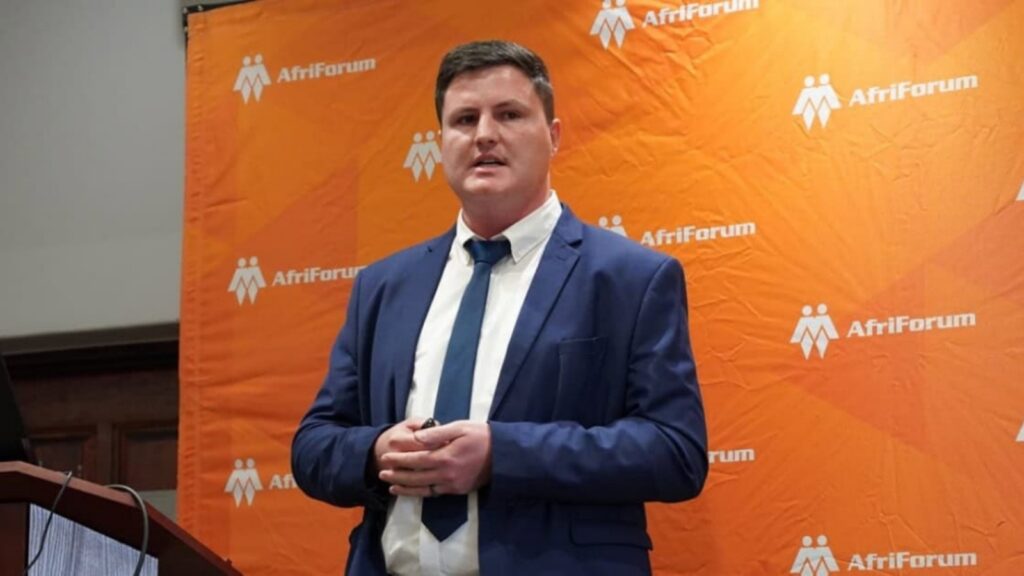
In a statement released on 12 May, the civil rights group AfriForum said the department cannot force farmers to participate in a vaccination scheme where the full compliance costs are not yet clear.
Agriculture Minister John Steenhuisen gazetted the department’s voluntary vaccination scheme on 5 May 2026, under section 10 of the Animal Diseases Act.
The scheme allows participating private farmers to procure vaccinations from the state, but only if they adhere to a strict set of guidelines set out by the DoA.
This includes potentially being required to pay for both the procurement and administration of the vaccines, as the DoA has not yet confirmed whether these will be subsidised.
AfriForum conceded that while state supervision was necessary, the government’s centralist strategy to vaccine administration had significantly delayed the rollout.
This effectively means that many cattle, which had already been vaccinated, will now have to be vaccinated again due to a heightened risk of re-infection.
AfriForum’s manager of Environmental Affairs, Lambert De Klerk, said this could have been avoided had farmers been allowed to procure the vaccines themselves through the private sector.
“In a crisis like this, time is everything,” De Klerk said. “Every week of delay leads to more animals being exposed, creates greater uncertainty and exacerbates economic damage.”
“The private sector has the necessary knowledge, networks and logistical capacity to help more quickly, but they should have been allowed to do so earlier.”
While the DoA has described the vaccination scheme as voluntary, AfriForum said farmers who do not participate will likely not be able to procure vaccines for themselves.
Additionally, farmers who do not strictly adhere to the department’s guidelines for scheme participation could run the risk of having their farms placed under quarantine.
AfriForum called on Steenhuisen and his department to remove all remaining barriers to private-sector participation in the administration of FMD vaccines across the country.
“Farmers should never be held hostage by a slow government process,” De Klerk said. “If the government had made way for the private sector earlier, the problem could have been closer to a full solution.”
Easier access to vaccines not enough
While the unveiling of the section 10 vaccination scheme has been seen as a step in the right direction, many argue it still does not make enough provision for the country’s farmers.
Independent farmer-led initiative FMD Response SA said the vaccination rollout programme was still too slow and restrictive to effectively halt the spread of the disease.
The group estimated the current FMD plan to have as much as a 95% chance of failure, even given the increased private sector participation through the section 10 scheme.
The DoA’s target is to vaccinate at least 80% of the country’s 14 million-strong national cattle herd by the end of 2026, which they expect will reduce FMD outbreaks by 70%.
Since the beginning of the vaccine rollout in late February, more than 2.7 million cattle had been vaccinated, and over 5.2 million vaccine doses had been distributed.
FMD Response SA chairman Stephen Butt said continued outbreaks of FMD and the re-infection of vaccinated animals around the country have validated the group’s concerns.
“The section 10 plan does not, in any way, talk to deploying or marshalling resources at a private sector level,” Butt said. “And that we’re deeply concerned about.”
“For that reason, we believe the plan is fatally flawed, and we’re seeing that with the continuation of outbreaks on the ground.”
FMD Response SA said animals need to be vaccinated within strict six-to-eight week timeframes to ensure continued immunity and prevent the spread of the disease.
The section 10 plan was originally slated to be gazetted in January 2026, but faced numerous delays and missed deadlines until its publication on 5 May.
Steenhuisen said the delays were due to the over 300 comment submissions which the DoA had to go through while finalising the plan, including those from FMD Response SA.
“I don’t think they’ve been adequately catered for in the revised section 10 scheme,” Butt said. “But we appreciate that the scheme is only part of the plan. There is other work at play.”
“We continue to engage positively with government, and the door has been opened. We’ve had some very meaningful contributions, and we’re very committed to resolving this crisis together.”




Comments