Good news for South Africans who still have a green ID book and need a new Smart ID card


Home Affairs Minister Leon Schreiber announced that people can get new Smart ID cards at 146 bank branches, with Capitec leading the way.
People who apply for a new Smart ID card can keep their old green ID book as a memento. However, it would no longer be a valid means of identification.
Over the last few weeks, there have been many developments to make it easier for South Africans to replace their green ID book with a Smart ID.
On 9 March 2026, the Department of Home Affairs’ new Digital Partnership Model with South Africa’s banking sector entered its live operational phase.
The Digital Partnership Model offers a fully digital experience where it takes just minutes to complete a Smart ID application.
This is achieved using cutting-edge technology, integrated with their local bank branch in the area where people live.
South African citizens, including qualifying naturalised citizens and permanent residents who still have green ID books, can convert to Smart ID Cards.
This initiative forms part of the Home Affairs @ home digital transformation programme to make it easier for South Africans to access identity and civic services.
“It signals our commitment to this new era in which Home Affairs services move closer to the people through digital and automated channels,” said Schreiber.
It includes extending the existing technological integration between Home Affairs and the banking sector, known as the Online Verification Service.
Department of Home Affairs’ new Digital Partnership Model
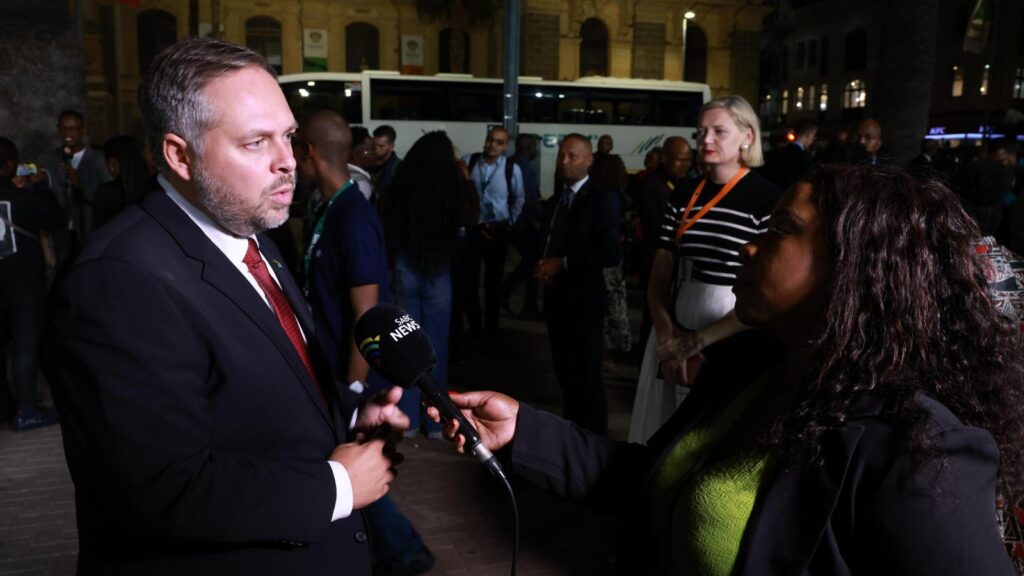
The new Digital Partnership Model enables participating banks to connect directly to Home Affairs systems through a secure API-based Digital Gateway.
This allows applications to be completed within a matter of minutes through the bank’s own service environment, without the need to fill in paperwork.
This decentralises and expands the number of secure and dignified service points available to citizens across the country.
Most of the country’s top banks form part of the programme, including Capitec Bank, Standard Bank, Absa, and FNB.
In March 2026, the first Capitec and Standard Bank branches went live. On 1 April 2026, the first FNB branches went live.
On Tuesday, 21 April 2026, Schreiber announced that 146 South African bank branches are now live on the new system.
“Just 6 weeks after we launched our new digital partnership model, 146 bank branches are now live across South Africa,” he said.
“Over 63,000 citizens have already replaced their green ID books with Smart IDs in just 5 minutes. No bookings or paperwork were required.”
This is only the start. The Department’s Medium-Term Development Plan is to scale the new Digital Partnership Model to 1,000 participating bank branches.
“This will dramatically increase access to services and ensure the end of long queues at Home Affairs offices,” Schreiber said.
Capitec will soon have 100 branches offering smart ID applications

Capitec will soon have 100 branches offering smart ID applications, with a plan to expand the service to 350 locations by the end of the year.
Capitec is South Africa’s largest bank by subscriber numbers, which means it will make it much easier for people with green ID books to get a new Smart ID.
Capitec CEO Graham Lee said their initial rollout was informed by the distance between branches and Home Affairs offices and broad geographic coverage.
“Our starting point was to work with Home Affairs to see where they saw the most pressing needs, and a variety of different factors were taken into account,” Lee said.
“These included distance from Home Affairs offices, particularly the modernised offices with live capture capability needed to issue smart IDs.”
Lee said they wanted to ensure that the service was broadly spread across different client types, needs, and all provinces.
Now that the goal of expanding smart ID services in all provinces has been met, they will follow customer demand to decide which branches need smart ID services next.
“It’s in every single province now, and we’re seeing demand. We’re very responsive, so we will see where the most demand is and roll out future branches there,” stated Lee.
“So very much, this is client-driven from this point on, while ensuring that it’s broadly spaced in terms of geography and broadly available.”
He added that the bank would soon begin offering a service to first-time Smart ID applicants who do not have a green ID book.
“This application process in our branches is an excellent example of the public and private sectors working together brilliantly for the benefit of South Africans,” Lee said.





Comments