One area in South Africa has not had electricity for 13 years


The community of Zebediela Moletlane in Limpopo has been without electricity for more than 13 years, and government efforts to address the problem have fallen short.
This community is one of many in South Africa where access to electricity remains limited or non-existent.
Now, the government has allocated R18.6 million over the next three years to electrify areas in South Africa that still lack access, and a task team has been established to oversee these efforts.
Electricity and Energy Minister Kgosientsho Ramokgopa was recently asked about the community of Zebediela Moletlane.
ANC MP Mogodu Moela asked the minister what steps he has taken to address matters of basic service delivery in the community of Zebediela Moletlane, pointing out that the area has been without electricity for more than 13 years.
The minister said his department is aware of the longstanding electricity backlogs affecting the community of Zebediela Moletlane, particularly in the new extensions and infill areas that remain without supply.
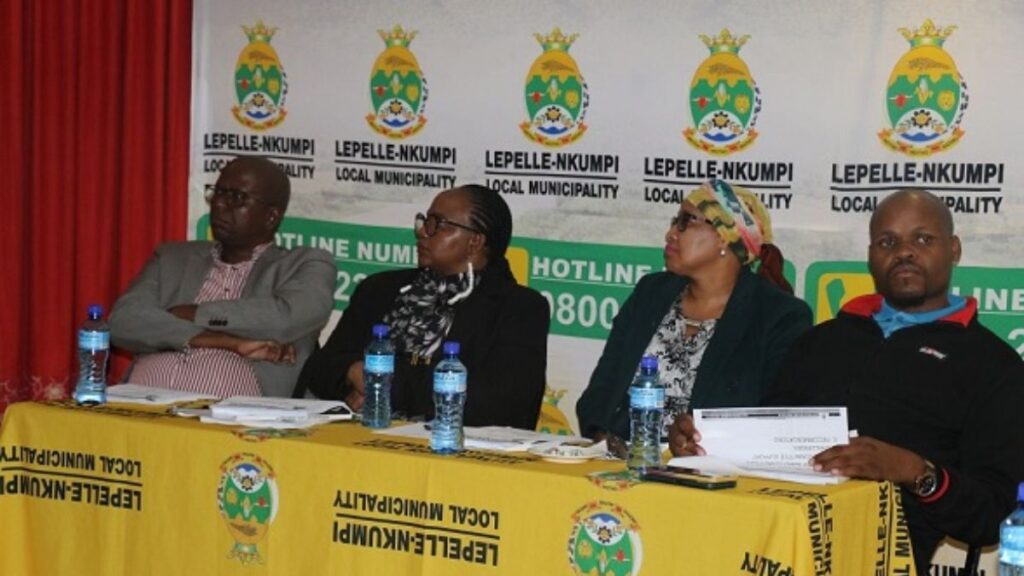
He explained that, in the 2022/23 financial year, the government allocated money to Lepelle-Nkumpi Local Municipality, of which Zebediela Moletlane forms part, to implement electrification in the affected areas.
“However, the project was not completed as planned due to capacity constraints, as well as internal operational and bureaucratic delays within the municipality,” he said.
This, he said, resulted in protracted timelines in the procurement process and the appointment of the requisite service providers.
Now, the government has allocated an additional R18.6 million over the current Medium Term Expenditure Framework (MTEF) to electrify areas that still lack access to electricity. This includes the Moletlane extensions and infill settlements.
In addition, Ramokgopa said his department, along with Eskom, will establish a task team to work closely with the municipality.
“The Task Team will provide technical assistance and implementation support to help resuscitate and accelerate the electrification programme,” he said.
The team will specifically focus on clearing procurement and delivery bottlenecks, strengthening technical readiness, and improving coordination and oversight across all implementing parties.
“This intervention is intended to eradicate the electrification backlog in Ward 12 and contribute to government’s objective of achieving universal access to electricity by 2030,” he said.
National Development Plan
As noted by the minister, expanding access to electricity for almost all South Africans is one of the goals outlined in the National Development Plan (NDP) 2030.
Specifically, the NDP states that more than 90% of the population should enjoy access to grid-connected or off-grid electricity within 20 years.
This plan envisages that, by 2030, South Africa will have an energy sector that promotes social equity through expanded access to energy at affordable tariffs and through targeted, sustainable subsidies for needy households.
The plan, therefore, notes that access to electricity is not merely an infrastructure issue but also an affordability concern.
“Even where infrastructure is available, households can often not afford enough electricity and water to cook and stay warm, or the fares to go to town to look for work,” the plan states.
It explained that these problems will only be resolved if their underlying causes are addressed, with one of the most important being that many households are too poor to pay the costs of basic services.
Since 2009, South Africa’s electricity prices have risen by more than 600%, not including the 8.76% tariff hike that is set to kick in on 1 April this year for customers supplied directly by Eskom.
This is considerably faster than the growth seen in consumer prices, which have roughly doubled since 2009.
Therefore, many South African households have been priced out of access to electricity, regardless of whether the requisite infrastructure exists.
This has also led to a rise in illegal connections, which have proven a thorn in Eskom’s side, necessitating further price increases to make up for the lost revenue.
To make electricity more affordable, the government offers Free Basic Services, which include a minimum amount of electricity, water, and sanitation given to households that meet certain conditions.
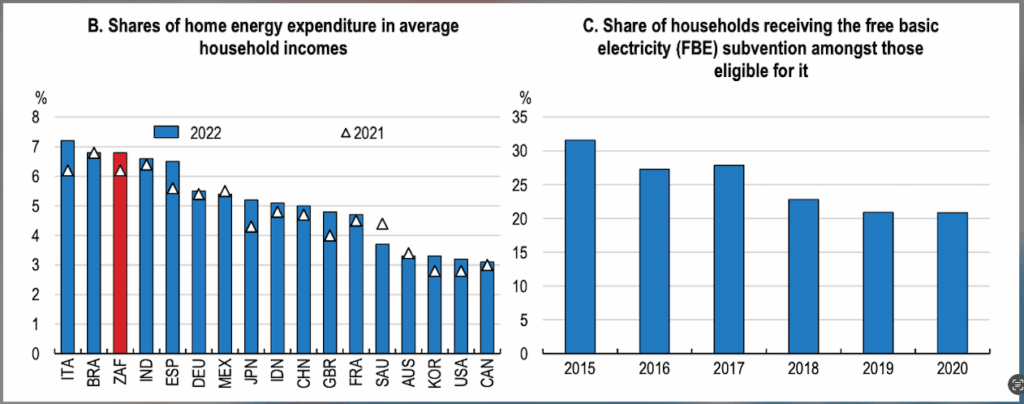
However, a Stats SA report released in 2025 showed that the percentage of consumer units using the free basic electricity service dropped from 25% to 14% between 2014 and 2023.
The Organisation for Economic Co-operation and Development (OECD) has sounded the alarm about this issue, saying the low uptake of free basic electricity has contributed to high electricity spending in the country.
The organisation estimated that 5.4 million, or almost 80% of eligible households, did not receive this service in 2020.
It attributed this to poor targeting, with many municipalities lacking registries of indigent households, weak administration and coordination issues between Eskom and municipalities when the utility is responsible for delivery.
“Additionally, the Free Basic Electricity (FBE) programme currently provides an insufficient amount of free electricity to meet basic needs, such as cooking and heating fully,” the OECD said.
“Estimates suggest that the FBE allocation would need to be increased by 50% to support eligible households adequately.”
The graphs below, courtesy of the OECD, show how South Africans’ spending on energy is among the highest in the world, yet the share of households receiving the FBE subsidy has decreased.



Comments