Social unrest warning for South Africa


South Africa faces an increased likelihood of social unrest in the coming years if the country cannot get its economy to grow at a much quicker pace.
Growing the economy at a faster rate is heavily reliant on the government pursuing its reform agenda with more urgency, with progress being slow outside of the electricity sector.
This is ultimately the hinge on which South Africa’s future lies, with executing the stated reform agenda being the determining factor between prosperity and increased hardship and social tension.
Standard Bank outlined this bifurcated view in its annual results for the 2025 financial year, in which it presents its bull and bear cases for the various markets in which it operates.
The bank remains broadly positive about South Africa’s future, encouraged by the uptick in confidence, investment activity, and economic momentum in the second half of 2025.
It believes this will broadly continue into 2026 and the future, but warned that the country’s recovery remains nascent and fragile.
In its bull case for South Africa, Standard Bank sees structural reforms gathering stronger momentum and unleashing a virtuous cycle of higher fixed investment and economic growth.
“South Africa’s potential growth rate improves in the near term, and faster-paced growth is possible over the medium term,” the bank said.
Coupled with these reforms gathering momentum, the National Treasury continues its policy of fiscal consolidation, reducing South Africa’s risk premium.
This translates into further upgrades in South Africa’s sovereign credit rating, a stronger rand, lower inflation, and lower interest rates.
Apart from structural factors, the bank expects continued short-term cyclical factors to boost economic growth in South Africa.
In particular, the bank expects commodity prices to remain elevated, supporting economic growth and the rand in the short term.
The combination of these factors should see economic growth continue its upward trend in the coming years, resulting in improved living standards for South Africans.
This bull case scenario is more likely, according to the bank, than the bear case scenario, with South Africa’s reform agenda appearing to have a pace of its own.
In particular, Operation Vulindlela has driven positive outcomes regarding red tape, reform in the electricity sector, and is now shifting focus towards municipal governance.

Social unrest looms
However, the outlook is not all rosy for South Africa, with there still being significant potential for the reform agenda to be derailed and reversed.
This potential is coupled with a likely reversal of cyclical factors due to the situation in the Middle East. If the conflict lasts for a substantial period of time, inflation is likely to rise, and interest rate hikes may follow.
In the bank’s bear case, these factors dovetail to result in capping South Africa’s economic growth below 1%.
“Locally, structural reform momentum wanes somewhat, keeping SA’s supply-side constraints more acute and capping real potential economic growth around 1%. Social unrest episodes are more likely in this case,” the bank said.
This results in South Africa’s risk premium rising once again, weakening the rand and translating into negative sovereign ratings action.
“Despite lower global inflation (and a lower oil price), domestic inflation is higher due to currency impacts and inflation expectations remaining sticky,” the bank said.
“This would trigger interest rate hikes by the Reserve Bank, with the policy rate 125 basis points higher than the base case at its peak.”
“Higher interest rates, lower growth and fiscal slippage see key fiscal ratios weaken, and debt stabilisation is unlikely to materialise.”
This will spark fears of a debt trap, where the government increases its borrowing to pay off existing debt. This new debt is issued at a higher interest rate, resulting in skyrocketing debt-servicing costs.
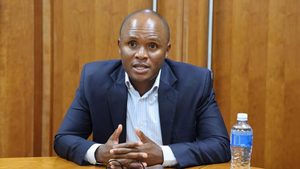
Standard Bank chief economist Goolam Ballim explained earlier this year that South Africa does face an increased risk of social unrest, with protest action increasing in recent years.
In 2025, South Africa experienced 229 service delivery protests amid rising frustration with local government failures and declining participation in elections and democratic processes.
“People are not happy. Service delivery protests in the past year, in terms of large, formal, recorded protests, almost surpassed the high of 2018,” Ballim explained.
“Certainly, at 229, it was a substantial number of protests, and people are not protesting based on personal ideology or an aversion to a particular party – it is all about utility deliveries.”
Ballim explained that people are protesting due to administrative incapacity at the local level, particularly over water shortages, electricity outages, and a lack of basic services.
This has been exacerbated by the apparent rise in lawlessness and crime, rising inequality, elevated unemployment, and, generally, poor economic management.






Comments