One ANC mistake cost South Africa an entire generation


South Africa’s government, under the ANC, has failed to transform the country’s education sector, resulting in a generation of learners with inadequate skills for a modern economy.
This has resulted in many being unable to find sustained employment in South Africa, while many businesses cannot find the skills they need within the country.
The failure to transform the country’s education system is despite the country’s budget for basic education rising sixfold from R52.8 billion in 2001 to R324.5 billion in 2024.
Apart from the lack of transformation of the education system to fit a modern economy, South Africa’s education standards have declined over the past 30 years.
More than 80% of Grade 4 learners in South Africa cannot read for meaning, while in nearly half of all secondary schools, no child reaches the intermediate maths benchmark.
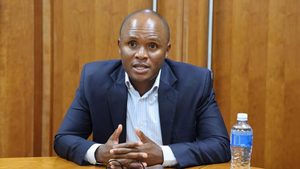
Former Finance Minister Trevor Manuel said the failure to transform South Africa’s education system is a significant part of the country’s broader failure to create a prosperous economy.
“Part of our problem as South Africa is that we have not sufficiently considered what the transformation of education is about,” Manuel told the Africa In the World Festival.
Manuel explained that South Africa has a two-tier education system. “There is education for what we used to call private and former model C schools, and then the education for the majority. It is completely binary,” he said.
The two-tiered nature of the system is still prevalent despite the ANC government being in power for 30 years and its efforts to improve education outcomes in South Africa.
For Manuel, this is because these efforts have the wrong focus, with the government focusing too much on access to education and not enough on the quality of education.
This has resulted in many learners receiving an education that is not applicable in a modern economy, leaving them unable to find sustained employment.
“It is a huge achievement that 80% of school children in South Africa are at no-fee schools. But no fees frequently also means no maths, no science, and no discipline,” Manuel said.
“And so this notion of transforming the education system is a curious thing that we have not been able to master in South Africa.”
Manuel said the failure to transform South Africa’s education system has resulted in the majority of the country having the same problems it faced 60 years ago.
“Bantu education was built in the 1950s without mathematics. That was in 1953, and in 2025, the mathematics is still not there,” Manuel said.
“You have taken quantitative skills out of a generation of learners and successive generations of teachers, and so it is still not there.”
South Africans are being left behind

South Africa’s economy is bearing the brunt of the failure to transform its education system, with millions of people ill-equipped to work in a modern economy.
This also points to the depth of the country’s unemployment crisis, with a significant mismatch between the jobs offered by the labour market and the skills individuals possess.
“That divide remains a massive divide, and unless you step up to the plate and drive change, we are training people for a world that we have left behind,” Manuel said.
“It is not the responsibility of some other government. It is the responsibility of this democratic government, and it is a massive responsibility, but one that we cannot avoid.”
The consequence of failing to engage with this issue is that an entire generation of South Africans is not equipped for a modern economy.
“It is not just the quantitative skills, it is also things like logic and all of the other skills that make for modern people,” Manuel said.
“We have this massive cleavage between those who have it and those who don’t.”
South African asset manager Coronation had its economics unit analyse the country’s unemployment crisis in a recent research note.
It pointed to lacklustre economic growth, declining private-sector investment, and the country’s inability to develop human capital as the main reasons behind the crisis.
In particular, the research team emphasised the impact of South Africa’s failure to develop its abundant human capital despite a surging education budget.
The failure has resulted in South Africa’s workforce gradually becoming less productive, limiting growth and reducing the economy’s ability to absorb new workers.
It has also translated into rising graduate unemployment in South Africa, with university students unable to find jobs because their skills do not meet the labour market’s demands.
This is despite the fact that education absorbs roughly 6% of South Africa’s annual GDP and 20% of all government spending. This places South Africa among the world’s highest spenders on education relative to income.
South Africa, for all its spending on education, has among the worst outcomes among its upper-to-middle-income country peers, Coronation said.
Recent international assessments show that more than 80% of Grade 4 learners in South Africa cannot read for meaning, and in 47% of secondary schools, no child reached the intermediate maths benchmark.
Adjusted for quality, a South African child effectively receives the equivalent of about five years of learning after nine years of schooling.



Comments