Well-known South African state-owned company collapsing in front of everyone’s eyes


Denel, which was once a profitable state entity and respected in the defence industry internationally, has been destroyed by mismanagement and corruption.
This was revealed in the company’s 2025/26 Corporate Plan, which provided an overview of the company’s operators and finances.
Denel is a state-owned aerospace and military technology conglomerate established in 1992, when Armscor’s manufacturing subsidiaries were separated from the company.
This was done to facilitate Armscor’s role as the procurement agency for the South African National Defence Force (SANDF).
It inherited most of Armscor’s production and research facilities and was widely viewed as a world-class institution.
The company has numerous divisions, including Aeronautics, Dynamics, Integrated Systems and Maritime, Land Systems, and Vehicle Systems.
It produced many globally renowned products, including the Rooivalk attack helicopter and the Atlas Oryx utility helicopter.
It also produced the Umkhonto vertical-launched air defence missile, the Mokopa tandem warhead anti-tank guided missile, and A-Darter air-to-air missile.
Denel’s G6 self-propelled howitzer and G5 towed howitzer are the longest-range guns in their class worldwide.
The company highlighted that it was a well-recognised state-owned company between 2010 and 2015, which was profitable and had a stable board.
Denel had sought after talent and was a leader in technology development. “We were a symbol of good governance and reporting systems,” it said.
With an order book which peaked at R40 billion in the 2014 financial year, it achieved seven consecutive years of positive operational profit.
Simply put, Denel was a well-run state-owned company which did not require support from the government to operate.
The collapse of Denel
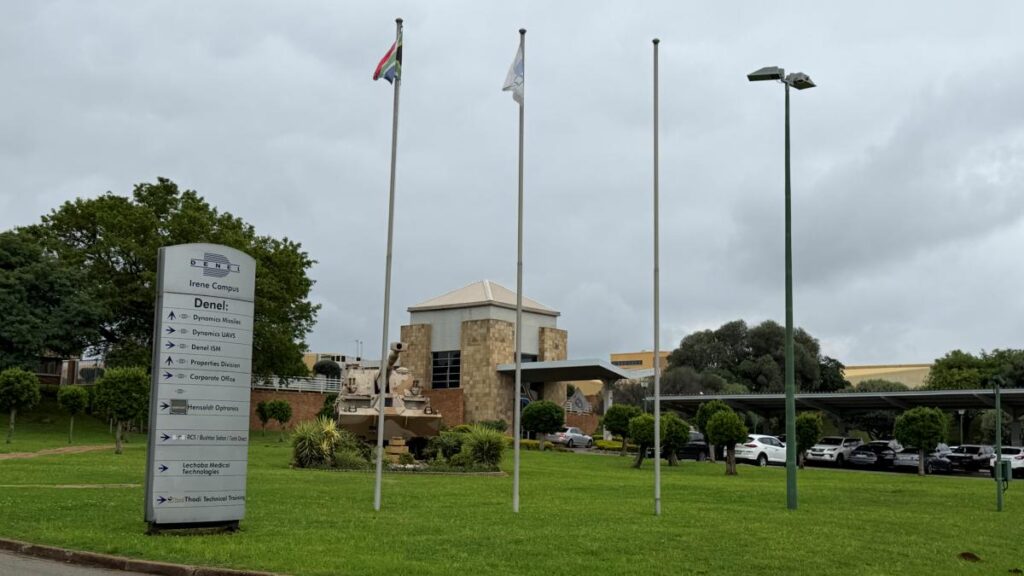
Denel stated that state capture, which involved becoming entangled with the infamous Gupta family, along with the COVID-19 pandemic, led to a downward spiral.
The problems included the misappropriation of Denel’s sensitive missile intellectual property to aid foreign state-owned companies.
During this period, Denel started to lose key customers, which, in turn, resulted in a significant loss of revenue.
It became so severe that Denel could no longer pay salaries, prompting legal action by trade unions such as Solidarity.
During this period, Denel lost a significant number of its skilled employees, who left South Africa to work for global weapons manufacturers.
The loss of key staff members further impacted the company, which caused an rapid downward spiral.
Its latest financial results showed that revenue declined from R8.8 billion in the 2016 financial year to only R1.4 billion eight years later.
Denel’s bottom line went from a net profit of R476 million in 2016 to a net loss of R550 million in the 2024 financial year.
Denel said the extent of the damage to the company was such that it could not be stabilised despite receiving a total of R2.38 billion in bailouts during 2019 and 2020.
The state-owned company further revealed that it was technically insolvent and had relied on government bailouts to survive.
The company launched a turnaround strategy, including retrenching staff, securing new revenue streams, and enhancing management, commercial skills, and governance.
The company aimed to grow revenue by at least 20% and improve its earnings before interest and tax (EBIT) by 6%.
To date, the turnaround strategy has been erratic. While it met some of its targets, it missed others, which were well below budget estimates and forecasts.
A former Denel employee describes the situation
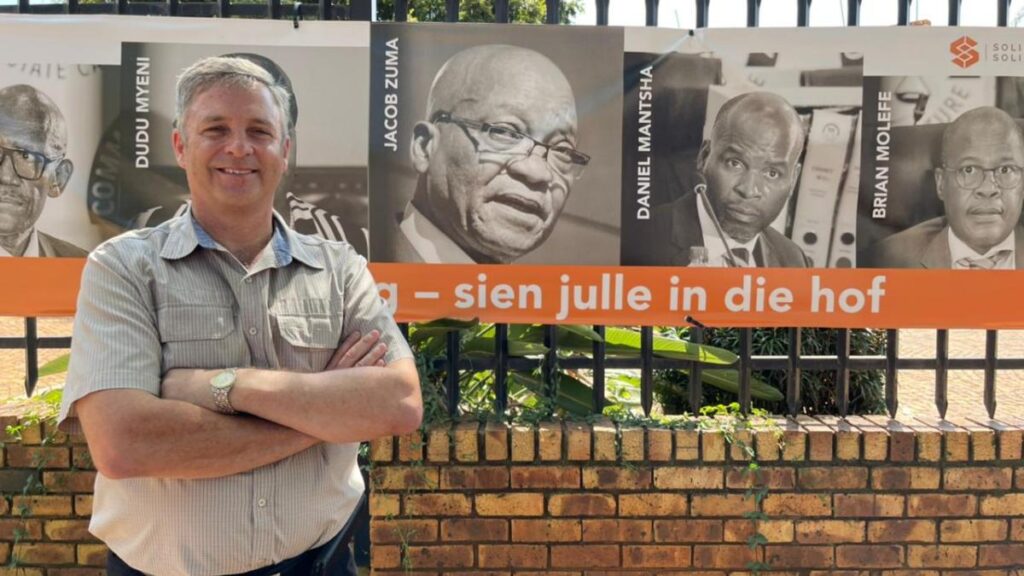
Former Denel employee Stef Pretorius said the problems were entirely avoidable. However, destructive government policies led to the institution’s demise.
Denel, and especially its subsidiary Pretoria Metal Pressings, was world-class in terms of its technology and employees.
Its products adhered to strict international standards and were on par with the best weapons manufacturers worldwide.
“The people working at Denel were like a family. Thirty years after we started working together, many of my colleagues are still my best friends,” he said.
He left Denel in 2004. When he returned to work at Denel in 2013, he realised things had changed. “There was a feeling that everyone had to stay in its own corner,” he said.
“Teamwork was sidelined. Instead, employees started to look for where they could catch each other doing something wrong.”
The level of professional, quality, and top-class service levels associated with Denel had all disappeared.
The company changed from employing the most skilled and competent people to a strong transformation agenda.
“The transformation agenda placed people in positions who replaced the way the company worked from engineering to ideology,” he said.
“Using engineering methods to find a solution and produce results fell by the wayside. Everything was ideologically driven.”
The company’s excellent training division underwent a transformation, which affected both student intake and the training officers.
“The strict old men were replaced with new training officers. This caused the quality of training to collapse,” he said.
He said these and other matters changed Denel from a globally renowned weapons manufacturer to a company struggling to survice.


Comments