One South African city gets a major makeover


Krugersdorp’s inner city is undergoing a major revitalisation through the Krugersdorp CBD Precinct Plan, which aims to restore economic vitality, improve service delivery, and attract investment to the deteriorating business district.
The inner city of Krugersdorp faces several critical challenges, including urban decay, neglected and ageing infrastructure, and deteriorating buildings.
What was once the heart of the metropolis, the historic Central Business District (CBD), is now marked by instability, illegal land use, safety concerns, underutilised public spaces, and a growing homeless population, all continuing to fuel its decline.
To reverse this trajectory, the Mogale City municipality has secured grant funding from the National Treasury to support the development of the Krugersdorp CBD Precinct Plan, initially approved in 2017.
This comprehensive plan outlines targeted interventions that are designed to bring new economic and social life to the CBD.
It seeks to foster an environment that attracts public and private investment while reinforcing the city’s distinct character and identity.
As a key component of the broader revitalisation strategy, the CBD Sub-Precinct Programme marks the first stage in implementing the Precinct Plan’s vision. This sub-precinct focuses on a northern portion of the CBD, anchored by several key sites.
These include the under-construction Mogale City Civic Centre, the recently completed once-infamous taxi rank, the existing President Square Shopping Centre, and the old Bob van Reenen Stadium site.
The Sub-Precinct Programme, funded through the National Treasury as part of the Neighbourhood Development Partnership Programme, aligns with national development priorities.
It aligns particularly with the goal of addressing spatial inequality, a central pillar of South Africa’s National Development Plan.
The historic Municipal Civic Centre stands at the heart of this transformation. This National Heritage Site originally designed by architect Chris Hosking in 1907, with later extensions in 1985 by Wilhelm Meyer.
While the building remains a cultural and architectural landmark, it no longer meets the partial and functional needs of Mogale City’s growing administration.
Currently, municipal offices are scattered across multiple rented buildings, including IEC, Ellerines, and others, resulting in inefficiencies and annual rental costs exceeding R2.7 million.
Civic Centre redevelopment

Studies show that at least 30,000 m² of additional net office space is required to consolidate municipal functions and improve service delivery.
By centralising key municipal departments in a single modern facility, Mogale City said residents will no longer need to move between multiple offices to access basic services.
This “one-stop” model brings departments closer together, improving coordination, reducing turnaround times, and making it easier for residents to resolve queries in one location.
To achieve this, the city has embarked on a phased expansion of the Civic Centre. Phase One, which is expected to be completed by 2026, will deliver 5,000 m² of net office space and a total gross floor area of 13,600 m².
The six-storey development will include two parking levels and four office space levels. Beyond reducing costly rentals, the expanded Civic Centre will serve as the anchor project for the wider precinct.
It will link to existing and planned projects, such as the historic Nederduits Hervormde Kerk building constructed in 1936 and proposed upgrades to President, Kruger, and Market Streets.
The Civic Centre will also link to major catalytic developments, including Bob van Reenen Stadium, Coronation Park, Fountain Street Market, Library Square, and the Krugersdorp Station Precinct.
From modern design principles to operational efficiency, the new Civic Centre incorporates features that ensure long-term durability, energy efficiency and cost effectiveness. These include –
- Architectural features: Optimised building orientation, screen walls, tinted double glazing to reduce solar heat gain
- Mechanical systems: Energy-efficient central air conditioning with a smart building management system to monitor and control water use, fire alarms, and maintenance operations
- Electrical design: LED lighting and occupancy sensors to prevent unnecessary energy use, complemented by large glass facades for natural light and power reduction
- Safety: A dedicated fire escape on each floor to ensure compliance and occupant safety
The goal of this precinct development extends beyond physical infrastructure. It seeks to reignite the inner city’s social, cultural, and economic vitality, transforming it into a vibrant hub of commerce, creativity, and community life.
The area is envisioned as a mixed-use, people-centred urban space that attracts residents, investors, and visitors while promoting safety, accessibility, and inclusive growth.
The Civic Centre project has faced public criticism, including allegations of mismanaged funds. However, Mogale City clarified that the development is predominantly grant-funded and operates under strict regulatory oversight.
It also represents a strategic and transparent investment in Mogale City’s future, supporting better governance, enhanced service delivery, and sustained economic growth.
This initiative stands as a cornerstone of Mogale City’s long-term development vision, marking not just the construction of a new building but a bold and forward-looking step toward the complete revitalisation of the inner city.
Mogale City Civic Centre


 Loading ...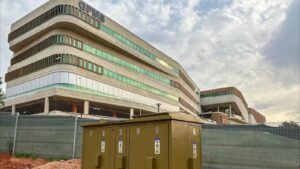

Comments