Iconic supermarket rolls out self-checkout tills in rich Western Cape town


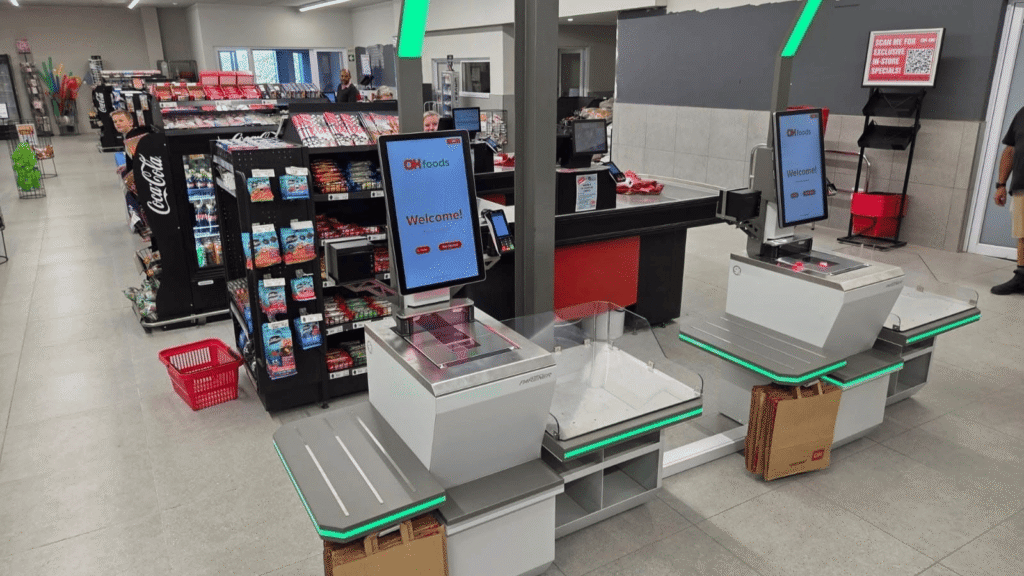
OK has introduced self-checkout tills at its Stilbaai store, as South African retailers continue to experiment with new self-service technologies.
The store now has two self-checkout tills, which allow customers to scan their own purchases and pay without using a traditional cashier-operated till.
The system is card-only, though customers can use digital payment methods like Google Pay and Apple Pay.
A shopper who shared the update said the tills were relatively easy to use once customers became familiar with the scanning process.
The rollout comes as South African retailers increasingly experiment with self-service technology to improve convenience and give customers more ways to complete their purchases.
OK’s parent company, Shoprite, has also been rolling out self-checkout services through its other subsidiary, Checkers.
The retailer has introduced self-checkout technology through its Xpress Trolley initiative. The smart trolleys feature touchscreens, barcode scanners, and cameras, allowing customers to scan and pack groceries as they shop.
The system was initially tested at Checkers Hyper Brackenfell and Checkers Constantia in the Western Cape before expanding to Gauteng in 2026.
Woolworths is also testing self-checkout at its Foreshore store in Cape Town. Its pilot allows customers to scan and pay for their purchases at a dedicated Express Till, with employees available to assist.
Pick n Pay has introduced self-service tills at selected stores. These allow shoppers to scan and pay for their own purchases, with measures such as weighing scales and receipt checks intended to help prevent theft.
The retailer has experimented with the technology since 2016, although an earlier trial was abandoned following opposition from trade unions and members of the public.
Self-service technology is also becoming more common outside grocery retail. Fast-food chains such as KFC, Burger King, and McDonald’s have introduced digital kiosks that allow customers to place and pay for orders themselves.
The different approaches show how retailers are testing ways to reduce reliance on traditional checkout processes.
However, the technology also requires retailers to consider security, customer assistance, and the needs of shoppers who prefer staffed tills.
OK’s franchise network faces pressure

Unlike Shoprite Holdings’ other chains, such as Checkers and Usave, the OK grocery business operates on a franchise model, with independently operated stores across several formats.
These include OK Foods, OK Express, OK Grocer, OK Urban, OK MiniMark, OK Liquor, and wholesale-focused OK Megasave.
Shoprite’s 2026 annual report showed that the OK Franchise division ended the financial year with 573 stores.
This comprised 495 stores in South Africa and 78 in neighbouring countries. The network experienced a net reduction of 42 stores during the 52 weeks ended 28 June 2026.
Drop-shipment sales to franchisees declined to R9.13 billion from R9.56 billion in the previous financial year. Franchise fees also edged lower, falling 0.5% to R191 million.
Shoprite does not report OK Franchise’s trading profit separately. Instead, the division forms part of its Other operating segments, alongside businesses such as Computicket, Red Star Wholesale Catering and its pharmacy operations.
The combined segment recorded trading profit of R617 million, down 5.4% from R652 million in 2025. Its trading margin also contracted from 3.5% to 3.2%.
Shoprite attributed the decline to low selling price inflation and the net closure of 42 OK Franchise stores during the year.
Despite the reduction in the overall network, some formats continued to expand. OK Express opened 13 new stores, taking its forecourt retail network to 139 locations.
OK Foods also opened three new stores in its more upmarket format, which can include specialist departments such as sushi bars, Urban Barista Brew coffee bars and Rib ’n Rooster quick-service counters.
The group is also working to improve the competitiveness of its franchisees as independent retailers face pressure from larger chains and their investment in technology.
Shoprite has expanded its franchise training academy and given franchisees access to group consumer data and analytics.
It is also strengthening its private-label ranges and integrating franchise stores into its technology and supply chain infrastructure.
The aim is to help franchisees improve product selection, reduce obsolete stock and benefit from the group’s buying power.
Login or register for unlimited free access.