South African fast-food giant run by a retail king’s son that opens a new store every second day


Hungry Lion opens a new store in Africa every second working day, with the company aiming to have 1,000 stores operating on the continent by 2028.
This growth trajectory is a far cry from the experimental deep-fried chicken store opened by Shoprite in 1997.
The experimental store was a test to see if a South African fast-food brand could compete with American fast-food giants as they re-entered the country after the end of apartheid.
It proved successful, with Hungry Lion quickly becoming famous for its king-sized fried chicken and attractive price point.
Leveraging Shoprite’s scale, the fast-food franchise began rolling out stores across South Africa, often sharing floor space with the retailer.
However, relatively early on, Hungry Lion had its eyes on African expansion, with the continent being relatively untouched by American brands.
This at the time seemed natural for large companies that had long been confined to the South African economy due to exchange controls.
For a small start-up like Hungry Lion, it was seen to be very risky, with little evidence of a successful expansion from a South African fast-food brand into Africa.
Nonetheless, the company went ahead with its plan to roll out stores in Africa, with it having a store in Zambia before it had one in Gauteng.
The man who led this growth, retail king Whitey Basson’s son, Adrian, explained to Standard Bank that the African expansion actually was a move to derisk the business rather than add risk.
At the 2026 Amplifying Growth Summit, the Hungry Lion CEO explained the African expansion. Hungry Lion is one of the bank’s biggest business and commercial banking clients.
“Africa has 1.5 billion people, most of whom eat chicken. The current opportunity pales in comparison to potential future growth,” Basson said.
“I see expanding into Africa as a de-risking exercise. It is hard to explain to someone that we are opening in the DRC, Tanzania, and Uganda to de-risk the business, but that is the reality.”
With plans to have 1,000 stores in Africa by 2026, Basson said that scale is what makes the business easier and less risky from an ownership perspective.
“If you build 30 stores per year, you are not just building individual stores. You are adding scale,” Basson said.
“The more stores you open, the better pricing you get from suppliers, the better you can source inputs, and the more people you can train, and the better skilled the people who work for you are.”
Rejecting the top job at Shoprite and AI frying chicken
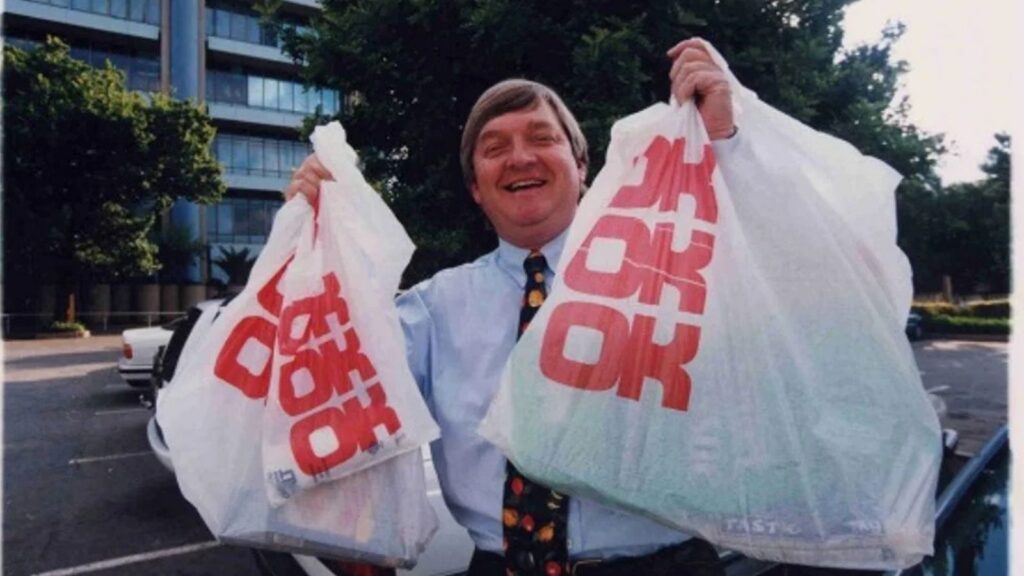
Basson has led Hungry Lion’s aggressive expansion since 2008, when he pioneered the brand’s unique identity to differentiate it from Shoprite.
Hungry Lion’s management team realised that customers viewed the brands as one and the same, limiting the fast-food giant’s expansion to areas with a Shoprite.
The creation of a unique brand was expensive, with Basson leading the overhaul of Hungry Lion stores and supply chains.
This has paid off handsomely, with Hungry Lion being able to roll out stores at an aggressive pace. Eventually, this ended the relationship with Shoprite as the retailer realised it could not add any value.
In 2018, Hungry Lion was sold by Shoprite and turned into an independent company under Basson’s leadership.
This required Basson to reject an offer from his father to take over the reins at Shoprite to focus on Hungry Lion and building his own business.
Whitey Basson told Conversations with Lelethu that he asked his son if he would like to step into the top job at Shoprite one day.
“My son’s response was: ‘Thank you, but keep your job. Having grown up under you, I don’t ever want a job like yours was,” Basson said.
“He said that he would rather start and run his own business than be subjected to everyone else’s wishes in this company.”
Whitey Basson said that his agreement with his son was that he would never give away control of the company and would never list it for money.
Now, Adrian Basson is focused on Hungry Lion’s expansion in Africa and on implementing machine learning and artificial intelligence to make the business more efficient.
“Lots of businesses focus their tech on the flashy, customer-facing stuff. We use tech to improve the business side,” Basson said.
This includes investing in cameras, AI alarm systems, and analytics tools ot alert managers to problems as soon as they arise.
“The investment in technology has created great efficiency for us. When we started, we had one regional manager for seven ot eight stores. Now, we can have one for about 20 stores.”
Login or register for unlimited free access.