Retail royalty Christo Wiese reveals Pick n Pay’s biggest mistake


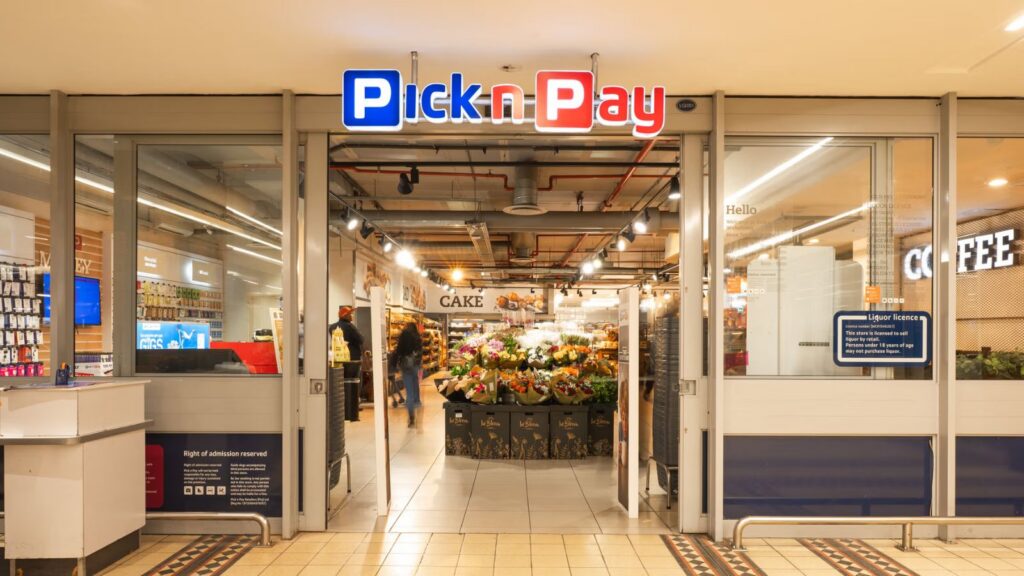
Billionaire Christo Wiese believes that Pick n Pay is in a dire situation because of the retailer’s historic dividend policy, which saw it return cash to shareholders rather than invest it in the business.
This resulted in Pick n Pay gradually losing the edge it had over other retailers in the middle market segment for decades under Raymond Ackerman.
Wiese told the audience at the 9th BizNews Conference that this is a common mistake made by many businesses, but it is ruthlessly punished in the retail space.
Operating on thin margins and high volumes as a retailer leaves very little room for error. The same volume and momentum that push retailers to new highs can easily run them into the ground.
Wiese knows this game well, having served as Shoprite’s chairman for 29 years as it became the largest retailer in Africa. Simultaneously, Wiese played a huge role in making Pepkor the biggest clothing retailer on the continent.
Wiese said he is surprised that Pick n Pay finds itself in the position it is in today, given its historic dominance and track record.
Throughout the 1990s, 2000s, and much of the 2010s, Pick n Pay was the retailer to beat in South Africa and had its sights on competing with Woolworths in the high-income segment and Shoprite in the lower end of the market.
However, this has not come to fruition, with a strategic misstep under former CEO Pieter Boone having severe consequences for the company.
Under Boone, Pick n Pay implemented the Ekuseni strategy. This strategy envisioned it stratifying into Pick n Pay and Pick n Pay QualiSave.
This would lead to a clear brand presence for middle-income and wealthier shoppers, as well as for the lower end of the market.
Instead, customers were confused by the changes and Pick n Pay’s costly rebranding efforts did not yield the desired results.
Between the 2021 financial year and the 2024 financial year, a Daily Investor analysis showed that Shoprite averaged annual turnover growth of 11.5% compared to Pick n Pay’s 6.1%.
Pick n Pay was not just left behind by the Shoprite juggernaut. It ended up in severe financial trouble, reporting a loss in the 2024 financial year and being technically insolvent for the first time ever.
Under CEO Sean Summers, a slow turnaround is taking place. Pick n Pay has listed Boxer separately to strengthen its balance sheet and closed hundreds of underperforming stores.
There are green shoots, with its primary South African supermarket business showing strong like-for-like growth in a recent trading update.
However, questions around Pick n Pay’s future remain, as the retailer has delayed its breakeven date by a year to 2029.
The big mistake
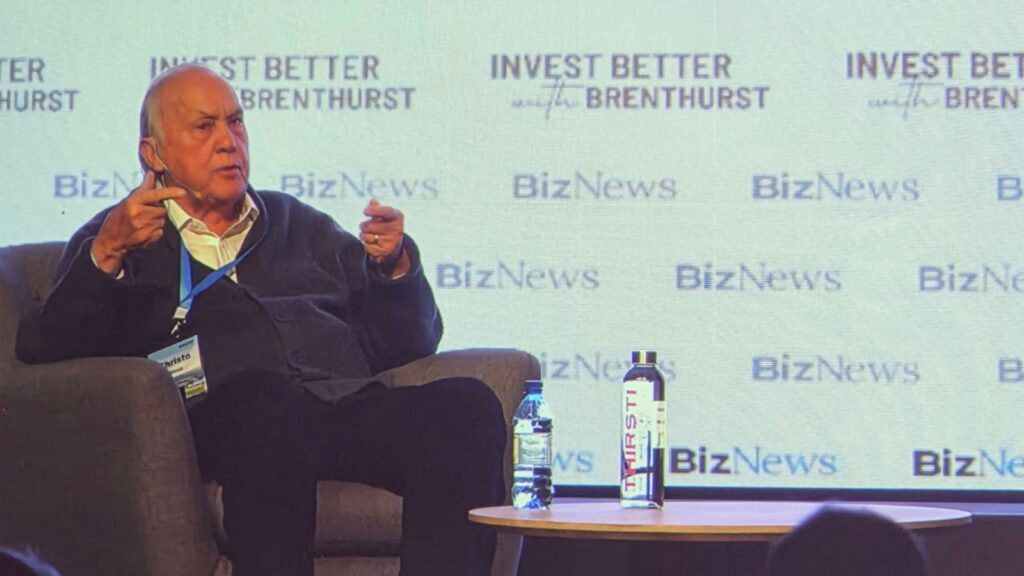
For Wiese, Pick n Pay’s challenges go back further to a decision taken years before Summers was appointed to turn the retailer around.
He explained that when he was Shoprite chairman, Pick n Pay was seen as the retail darling of the market because of the hefty dividends it paid.
“For years, I paid very little dividends to shareholders as Shoprite chairman. That was until the institutions forced me to try and match Pick n Pay,” Wiese said.
“We never matched Pick n Pay, despite raising our dividend. This was because we wanted to keep cash on hand and had a large dividend cover ratio.”
“Pick n Pay always had a low dividend cover ratio of around 1.5 times. The opposite is Anton Rupert, who had 7 times or 9 times cover.”
Wiese explained that this created a problem for Pick n Pay as you always need cash to invest in keeping the business at the cutting edge.
In a highly competitive market, such as retail, this is important, as investment in technology, logistics, or store layout can boost margins significantly.
“So, if you ask me what the mistake was. The first mistake was the dividend, and you can see that in smaller businesses as well.”
“You have to have cash to reinvest in the business. Most people do not do that. The cash comes and goes. The first money they make goes to a new car or house. That is the wrong way.”
Wiese explained that he went to the “Joel Stern school of business” and believes that a company should never pay a dividend.
“If you pay a dividend, you are telling your shareholders that they can do better things with the money than you can as a management team,” Wiese said.
“Theoretically, the management team should always do better with the money than you can. If shareholders need the cash, then they can sell some of their shares.”


Comments