Shein and Temu eating away at South African retailers


South African consumer discretionary stocks, particularly apparel retailers, are feeling the heat of constrained consumer demand and increased competition from global low-cost competitors.
Chinese eCommerce giants Shein and Temu have become particularly popular among South African consumers, offering prices that local retailers are struggling to compete with.
This is part of the reason why, despite a record performance for the JSE in 2025, the retail sector saw a negative return over the past year.
This is set to persist in the year ahead, with SA Inc stocks like apparel retailers expected to continue taking pain.
Abax investment manager Omri Thomas explained at a recent Nedgroup Investments event that 2025 saw spectacular growth across almost all South African asset classes.
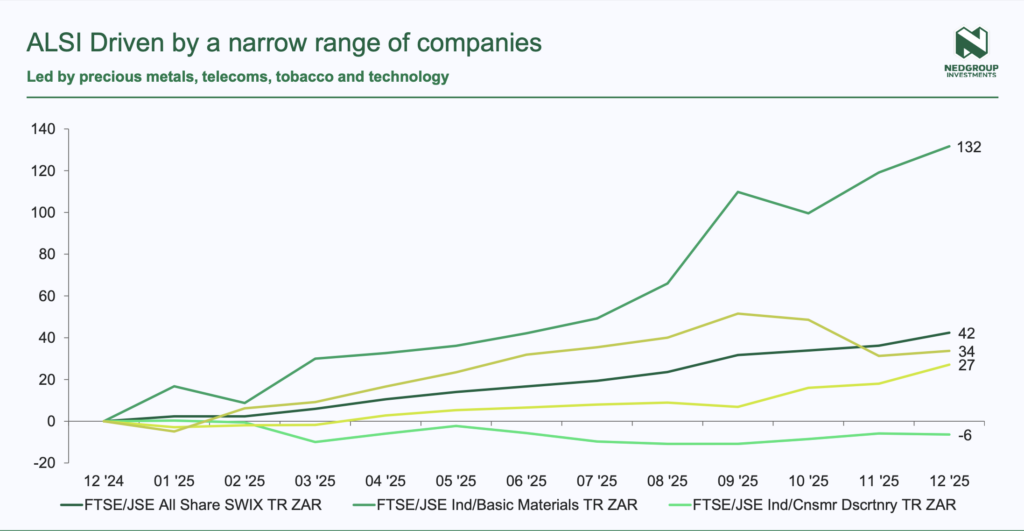
This saw returns from the JSE All Share Index (ALSI) surge by over 30% over the course of the year, driven largely by a standout performance from the basic materials sector (up 132%).
Thomas explained that the ALSI was driven by a narrow range of companies, led by the precious metals, telecoms, tobacco and technology sectors.
However, amid these strong performances, some South African companies came under severe pressure, particularly consumer discretionary stocks, which were down 6% over the past year.
Thomas highlighted retailers, in particular, as sufferers, saying they came under pressure from constrained consumer demand.
In addition, he highlighted the negative impact of increased competition from low-cost global competitors, which put pressure on local retailers’ margins.
This has been a growing concern among local retailers over the past few years, with apparel retailers in particular sounding the alarm about Chinese eCommerce giants Temu and Shein.
Many have warned of significant job losses and potential business closures due to the rising competition from the Chinese giants.
The Localisation Support Fund (LSF) previously estimated that the growth of these retailers has come at the expense of local players, eating into their market share and undermining local employment.
The LSF estimated that more than 8,100 local job opportunities have not come into being because of Shein and Temu’s market presence in South Africa.
SA Inc has potential
Thomas explained that SA Inc shares came under severe pressure in South Africa over the past year.
SA Inc companies refer to those that derive the vast majority of their earnings from South Africa, as opposed to locally listed companies with large operations outside the country.
Examples include apparel retailers like Mr Price and Truworths, as well as Capitec, Nampak, and Raubex.
Despite their lacklustre performance in 2025, Thomas said there are SA Inc shares currently offering value, as they have gone largely overlooked amid a commodity rally that saw mining and industrial shares shine.
This has made some SA Inc stocks severely undervalued, presenting a strong opportunity for investors who know where to look.
Thomas added that South Africa’s broader growth, estimated at around 1.4% for 2026, should also support domestic stocks in the year ahead.
A similar argument has been put forward by Investec’s head of equities, Will Ridge, who recently explained that SA Inc shares are no longer just a contrarian bet.
He argued that these companies are benefiting from a confluence of positive structural shifts, including progress on local challenges that are holding back the economy from its higher potential growth rate.
This includes fiscal improvements, a new inflation target, expected lower interest rates, South Africa’s removal from the Financial Action Task Force’s grey list, and the country’s credit rating upgrade from S&P.
He specified that this does not mean there are no risks to the South African economy in 2026, but these factors are putting the country on the right track and have created a unique investment case that is hard to ignore.
Other asset managers are also backing this turnaround, with Coronation’s Top 20 fund reducing its exposure to precious metals and increasing its holdings in undervalued South African retailers, banks, and select global companies.






Comments