The grocery store cheaper than Checkers and Pick n Pay


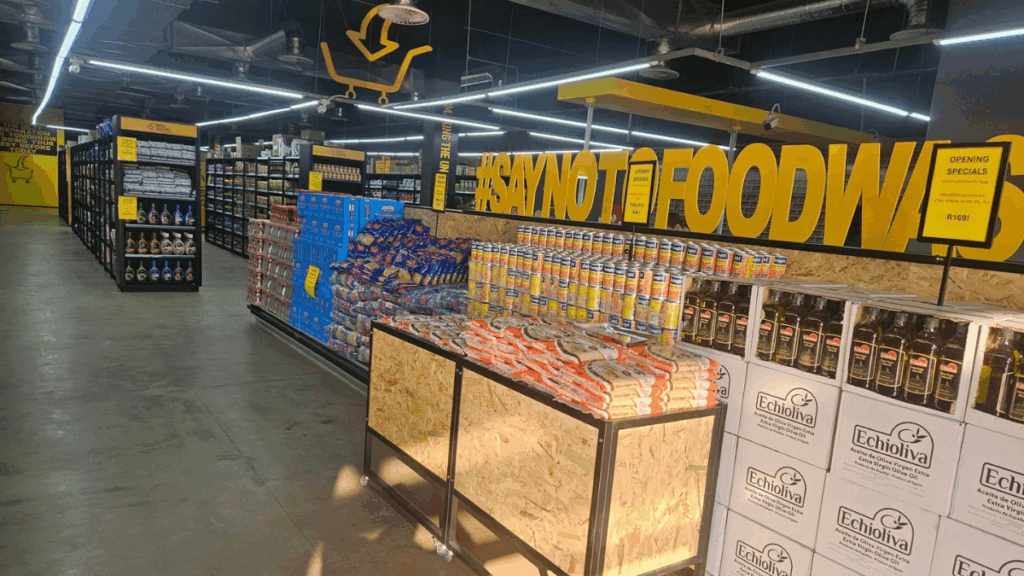
Discount retailer Best Before is expanding its physical and online presence as South Africans continue to turn away from traditional grocery stores in search of more affordable products.
Best Before Clearance Store was founded in 2017 by Mark Gordon and Alain Soriano, two entrepreneurs with over 60 years of combined retail expertise.
Inspired by the success of clearance stores in Europe and Australia, they were determined to shake up South Africa’s shopping experience.
Their concept was centred around offering premium branded food and personal care products at discount prices in a modern shopping environment.
In 2017, Gordon and Soriano launched their pilot store in Wendywood, Sandton. The concept quickly took off with frugal shoppers, and they opened their second branch at Edenglen Retail Centre in Edenvale soon after.
Best Before was not only a hit with shoppers, though. The company also created a sustainable channel for suppliers who need to move stock that no longer fits traditional supermarket shelf-life rules.
Today, Best Before has eight retail locations, with its first store outside of Johannesburg opening in October 2025. The business assured that it has more stores in the pipeline.
Best Before has also officially launched online shopping and convenient in-store collection points across all Best Before locations.
Every week, the retailer offers new arrivals and clearance discounts, with products ranging from pantry staples and snacks to personal care essentials. Shoppers can expect a discount of up to 70% off traditional retail prices.
Unlike traditional salvage outlets that sell damaged or shop-soiled stock, Best Before’s focus is on short-dated and past-dated products that are still high-quality and safe, giving shoppers access to big-name brands at a fraction of the cost.
Same products – cheaper prices

While some customers may be sceptical about buying goods which are passed, or close to, the best before date, the company assured that these products are perfectly safe to consume.
“Best-before dates are an indicative guide of when the quality of food or drink will start to change,” the company explained. “They are not to do with safety. Food that has passed its best-before date is safe to eat.”
“Best before should be considered a rough guide rather than a strict rule. There is no reason to throw away food that goes past its best-before date; it is perfectly safe to eat and will often taste just as good.”
Unlike Use By/Sell by dates, which are determined by the Health Department and are directly linked to food safety, best-before dates are put on the product by the manufacturer.
This means the product will retain the same taste, colour and texture that it was initially packaged with up until this date.
“This certainly does not imply that the quality of the contents will have deteriorated to such a degree that it renders it unsafe to consume in any way within a few weeks after this date,” the company said.
“On the contrary, the contents of the container or tin can remain perfectly safe to eat for long periods thereafter.”
However, while Best Before’s products are still safe for consumption, the retailer assured that it would offer a refund for any item bought in its stores should the customer not be satisfied with their purchase.
In addition, not all of the retailers’ stock has passed the best-before date, which means that consumers can find the exact same quality products they would at a different grocer for a fraction of the cost.
Tackling a R60 billion problem
Beyond bringing consumers savings, Best Before’s concept also tackles another major problem in South Africa: food waste.
In 2020, the Consumer Goods Council of South Africa (CGCSA) estimated that approximately 10 million tonnes, or 30% of local agricultural production, is wasted each year.
At the time, this was equivalent to an estimated R60 billion a year, or about 2% of GDP, which was being wasted.
A 2017 study by the World Wildlife Fund (WWF) estimated that 10 million tonnes of food go to waste every year in South Africa.
This equates to 210kg of food wasted per person per year. Around 25% of this waste happens at the consumer distribution and retail levels.
According to the WWF, fruit and vegetables were wasted the most, at 44%. This was followed by cereals – at 26% – meat and dairy – at 15% – and roots, tubers, and oilseed – at 13%.
“South Africa throws away millions of tons of food and drink every year,” Best Before said. “Two million of this is thrown away by households, and 670,000 of this is food that has been thrown out because food labels have been misinterpreted.”
“The majority of this could have been consumed. If you want to reduce your food waste footprint, don’t throw out food just because it has passed its best-before date.”
Inside Best Before








Comments